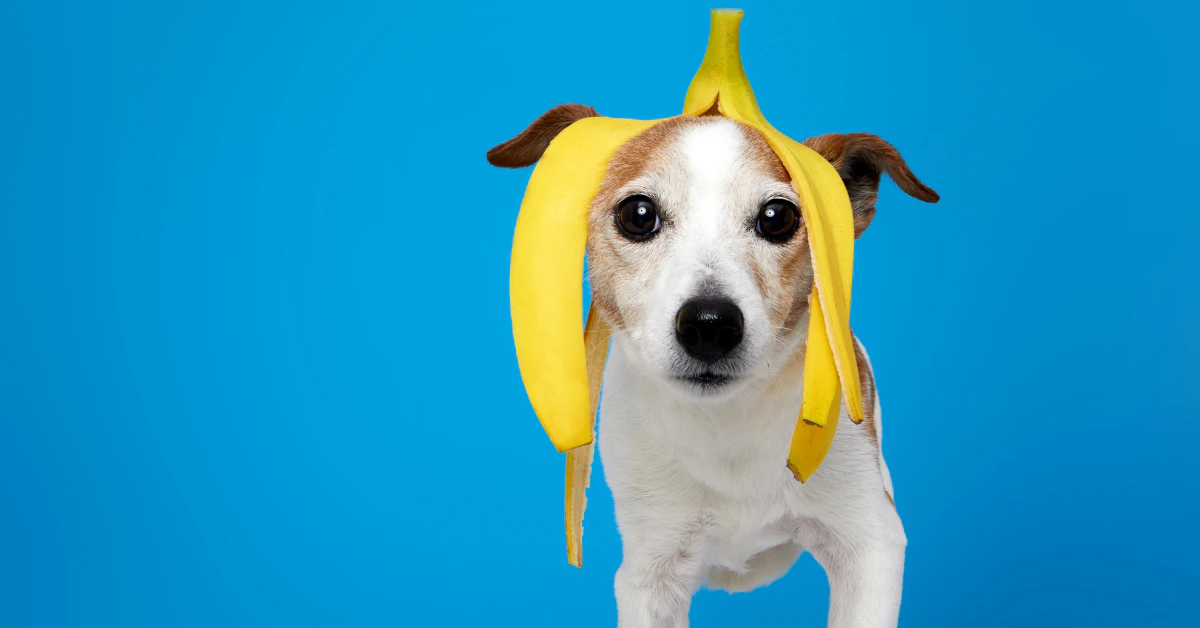
No, dogs should not eat banana peels, or banana skin. But here’s the good news: banana peels are not poisonous to dogs.
That might sound confusing. Something can be non-toxic and still not be safe to eat. Banana peels are tough and full of fiber, which makes them hard for a dog’s stomach to break down. If a dog swallows too much peel, it can get stuck and cause an intestinal blockage.
So there is no need to panic. Just read on to learn what to watch for.
Learn more from the American Kennel Club.
Toxicity vs. Obstruction: Understanding the Real Risk

Some foods hurt dogs because they poison the body. Banana peels work differently. The danger here is physical, not chemical.
A bowel obstruction happens when something blocks the stomach or intestines. According to the AKC, it is a complete or partial blockage that stops solids or liquids from moving through the digestive tract. A banana peel is tough and fibrous, so a dog’s gut can struggle to pass it. If enough peel gets stuck, nothing can move past it.
This is why you can’t feed banana peels safely, even in small amounts every day. Each piece adds more fiber that the gut has to deal with. Over time, or in one large piece, that fiber can build into a real blockage.
Young dogs face extra risk. Puppies are especially vulnerable to bowel obstructions, since they tend to swallow things quickly without chewing well.
Think of it this way. A poisoning emergency, like a dog eating chocolate, involves a toxic substance entering the bloodstream. An obstruction emergency is a physical traffic jam inside the gut. Both need quick attention, but they are not the same kind of danger.
3 Hidden Dangers of Banana Peels (Size, Spray, and Scraps)

Banana peels carry more than one kind of risk. Here are three things every owner should know.
Size Matters More Than You Think
A big dog and a small dog do not face the same risk. A Great Dane swallowing a banana peel is very different from a Chihuahua doing the same thing.
Small and toy breeds show up more often in cases of banana peel obstruction. Their gut is narrower, so even a small amount of tough, fibrous peel can block it. A large dog has more room for that fiber to pass through. A tiny dog does not.
What’s On the Peel Matters Too
Most bananas at the grocery store are treated with fungicide or wax to help them survive shipping and stay fresh on the shelf. People peel the banana before eating the fruit inside, so this coating rarely touches what we eat.
Dogs are different. If a dog chews on the peel itself, it is chewing on whatever is coating that peel. This residue is not something your dog’s stomach is built to handle, and it adds one more reason to keep peels away from curious mouths.
Too Much Fiber, Too Fast
A dog’s digestive system can handle some fiber just fine. The problem is volume. Banana peel fiber is dense and tough, and a dog’s digestive enzymes are not built to break down that much of it at once.
Even if a dog manages to pass a small bite without trouble, that does not mean a bigger piece will go the same way. The more peel a dog eats, the harder the digestive system has to work, and the higher the chance that fiber gets stuck instead of passing through.
Does Freezing or Cooking Make the Peel Safe?
Raw banana peel is the version most dogs actually run into. It usually happens by accident, when a dog grabs a peel off the counter or digs one out of the trash.
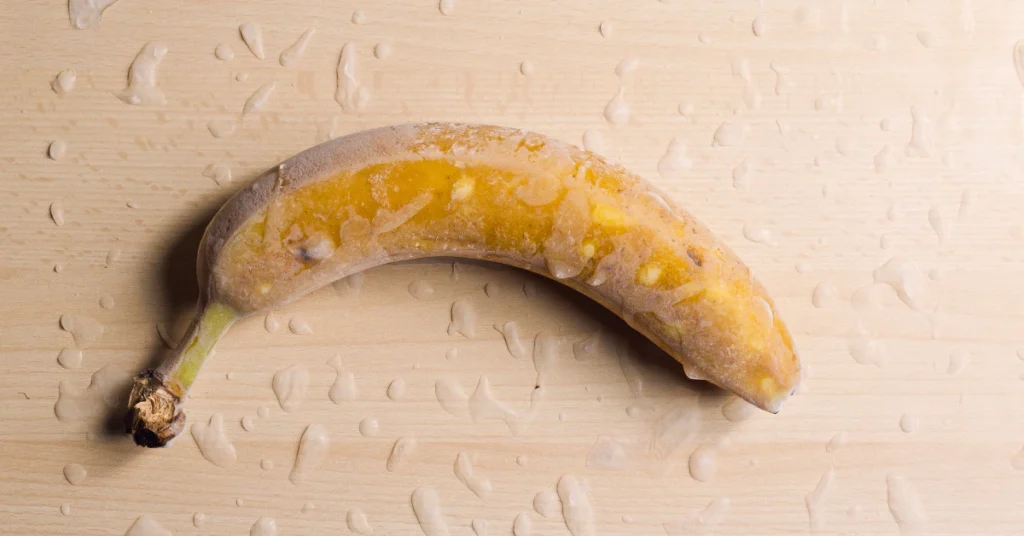
Some owners try a different approach for summer. They freeze a whole, unpeeled banana to make a cold treat for their dog. This seems like a smart shortcut, but it is actually a mistake. Freezing does not soften the peel. It makes the fibers tighter and tougher to break down. Instead of lowering the risk of a blockage, freezing a peel can raise it. If you want to give your dog a frozen banana treat, peel it first.
What about cooking? Boiling a banana peel does soften it a little. But softer is not the same as safe. The peel still has the same dense fiber that your dog’s gut struggles to process. Cooking does not remove that hazard, so a cooked peel is still not something to hand your dog as a treat.
Here is a simple way to remember it:
| Peel State | Safer to Eat? | Why |
| Raw | No | Tough fiber, hard to digest |
| Frozen | No, riskier | Freezing makes fiber tougher |
| Cooked | No | Softer texture, same fiber hazard |
No matter the state, the safest move is the same. Peel the banana, and keep the peel out of reach.
Why Did My Dog Eat the Peel? (Or Spit It Out)
Your dog may grab a dropped banana peel in an instant, only to spit it right back out. That is actually normal, and it is not a coincidence.
Dogs have about 1,700 to 2,000 taste buds. Humans have around 10,000. But dogs still have working bitter taste receptors, and banana peel is bitter. Many dogs take one bite, decide they do not like it, and move on.
This explains something you may have seen in online forums. Owners often say their dog eats banana peels all the time with no problem. In many of these cases, the dog never actually swallows much of it. It gets chewed up, spit out, or torn into tiny bits because the taste is not appealing.
That said, this is not true for every dog. Some dogs will eat almost anything, bitter taste or not, especially if they are fast eaters or tend to gulp down food. So while a built-in dislike for the taste helps many dogs avoid trouble, it is not a safety guarantee. It is just one small reason why some dogs seem to get away with it.
What to Do if Your Dog Just Ate a Banana Peel

This article is not a substitute for professional veterinary advice. If your dog shows severe symptoms, contact your vet or ASPCA Poison Control right away.
First, try to stay calm and figure out how much peel your dog actually ate. A small nibble from a large dog is a different situation than a whole peel swallowed by a small dog. Think about the size of the piece compared to your dog’s size.
Then, watch your dog closely over the next day or two.
Mild signs to watch for:
- Eating less than usual
- Low energy or seeming tired
- Occasional vomiting
These signs do not always mean an emergency. But if they continue for more than a day, call your vet.
Signs that mean you need to see a vet right away:
- Vomiting that keeps happening and will not stop
- Your dog cannot keep water down
- Strong abdominal pain, such as whining, crying, or refusing to lie down
- A stomach that looks swollen or feels hard
If you see any of these, do not wait it out. Call your vet or an emergency animal hospital immediately.
One more important note. Do not try to make your dog throw up on your own unless a vet specifically tells you to do so. Inducing vomiting the wrong way can cause choking, especially with something as tough and stringy as banana peel.
If you are ever unsure, it is always safer to call. You can reach the ASPCA Animal Poison Control Center for guidance.
Trash Raiders: Banana Peels vs. Other Fruit Peels
A banana peel is not the only thing a curious dog might dig out of the trash or compost bin. It helps to know how it compares to other common scraps.
| Scrap | Main Risk | Type of Danger |
| Banana peel | Hard to digest, can cause a blockage | Physical (obstruction) |
| Apple core | Seeds contain a small amount of cyanide | Chemical (toxicity) |
| Citrus peel | Oils can irritate the stomach | Chemical/digestive irritant |
| Mango skin | Tough skin, plus possible pesticide residue | Physical and chemical |
A banana peel sits in its own category. It is not chemically poisonous the way an apple core or citrus peel can be. The danger comes from its texture, not from a toxin inside it.
That does not mean it is the safest thing in the bunch. It still carries a real risk of blockage. But knowing the difference can help you react the right way if your dog gets into more than one kind of scrap at once, and it shows why “not toxic” never means “fine to eat.”
Frequently Asked Questions
Can dogs eat a whole banana?
Yes, in most cases. The flesh of a banana is safe for dogs in moderation. Just remove the peel first, and keep the portion size matched to your dog’s size. A few small slices is plenty for most dogs.
What fruit can’t dogs eat?
Grapes and raisins top this list, and the danger here is very different from a banana peel. According to ASPCA Poison Control, human food and drink ranked as the second most common pet toxin category in 2024, and grapes and raisins alone led to more than 9,300 cases in 2025 so far. The suspected toxic compound is tartaric acid, which dogs cannot process. This can lead to kidney damage that does not go away. That is true toxicity. A banana peel is a different kind of problem. It is not poisonous, just hard to digest.
What taste do dogs love the most?
Dogs tend to go for sweet, fatty, and meaty flavors over anything bitter or sour. This lines up with what many owners notice at home, since dogs often get excited over meaty treats and naturally sweet foods alike.
Why does my dog love bananas?
It comes down to biology. Unlike cats, dogs keep functional sweet taste receptors. Cats cannot taste sweetness at all, but dogs can, and they tend to enjoy it. That is why the natural sugar in a banana is genuinely appealing to most dogs, not just a smell they are reacting to.
Conclusion
Banana peels are not poisonous, but they are not a safe treat either. The real danger is a physical one: a tough, fibrous peel that can be hard for your dog’s gut to pass, especially in small breeds or puppies. Freezing or cooking the peel does not fix this problem. The safest habit is simple: always peel the banana, keep peels out of reach, and watch for any symptoms if your dog manages to grab one. When in doubt, a quick call to your vet is always the right move.