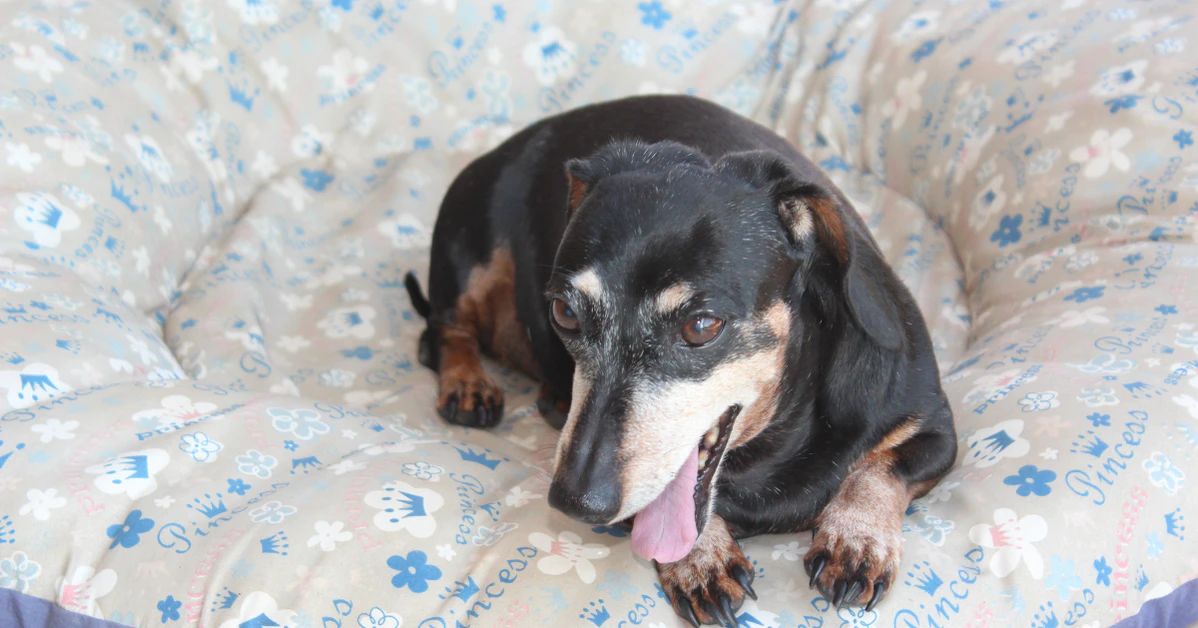
A little panting at night is usually fine if your dog is warm, just settled down from play, or mildly stressed by a noise. It’s a different story if the panting is heavy, doesn’t stop, or comes with coughing, pale gums, weakness, or your dog struggling to get comfortable. That pattern needs a vet’s eyes on it soon.
This article is for informational purposes and is not a substitute for professional veterinary advice. If your dog is struggling to breathe, has pale or blue gums, or collapses, seek emergency veterinary care immediately.
A dog panting at night in bed can pull you right out of sleep and straight into worry. Most of the time, there’s a simple explanation. Sometimes there isn’t, and catching that early matters. This guide walks through the common causes, the warning signs worth acting on, and simple ways to help your dog settle back down.
The Emergency Red Flag Checklist
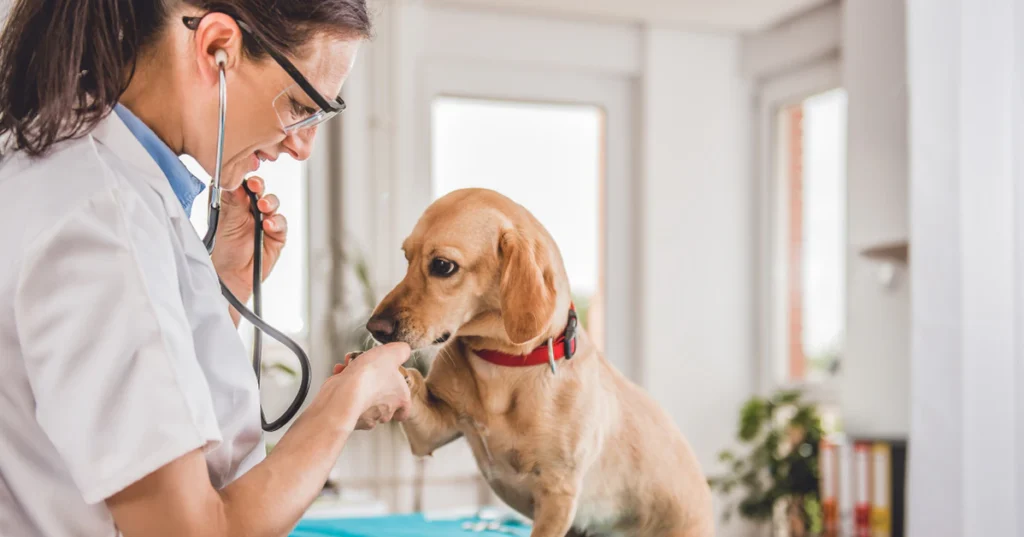
Some signs mean you stop reading and act. If your dog shows any of these, call an emergency vet right away:
- Pale, white, or blue gums
- Collapsing or struggling to stand
- Breathing that looks labored, with the belly heaving
- A cough that won’t stop
- Total unwillingness to lie down or get comfortable
- Seizures or loss of consciousness
Early Signs of Heart Failure
Heart failure can be harder to catch early, since the signs build slowly. Watch for a cough that shows up at night or after exercise, pacing or trouble settling before bed, getting tired faster on walks, and panting that happens even when your dog is resting quietly. None of these alone means heart failure for certain. Together, especially in an older dog, they’re worth a vet visit.
If You Suspect Heatstroke
Heatstroke needs fast action, but the order matters. The American Veterinary Medical Association is clear on this: cool your dog first, then get to the vet. Don’t skip the cooling step just to drive faster.
Here’s how to do it safely:
- Move your dog to a cooler spot.
- Wet them down with cool water, not ice-cold water.
- Keep air moving with a fan if you can.
- Call your vet or head to the clinic once cooling has started.
Avoid ice water or ice packs. Cooling a dog too fast can shock their system and make things worse, not better. Gentle and steady wins here.
For more on recognizing and responding to heatstroke, the AVMA’s pet first aid guide is a solid reference to keep handy.
How to Check Your Dog’s Breathing at Home
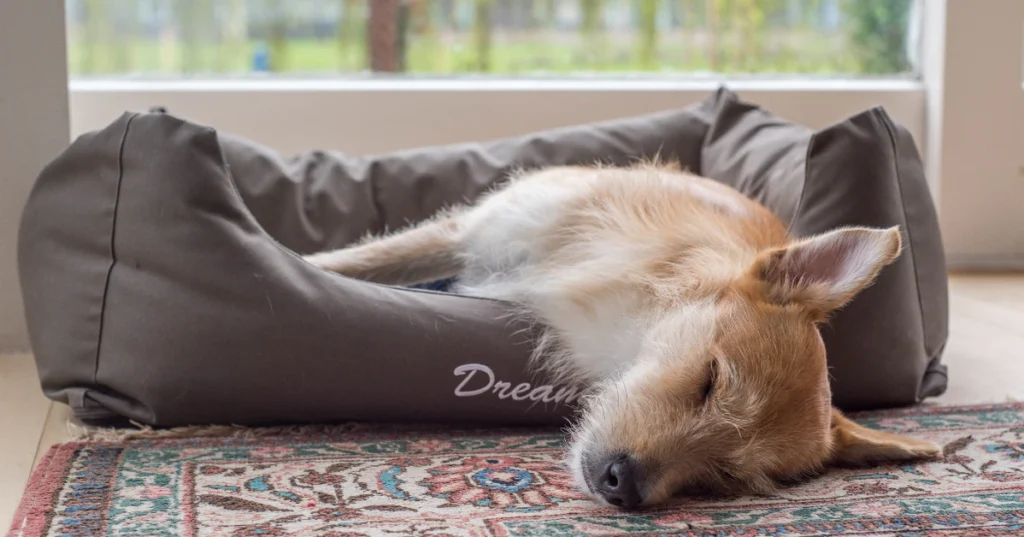
Guessing whether your dog is panting “too much” is hard. Your eyes and ears can only tell you so much, especially at 2 a.m. Veterinary cardiologists use a simple tool instead: counting breaths per minute while a dog is fully asleep.
This is called the Sleeping Respiratory Rate, or SRR, and you can do it yourself.
Here’s how:
- Wait until your dog is fully asleep, not just resting with eyes closed.
- Watch their chest or belly rise and fall. Count how many breaths happen in 30 seconds.
- Multiply that number by 2. That’s the breaths per minute.
What counts as normal:
According to veterinary cardiology data, a normal sleeping respiratory rate falls between 15 and 30 breaths per minute. A rate that consistently stays above 30, especially if it keeps climbing night after night, is a signal to call your vet.
This matters most when your dog is panting at night for no clear reason. No heat, no stress, no recent exercise. A real number gives you something solid to act on, instead of just a feeling that something’s off.
Why Is My Dog Panting at Night?
Once you’ve ruled out an emergency, the next step is figuring out what’s actually going on. A few common causes show up again and again, and each one tends to have its own pattern.
| Cause | How It Looks or Sounds | Other Signs to Watch For |
| Stress or anxiety | Panting with wide eyes, pacing, or an unsettled dog that won’t lie still | Lip licking, yawning, tucked tail, whining |
| Heat | Steady panting, often after a warm day or heavy bedding | Seeking cool floors, lots of water drinking |
| Pain | Panting paired with trouble getting comfortable or shifting positions often | Limping, stiffness, reluctance to be touched |
| Heart or medical issue | Panting at rest, with no clear trigger, sometimes worse lying down | Coughing, tiring easily, pale gums |
When Panting Comes With Lip Licking
Dogs talk with their bodies more than their mouths. Lip licking, yawning when they’re not tired, and panting that isn’t tied to heat often show up together. Vets call this cluster of behaviors “calming signals.” They’re small signs a dog uses to self-soothe when something feels off.
So if your dog is panting at night and licking their lips, it’s usually not two separate issues. It’s one stress response showing up in two ways. A loud storm outside, a change in routine, or even a new piece of furniture can set this off. It should ease once whatever is bothering them passes.
Panting When It’s Not Hot
This is one of the more confusing patterns for owners. The room feels cool, nothing happened before bed, and yet the panting continues. When heat clearly isn’t the cause, it’s worth looking at the stress and pain columns in the table above first. If neither fits and the panting keeps happening, that’s when a vet visit makes sense.
A Note on Flat-Faced Breeds
Pugs, French Bulldogs, and other flat-faced breeds don’t cool themselves as efficiently as longer-nosed dogs. Their airways are simply built differently. Because of this, these breeds often run a bit higher on the “normal” pant scale than other dogs, even on an ordinary night. That doesn’t mean heavy or labored panting should be ignored in these breeds. It just means their baseline sits a little higher than, say, a Labrador’s.
Medication, Steroids, and Panting
It’s easy to forget a new prescription when you’re staring at a panting dog at 3 a.m. But a recent medication change is one of the most overlooked causes of sudden nighttime panting.
If your dog recently started prednisone or a similar corticosteroid, for allergies, pain, or an immune condition, panting is one of the most common side effects. It usually shows up alongside increased thirst and more frequent trips outside to pee.
This kind of panting is dose-dependent. Higher doses tend to cause more noticeable panting, and it typically fades as your vet lowers the dose over time.
What to do:
- Mention the panting to your vet, even if it seems minor.
- Don’t stop the medication on your own. Steroids need to be tapered off slowly, and stopping abruptly can cause serious problems.
- Keep track of when the panting started compared to when the medication began. That timeline helps your vet sort out what’s going on.
Specific Nighttime Panting Scenarios
A few symptom combinations come up often enough that they deserve their own look.
Panting and Drinking a Lot of Water
If your dog is panting at night and also drinking noticeably more water than usual, heat probably isn’t the explanation. This combination can point toward conditions like Cushing’s disease, kidney problems, diabetes, or steroid medication. None of these are something to diagnose at home. If you’ve noticed both panting and increased thirst sticking around for more than a day or two, it’s worth getting bloodwork done.
Panting Inside the Crate
Crates can quietly become too warm, especially if they’re placed near a heating vent, a radiator, or a window that gets afternoon sun. Check where the crate sits and whether it stays noticeably warmer than the rest of the room.
Confinement itself can also be the trigger. Some dogs feel anxious when closed in, particularly if the crate is new or they’re not used to being left alone in it. If panting only happens in the crate and settles down once your dog is out, anxiety is a likely cause.
Panting With Shaking or Constant Licking
Panting combined with shaking or nonstop licking usually points to something more than mild stress. Shaking at night can be a sign of pain, arthritis flaring up as a dog lies still for the first time all day is a common trigger. Constant licking, especially of paws or a specific body part, can also signal localized pain or significant anxiety.
Either way, this combination is a good reason to call your vet rather than wait it out. It’s not something to self-diagnose, and catching pain early makes it easier to manage.
What Not to Do
When you’re worried and it’s the middle of the night, it’s easy to make things worse with good intentions. A few mistakes come up often enough to call out directly.
- Don’t use ice water or ice packs to cool your dog down. Studies on cooling methods show that overly cold water can shock the body and actually cause more harm than slow, steady cooling with cool (not ice-cold) water.
- Don’t withhold water out of fear they’ll gulp too much. Let your dog drink freely in small sips. Blocking access to water doesn’t help and can add unnecessary stress.
- Don’t write off heavy panting as “just old age.” In senior dogs, new or worsening panting is often the first visible sign of arthritis pain, cognitive decline, or early heart disease. It’s worth a conversation with your vet rather than an assumption.
Frequently Asked Questions
When should I worry about dog panting at night?
Worry if your dog’s sleeping respiratory rate stays above 30 breaths per minute, their gums look pale, or the panting comes with a cough. These signs point toward something that needs a vet’s attention rather than a wait-and-see approach.
How to calm dog panting at night?
Start by removing whatever might be stressing your dog, whether that’s noise, a warm room, or a new change at home. Cooling the room and keeping a calm bedtime routine are some of the simplest dog panting at night remedies for anxiety-driven cases.
What are the first signs of heart failure in dogs?
A cough that shows up at night, pacing before bed, and a resting respiratory rate that creeps above 30 breaths per minute are commonly reported early signs. These are worth mentioning to your vet, especially in older dogs.
Why is my dog panting while laying down in bed?
It could be as simple as trying to find a comfortable position if they’re sore, or the room being a bit too warm. In some cases, especially with no clear trigger, it reflects extra effort from the heart and deserves a vet check.
What does stress panting look like?
Stress panting usually comes with other calming signals, like whale eye (when the whites of the eyes show), a tucked tail, lip licking, or pacing. These signs together paint a clearer picture than panting alone.
How long is too long for a dog to be panting?
If panting continues after the heat or stressful situation has clearly passed, or if the sleeping respiratory rate stays above 30 breaths per minute, it’s time to call the vet.
What is the 3-3-3 rule for dogs with anxiety?
This one gets misunderstood a lot online. The 3-3-3 rule actually has nothing to do with managing anxiety or panting. It’s a guideline for newly adopted dogs: 3 days to decompress, 3 weeks to settle into a routine, and 3 months to fully bond with their new family. It’s not a clinical tool for panting or anxiety symptoms.
How to cool down a panting dog at night?
Move your dog to a cooler room or a cool floor, run a fan, and offer cool (not ice-cold) water. Avoid ice packs or very cold water, since cooling too fast can do more harm than good.
This article is for informational purposes and is not a substitute for professional veterinary advice. If your dog is struggling to breathe, has pale or blue gums, or collapses, seek emergency veterinary care immediately.
Conclusion
Nighttime panting is unsettling, but most of the time it has a simple, manageable cause. The key is knowing which signs mean “wait and watch” and which mean “call the vet now.” Keep an eye on your dog’s breathing rate, note any recent medication changes, and trust your gut if something feels off. When in doubt, a quick call to your vet is always the safer choice.