
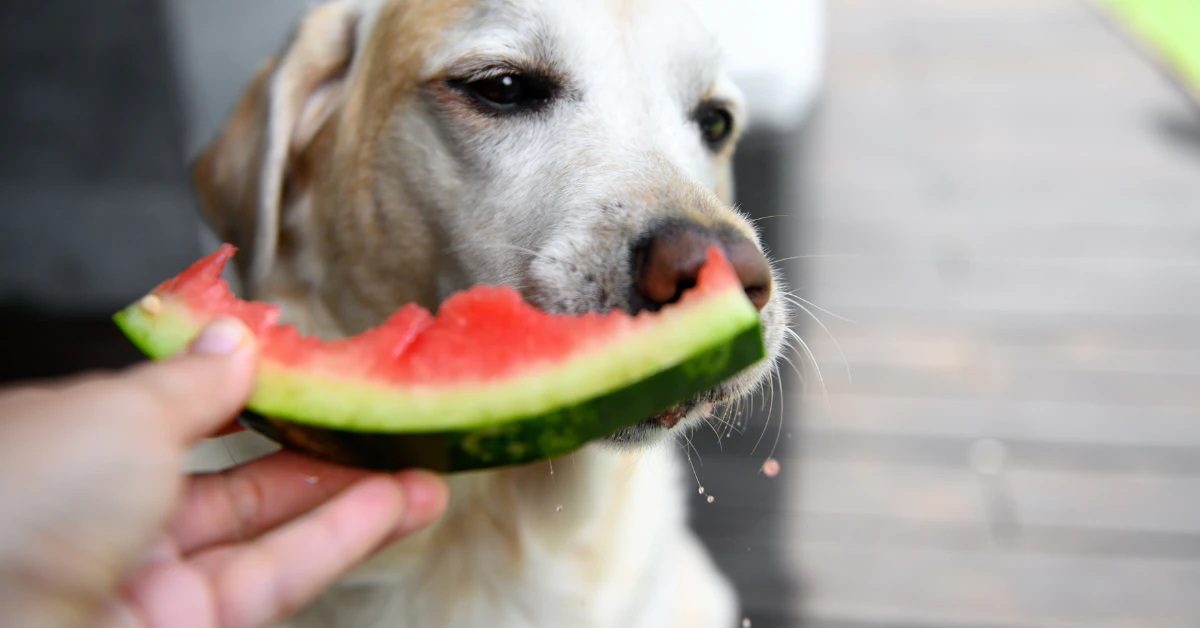
Watermelon rind is not something you should feed your dog on purpose. The pink, juicy flesh is safe and even healthy in small amounts, but the rind is a different story. It is tough, hard to digest, and can be a choking hazard. In worse cases, it can cause a blockage in your dog’s gut.
If your dog grabbed a small piece of rind that fell on the ground, try not to panic. This usually just leads to a bit of an upset stomach. But rind should never be something you hand your dog on purpose, and it is worth keeping an eye on your pup for the next day just in case.
The Watermelon Breakdown: Flesh, Seeds, and Rind

A whole watermelon actually has three different parts, and they are not all treated the same way. Here is how they stack up.
| Part | Safe for dogs? | Why |
| Pink flesh | Yes, in small amounts | About 92% water, around 50 calories a cup, and packed with vitamins A, B6, and C, plus potassium |
| Seeds | No | Can cause choking or block the gut, especially in small dogs |
| Rind (outer skin) | No | Tough and fibrous, hard to digest, can cause stomach upset or a blockage |
| Watermelon-flavored treats or drinks | No | Often loaded with added sugar or artificial sweeteners, not real fruit |
The line between “rind” and “flesh” is not as sharp as people think. If you look closely at a slice, there is a pale green layer sitting right between the pink flesh and the dark green skin. This lighter inner layer is softer and less fibrous than the rest of the rind.
The real danger is the tough, dark green and white outer skin. This is the part that is hardest to chew and digest, and it is the piece most likely to cause choking or get stuck in your dog’s gut. When you are prepping watermelon for your dog, the safest move is still to cut well past that pale green zone and stick to the pink flesh only.
The Real Risks: Why Watermelon Rind is Dangerous

It helps to understand that watermelon rind is not poisonous to dogs. The danger is mechanical, not toxic. Think of it less like a food hazard and more like swallowing a tough, fibrous chunk your dog’s body simply cannot break down.
Raw rind is dense and hard to chew properly. Dogs often do not grind it down the way they should before swallowing, which leaves large pieces sitting in the stomach or gut. From there, two things can happen. The rind can cause ongoing stomach upset, like vomiting or diarrhea. Or, in more serious cases, a piece can get stuck and cause a blockage that needs emergency treatment.
Puppies and small dog breeds face a bigger risk. Their digestive tracts are narrower than an adult or large dog’s, so even a small piece of rind has less room to pass through safely. What might cause mild discomfort in a Labrador could cause a full blockage in a Chihuahua or a young puppy still growing into their body.
There is also a chewing risk worth mentioning. Some owners hand their dog a chunk of rind to gnaw on, treating it like a cheap chew toy. This is not a good idea. The outer skin is hard enough that aggressive chewing can crack or fracture a tooth, on top of the choking and blockage risks already covered.
Watch for these signs of a possible blockage after your dog eats rind:
- Vomiting
- Diarrhea
- A painful or tender belly
- Not wanting to eat
- Low energy or acting unusually tired
This article is not a substitute for veterinary advice. If your dog exhibits signs of distress, contact your veterinarian or an emergency clinic immediately.
What to Do If Your Dog Swallowed Watermelon Rind

A small bite of rind that your dog grabbed off the ground is usually not an emergency. Most dogs pass small pieces without any trouble. But the next day or two still matter, so it helps to know what to watch for.
Hours 1 to 6: Stay calm and watch closely
Take away any remaining rind right away so your dog cannot eat more. Then just keep an eye on them. Mild drooling or one episode of vomiting soon after eating is not unusual and does not always mean something serious is happening.
Hours 6 to 24: Watch for these signs
Check in on your dog through the day and night. Call your vet if you notice:
- Vomiting more than once
- Diarrhea
- A belly that seems sore or tender when touched
- Your dog skipping meals or losing interest in food
- Low energy, or seeming unusually tired or withdrawn
Hours 24 to 48: Don’t let mild symptoms drag on
If your dog still is not acting like themselves after a full day, do not wait it out. A piece of rind stuck in the gut does not always cause dramatic symptoms right away. Sometimes it just looks like your dog is “a little off” for a day or two before things get worse.
When to go straight to the vet or an emergency clinic
Skip the wait-and-see approach if your dog is repeatedly vomiting, cannot keep food or water down, has a swollen or painful belly, or seems weak or collapsed. These can be signs of a full blockage, which is a medical emergency.
It is worth knowing what is at stake financially too. According to Embrace Pet Insurance, surgery to remove an intestinal blockage can cost anywhere from $2,000 to $6,000 or more. That is a good reason to call your vet early if something feels wrong, rather than waiting to see if it gets worse on its own.
This article is not a substitute for veterinary advice. If your dog shows any of the signs above, contact your veterinarian or an emergency clinic right away.
Can vs. Should: Is Any Form of Rind Safe?
Just because a big dog might be able to swallow and pass a piece of rind does not mean it is a good idea. This is really the heart of the question. Even if the odds are in your dog’s favor, you are still rolling the dice on a choking hazard or a trip to the emergency vet. The flesh gives your dog the same taste and the same cool, refreshing treat, without any of that risk. There is no real upside to pushing your luck with the rind.
What about freezing it?
Some owners wonder if freezing watermelon rind makes it safer, maybe thinking the cold softens it somehow. It does not. Freezing actually makes the rind harder and more solid, which can turn it into an even tougher chewing and choking hazard, not a safer one. If you want to freeze a treat for your dog, stick to frozen chunks of the pink flesh instead.
What about store-bought pre-cut fruit cups?
Grabbing a pre-cut watermelon cup from the store might seem like an easy shortcut, but it comes with its own risk. These containers are often prepped on shared cutting boards and with shared knives that may have touched onions, garlic, or other foods that are harmful to dogs. Unless you are cutting the watermelon yourself, you cannot be sure what else that piece of fruit came into contact with.
Even safe watermelon has a limit
Watermelon flesh is a treat, not a meal replacement, and that matters even when you are doing everything right. All treats combined, including watermelon, should stay under 10% of your dog’s daily calorie intake. That means watermelon is fine as an occasional snack, but it should not become a daily habit.
Safe Alternatives and Toxic Fruits to Avoid

Watermelon rind is not the only fruit skin dog owners wonder about. The good news is that most thin fruit skins are fine. A thin slice of apple skin or a piece of cucumber skin is generally okay for dogs in small amounts, since they are soft and easy to digest. Watermelon rind is different because it is thick, tough, and fibrous all the way through, which is what makes it a real hazard instead of a minor one.
It also helps to know that not every fruit risk works the same way. Watermelon rind is a mechanical problem. It can choke your dog or get stuck in their gut, but it is not poisonous.
Grapes and raisins are a completely different story. These are truly toxic to dogs, in any amount and in any form, including raisins baked into bread or cookies. Even a small handful can lead to acute kidney failure. There is no known safe amount, so grapes and raisins should never be given to dogs on purpose, and any accidental ingestion is worth an urgent call to your vet. You can read more on this from the ASPCA’s guide on toxic foods for pets.
A quick note on sourcing: the advice in this article comes only from verified veterinary and animal health sources. You may come across other blogs citing specific survey numbers about rind-related vet visits. We could not verify those claims against any real study or veterinary organization, so we left them out entirely. When it comes to your dog’s safety, it is better to stick with confirmed facts than catchy statistics.
Frequently Asked Questions
Is watermelon a laxative for dogs?
Not in a formal sense, but it can have a similar effect if your dog eats too much. Watermelon is mostly water, and the rind adds a heavy dose of tough fiber on top of that. Too much of either can lead to loose stool or diarrhea. This is more about overfeeding than watermelon acting as a true laxative.
How much watermelon rind is too much for a dog?
Here is the honest answer. There is no safe amount of rind to give your dog on purpose. This is not like counting calories or measuring out a portion. The risk comes from the rind itself getting stuck or causing a blockage, not from eating “too much” of it. Because of that, the real rule is simple: zero rind, on purpose, ever.
Is watermelon ok for dogs to eat?
Yes. The seedless, rind-free pink flesh is a safe treat for most dogs in small amounts. It is hydrating, low in calories, and has vitamins your dog can benefit from. Just remember it should stay an occasional treat, not a daily habit.
What’s the most toxic fruit for dogs?
Grapes and raisins. These are far more dangerous than watermelon rind because they are actually poisonous to dogs, not just a choking or blockage risk. Even a small amount can lead to kidney failure.
What fruit cannot be fed to dogs?
Grapes and raisins top this list. There is no known safe dose for dogs, which means even a few grapes or a small handful of raisins can be dangerous. This applies to all types, including raisins hidden in baked goods like cookies or bread. If your dog eats any grapes or raisins, it is worth contacting your vet right away rather than waiting to see what happens.
Conclusion
Watermelon itself is a good summer treat for your dog. The pink flesh is safe, hydrating, and even has some nutrients your dog can use. The rind is where things change. It is not poisonous, but it is tough on your dog’s gut and can lead to choking or a blockage that needs emergency care. The safest habit is simple: cut off the rind, skip the seeds, and offer your dog the flesh in small amounts as an occasional treat, not a daily one. If your dog does grab a bite of rind, keep an eye on them for the next day or two, and call your vet if anything seems off.