
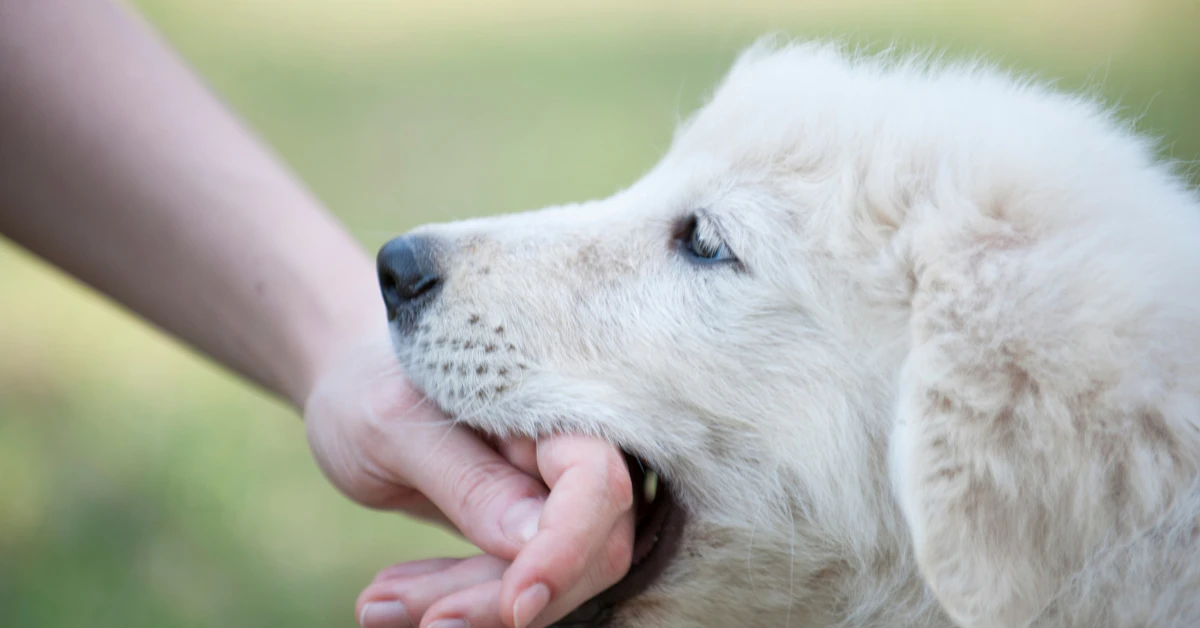
To stop a puppy from biting you, stay calm and make biting boring instead of exciting. The moment those teeth touch your skin, stop moving, say nothing, and pull your hands away slowly. Then hand your puppy a chew toy right away. Repeat this every single time. Consistency teaches your puppy that skin isn’t for biting, but toys are fair game.
If your hands look like a pincushion right now, you are not doing anything wrong. You are raising a puppy.
Torn sleeves, scratched arms, and a puppy who seems to treat your body like a chew toy can wear anyone down. Many new owners start to wonder if something is actually wrong with their dog.
Here’s the relief part. According to the ASPCA, most puppy biting is normal, playful, and exploratory. It is not a warning sign of future aggression. Puppies use their mouths the way toddlers use their hands, to touch, test, and learn about the world around them.
This phase is frustrating, but it is temporary and very fixable. Below is exactly how to get through it.
Why Is My Puppy Biting Everything? (The Teething Timeline)
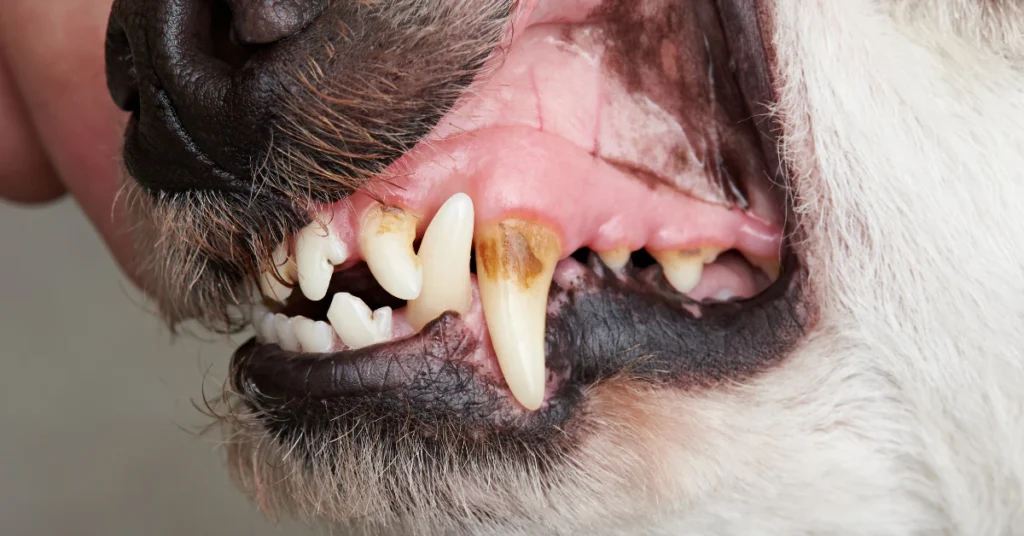
Your puppy isn’t biting everything because something is wrong with them. Their mouth is going through a lot of change, and biting is how they cope with it.
Start with bite inhibition. This is a dog’s ability to control how hard it bites down. Puppies are not born with this skill. According to the ASPCA, a puppy who hasn’t learned bite inhibition doesn’t understand that human skin is far more sensitive than a littermate’s fur. So when your puppy chomps down hard, it isn’t being mean. It simply hasn’t learned its own strength yet.
Teething makes this worse. Sore, itchy gums push puppies to chew on anything they can reach, including your hands and feet. Knowing roughly where your puppy is in this process can help you stop guessing and start planning.
Here’s what the AKC’s teething timeline looks like:
- 2 to 4 weeks old: Baby teeth start coming in
- 5 to 6 weeks old: All baby teeth (about 28 of them) are usually in
- 12 to 16 weeks old: Baby teeth begin falling out as adult teeth push through
- Around 6 months old: A full set of 42 adult teeth is usually in place
Notice that the hardest biting (12 to 16 weeks) overlaps almost exactly with another major event: your puppy’s critical socialization window. The AVMA notes this window runs from about 3 to 14 weeks of age, the stretch when puppies are most open to learning what’s normal and safe. This is also exactly when owners tend to bring puppies home.
In other words, you aren’t just living through peak teething. You’re also doing some of the most important training of your puppy’s life at the same time. That combination is a lot, but it also means the intense biting phase and your training window line up. The work you put in now pays off fastest during this stretch, not later.
The “Catch It Before It Happens” Checklist
The best time to stop a bite is before it happens. Most puppies give off clear signals right before they start mouthing, if you know what to watch for.
The ASPCA points to a few common physical tells that show up right before mouthing starts. Keep an eye out for:
- Dilated pupils. Your puppy’s eyes look darker or wider than usual.
- Repeated jumping. Bouncing up at you again and again, not just once.
- Leash tugging or grabbing. Your puppy starts mouthing or pulling at the leash during walks.
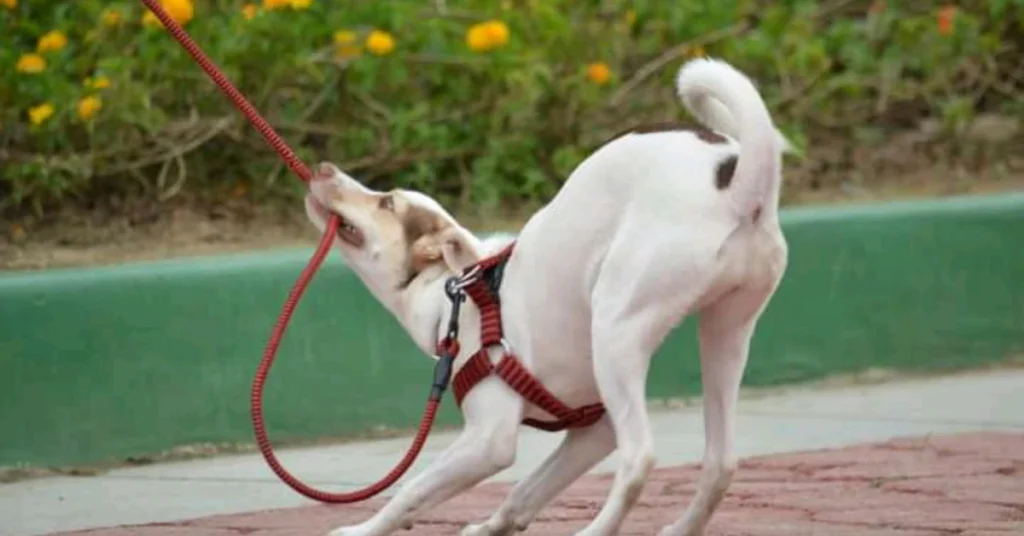
That last one matters a lot if leash biting is your main headache. Puppies often grab the leash when they’re overstimulated, not when they’re calm. A loose, relaxed puppy rarely chomps down on a leash out of nowhere. It usually builds up first, more jumping, more tugging, more darting around.
Once you spot these signs, step in early instead of waiting for teeth to land. If your puppy starts eyeing the leash and bouncing on a walk, stop moving for a moment, redirect them with a cue they know, or offer a toy to hold instead. If jumping is ramping up before playtime, ask for a sit before you engage.
Catching arousal on the way up is much easier than calming a puppy down once they’re already in full bite mode. A few seconds of attention to these cues can save you a sore hand later.
The 4-Step Plan to Stop Puppy Biting (And Why Yelping Fails)
Most advice on puppy biting boils down to one method. It works, but only if you do it the same way every time.
Freeze. The second your puppy’s teeth touch skin, stop moving your hand. A moving hand is a fun, chase-worthy target. A still one is boring.
Make a short sound. A quick, high-pitched “ouch” mimics the yelp a littermate would give during rough play. It should be brief, not dramatic.
Withdraw, don’t engage. Pull your hand away slowly and calmly. Don’t pull it back fast, since that can turn into a game of chase.
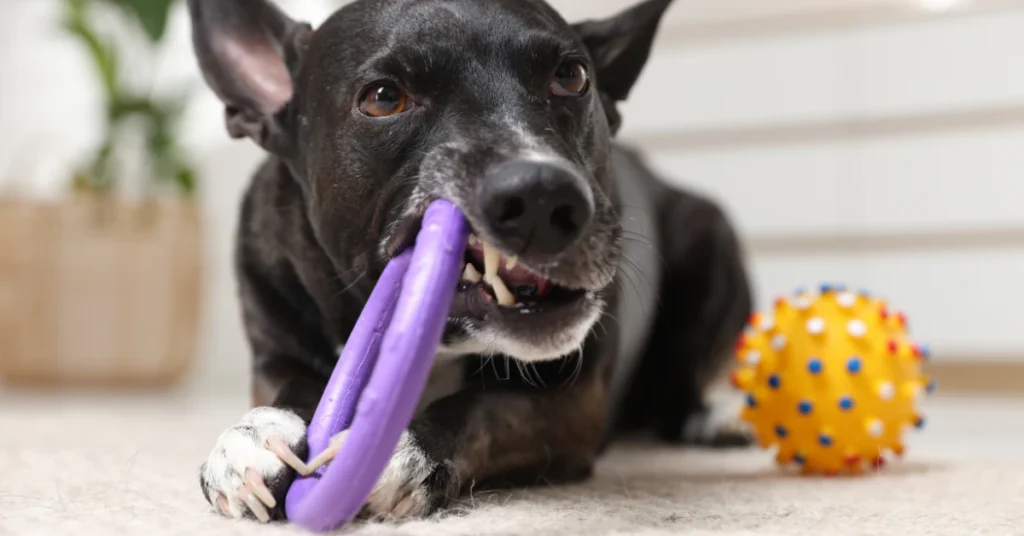
Redirect to something your puppy is allowed to bite. Hand over a chew toy right after things settle down, not the instant the bite happens.
That last gap matters more than it sounds.
The toy trap. If you hand over a toy the moment your puppy bites your skin, you can accidentally teach them that biting makes a toy appear. Over time, biting becomes the cue they use to ask for one. Instead, wait a beat after the withdrawal so biting and “toy shows up” aren’t linked back to back.
Why yelping sometimes backfires. For calmer puppies, a yelp works well. But for high-energy puppies, a loud “ouch,” a sharp “no,” or flailing hands can actually look like more fun. To your puppy, any sudden noise or movement from you is still attention, and attention is still a reward. If your puppy bites harder or gets more excited right after you yelp, that’s your sign this particular puppy needs the quiet version: freeze, pull away, stay silent, and leave the room for a few seconds if needed.
What never to do. The ASPCA is clear on this point: physical corrections, like holding your puppy’s muzzle shut, tapping or smacking its nose, or shouting, don’t teach bite control. They can scare your puppy, damage the trust between you, and actually make biting worse, since a frightened puppy may bite out of self-defense instead of play.
Common mistakes to avoid:
- Mixing five different tactics in one day instead of sticking with one method
- Giving a toy immediately after a skin bite, every single time
- Raising your voice or using hands to physically stop the bite
- Expecting results after one or two tries instead of days of repetition
This method asks for patience more than perfection. A few consistent days usually beat weeks of switching strategies.
Biting Context Guide: Ankles, Leashes, and Other Dogs
Not all puppy biting looks the same, and it doesn’t all need the same fix. Here’s a quick reference for some of the most common situations:
| Bite Context | Likely Cause | The Fix |
| Nipping at ankles or heels | Overstimulation, often seen in herding-type breeds chasing movement | Stop walking and stand still until your puppy settles, then reward calm feet |
| Biting hands during cuddles or petting | Overexcitement or testing boundaries | Pause the petting, withdraw your hand, resume only when calm |
| Grabbing or tugging the leash | Overstimulation on walks | Stop moving, redirect with a known cue, or offer an approved tug toy |
| Mouthing during rough play | Normal play arousal running too high | Pause the game for a few seconds, then restart at a calmer pace |
| Biting other puppies or dogs too hard | Still learning bite inhibition with other dogs, not just people | Let the other dog correct with a yelp or a step away; supervise closely |
| Biting when overtired | Puppy “witching hour” from lack of rest | Skip more play and offer a nap or quiet crate time instead |
A quick note on ankle-nipping. Some puppies, especially herding-type breeds, seem drawn to chase and nip at moving feet or ankles. This is often linked to natural herding instinct rather than aggression, though every puppy is an individual, so treat it as a tendency to manage, not a guaranteed trait of any one breed.
That brings up an important point from the AVMA: breed alone does not determine whether a dog will bite. What matters more is that individual dog’s history, socialization, and behavior. So while some breeds may show more nipping or chasing tendencies, the real work is still the same for every puppy, consistent redirection and patience.
When it comes to biting other dogs during play, a little mouthiness is normal and often self-correcting. Dogs are good teachers for each other. If your puppy bites too hard, a well-socialized playmate will usually yelp or walk away, which teaches the same lesson you’re teaching at home. Just stay close enough to step in if play gets too rough or one-sided.
The 8-Month Relapse: Dog Adolescence is Real

If your puppy had biting mostly under control and it suddenly came back around 8 or 9 months old, you didn’t do anything wrong. This is a real, documented stage.
Researchers at Newcastle University studied dogs during this age range and found something surprising. Puppies were noticeably less likely to respond to commands from their own owners at 8 months than they were at 5 months, even though they responded fine to commands from someone else. The researchers compared it directly to human puberty, a hormonal, temporary phase that affects behavior and listening, not a sign your dog has forgotten its training.
This matters because biting, jumping, and other “puppy” behaviors can resurface during this stretch, right when owners expect things to be getting easier. It can feel discouraging, especially if you already put in weeks of consistent work.
Here’s why pushing through matters. According to a study published in the Journal of Applied Welfare Science, dogs between about 8 months and 2 years old are surrendered to shelters more often than puppies or almost any other age group. This is often the exact moment owners feel like they’re failing, when really, their dog is just going through a known, temporary phase.
Staying consistent now, even when it feels like a step backward, is one of the most important things you can do. The training you did earlier isn’t gone. It’s still in there. Your dog just needs you to ride out this stage the same way you rode out the early teething months.
This phase passes. Dogs that make it through adolescence with steady, patient owners typically settle into calmer, more reliable adults.
Red Flags vs. Normal Play: When to Call a Professional
This article provides general behavioral information and is not a substitute for a certified veterinary behaviorist’s assessment. If you’re ever concerned about your puppy’s biting, a professional evaluation is the safest next step.
Most puppy biting is nothing to worry about. But it helps to know what normal looks like so you can spot the difference if something feels off.
According to the ASPCA, playful mouthing usually comes with a loose, relaxed body and no growling or snarling. Think wagging tail, bouncy movement, maybe a “play bow” with front legs down and rear end up. Biting driven by fear or frustration looks and feels different. It can come with a stiff body, growling, snapping, or biting that happens with no play buildup at all, like when your puppy is startled, cornered, or guarding something.
A simple way to think about bite intensity is on a scale:
- Teeth resting on skin, no pressure, just mouthing or exploring
- Light pressure, feels like a pinch, no mark left
- Firm pressure, uncomfortable but skin isn’t broken
- Hard bite that leaves a mark or bruise
- Bite that breaks the skin
Levels 1 through 3 are common in young, untrained puppies and usually improve with the consistent steps covered earlier. Level 4 and especially level 5, particularly paired with growling, stiff body language, or no clear play trigger, are worth bringing up with your vet or a certified trainer.
This isn’t about panic. It’s about taking it seriously early. The AVMA estimates that roughly 4.5 million dog bites happen in the US every year, and most of those involve dogs that were never properly guided through this exact puppy stage. A little extra attention now, while your puppy is small and learning, goes a long way toward preventing bigger problems later.
Frequently Asked Questions About Puppy Biting
At what age do puppies stop biting?
Most puppy mouthing drops off significantly by 6 to 8 months old, as teething ends and bite inhibition develops with consistent training. Some owners see a brief return of mouthing during adolescence around 8 to 9 months, but it typically settles for good by 1 to 2 years with continued consistency.
How do you discipline a puppy from biting you?
Skip the idea of “discipline” in the punishment sense altogether. The method that actually works is simple: freeze the moment teeth touch skin, give a short “ouch” or stay silent if your puppy gets overexcited by sound, withdraw your hand, and redirect to a toy once things calm down. Repeating this consistently teaches the lesson far better than any punishment would.
Should I tap my puppy on the nose when he bites?
No. This is worth saying clearly. The ASPCA warns against physical corrections like nose-tapping, holding the muzzle shut, or slapping, since these can frighten a puppy, damage trust, and actually make biting worse or more defensive.
Do puppies grow out of aggressive biting?
Normal play-biting is something puppies grow out of as teething ends and training takes hold. But biting driven by fear or frustration is a different category, and it doesn’t reliably resolve on its own. If your puppy’s biting comes with growling, stiff body language, or no play buildup at all, a certified veterinary behaviorist can assess what’s really going on. This is general information, not a substitute for professional veterinary advice.
What age is the hardest with a puppy?
Many owners find the early teething stretch around 3 to 4 months especially tough because of intense nipping. But adolescence, roughly 8 months to 1 to 2 years old, is often considered harder from a training standpoint, since dogs at this age show a measurable, temporary drop in how well they respond to commands from their own owners.
Why is my puppy viciously biting me?
“Vicious” is rarely the right word for a puppy. Most hard biting at this age comes from undeveloped bite inhibition, teething pain, or overexcitement, not aggression. True aggression is a distinct pattern, usually paired with growling, stiffness, or fear, and it’s uncommon in young puppies. If you’re genuinely worried, a vet or certified behaviorist can help rule concerns in or out. This isn’t a substitute for professional veterinary advice.
Can a dog be trusted after it bites?
This depends heavily on the individual dog and the context of the bite, not a blanket yes or no. Whether the bite came from fear, pain, overstimulation, or a clearer aggressive pattern changes everything. A professional assessment from a certified veterinary behaviorist is the most reliable way to understand what happened and what to do next. This is general guidance, not a substitute for a professional evaluation.
What is a red flag puppy’s behavior?
Watch for biting paired with growling, snarling, or a stiff body, rather than the loose, relaxed body language of normal play. Biting that happens with no play buildup at all, such as when your puppy is startled, cornered, or guarding food, is also worth paying attention to and discussing with a professional if it continues.
Why does a puppy only bite one person?
This is a common pattern, and it’s usually tied to practical reasons rather than anything deeper. The person a puppy bites most is often the one who handles them the most, plays the most actively, or gets the puppy most excited. It’s a general behavioral observation rather than a sign that something is wrong with that relationship.
Conclusion
Puppy biting feels endless when you’re in the middle of it, but it is a phase, not a life sentence. Your puppy’s sharp teeth, their constant mouthing, and even the frustrating relapse around 8 months are all normal parts of growing up. None of it means your puppy is broken or that you’re failing as an owner.
What actually works is simple and repeatable: freeze when teeth touch skin, pull away calmly, redirect to a toy, and stay consistent even on hard days. Skip the yelling, the nose taps, and the muzzle holds. Watch for the warning signs before a bite happens, and know the difference between normal play and something that needs a professional’s eyes on it.
Give this time. Most puppies settle into gentle, reliable adults with patient, steady guidance, and you’re already doing the right thing by looking for real answers instead of giving up.