
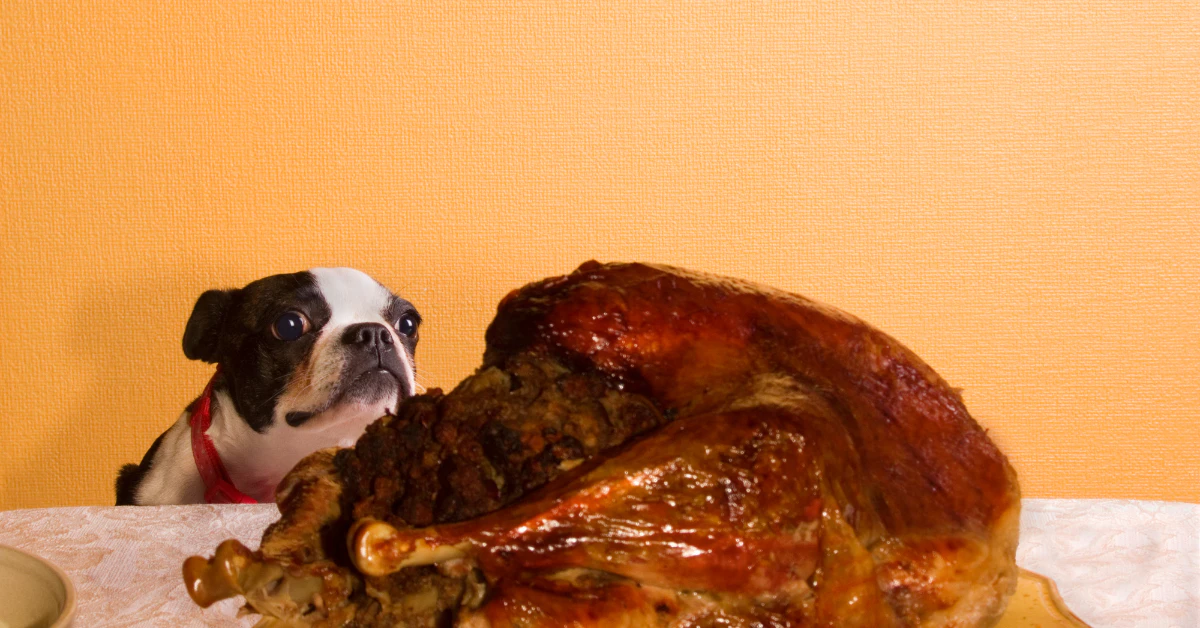
Yes, dogs can eat turkey meat. Plain, fully cooked, boneless, skinless turkey with no seasoning is safe for most dogs in small amounts. Turkey skin, bones, gravy, and seasoned cuts are not safe and can cause real harm, from choking to an upset stomach.
Maybe your dog just grabbed a piece off the counter. Maybe you’re planning your Thanksgiving spread and want to know what’s okay to share. Either way, the short version above covers the basics.
But turkey comes in a lot of forms. Bacon, sausage, deli meat, necks, and ground turkey each carry their own risks. The rest of this guide breaks down exactly what’s safe, what to avoid, and what to do if your dog already ate something they shouldn’t have.
The Thanksgiving Warning: Why Turkey Safety Matters
Turkey itself isn’t the main danger. What comes with it usually is.
The ASPCA Animal Poison Control Center handled more than 451,000 cases in 2024, a 4% jump from the year before. Human food made up a large share of those calls, with garlic, onions, and xylitol topping the list of culprits. These are exactly the ingredients that show up in holiday turkey: seasoned rubs, buttery gravy, and stuffing.
The American Kennel Club has also flagged a real pattern. Vet clinics see a measurable spike in emergency visits around Thanksgiving, tied directly to dogs getting into human food they shouldn’t have.
This isn’t about scaring you away from sharing a bite. It’s about knowing where the actual risk hides. A plain piece of turkey breast is very different from a slice soaked in drippings or seasoned with garlic powder. The meat looks the same. The danger level doesn’t.
Holidays also mean more hands feeding your dog, more food left within reach, and more chances for a mistake. A guest might slip your dog a buttered roll or a turkey leg with the skin still on, not realizing it could cause a problem.
Knowing this ahead of time is what keeps Thanksgiving fun instead of stressful. The next sections walk through exactly which turkey products are safe, which ones to skip, and how to prep turkey the right way.
Which Parts of the Turkey Are Safe? (The “Yes” List)

Plain turkey breast is the safest choice you can offer. It’s lean, it’s high in protein, and most dogs love it.
To prep it safely, follow these steps:
- Cook it fully. The meat should reach an internal temperature of 165°F.
- Skip the seasoning. No salt, garlic, onion, butter, or gravy.
- Remove the skin and bones before serving.
- Cut it into small, bite-sized pieces.
White turkey breast works better than dark meat from the legs or thighs, since dark meat carries more fat.
Portion size matters just as much as prep. Vets recommend that treats, including turkey, make up no more than 10% of a dog’s daily food intake. The other 90% should come from their regular, balanced dog food.
What that looks like depends on your dog’s size:
| Dog Size | Example Breed | Safe Turkey Portion |
| Small (under 20 lbs) | Chihuahua, Yorkie | 1 to 2 small bite-sized pieces |
| Medium (20 to 50 lbs) | Beagle, Border Collie | A few bite-sized pieces |
| Large (50+ lbs) | Labrador, Golden Retriever | A small handful of pieces |
These are general guidelines, not exact measurements. A good rule of thumb is to keep the portion small enough that it feels like a treat, not a meal.
If your dog has health issues like obesity or diabetes, talk to your vet before adding turkey to their diet.
The “No” List: Unsafe Turkey Parts & Products

Not every part of the turkey belongs in your dog’s bowl. Here’s what to leave out.
Bones. This includes legs, wings, and any bone-in cuts. Cooked bones splinter easily and can cause choking, cuts in the mouth or throat, or punctures in the stomach and intestines. Raw bones carry a smaller risk of splintering, but they can still cause blockages or crack a tooth. Skip bones entirely, cooked or raw.
Skin and fat. Turkey skin is loaded with fat. Too much fat, even in one sitting, can trigger pancreatitis, a painful and serious condition. Watch for vomiting, loss of appetite, or a painful belly if your dog gets into fatty turkey skin.
Processed turkey products. This is where most hidden dangers live:
- Turkey bacon and turkey sausage are high in sodium and often seasoned with garlic or onion.
- Turkey lunch meat and turkey ham are packed with salt and preservatives.
- Turkey hot dogs and turkey burgers usually contain added sodium, spices, and sometimes onion powder.
These products are made for human taste buds, not canine digestion. Even small amounts can add up to a sodium overload.
Here’s a mistake a lot of owners make without realizing it. A store-bought rotisserie-style turkey breast, smoked turkey, or deli turkey might look like plain, simple meat. It’s not. These products are almost always injected or coated with a seasoning blend that includes garlic powder or onion powder, both of which are toxic to dogs. The turkey on your holiday table might actually carry less hidden risk than the “healthy-looking” turkey breast from the deli counter.
| Product | Safe? | Why |
| Turkey bones | No | Choking, splintering, punctures |
| Turkey skin | No | High fat, pancreatitis risk |
| Turkey bacon | No | High sodium, often seasoned |
| Turkey sausage | No | High sodium, often seasoned |
| Turkey lunch meat | No | High sodium, preservatives |
| Turkey ham | No | High sodium, preservatives |
| Turkey hot dogs | No | Sodium, spices, possible onion |
| Turkey burgers | No | Sodium, spices, possible onion |
If your dog eats something from this list and starts showing symptoms like vomiting, diarrhea, or lethargy, call your vet. This isn’t a substitute for professional veterinary advice, so when in doubt, reach out to your vet directly.
Quick-Reference: Turkey Cuts Safety Table
Short on time? Here’s the full picture in one table.
| Turkey Cut/Product | Status | Why |
| Plain turkey breast | Safe | Lean, low fat, no seasoning needed |
| Turkey necks | Ask Vet | Cooked is fine; raw can carry Salmonella |
| Turkey bones | Unsafe | Splinter risk, choking, punctures |
| Turkey skin | Unsafe | High fat, pancreatitis risk |
| Turkey bacon | Unsafe | High sodium, often seasoned |
| Turkey sausage | Unsafe | High sodium, often seasoned |
| Turkey deli meat | Unsafe | High sodium, preservatives |
| Turkey ham | Unsafe | High sodium, preservatives |
| Turkey hot dogs | Unsafe | Sodium, spices, possible onion |
| Turkey burgers | Unsafe | Sodium, spices, possible onion |
When in doubt, plain and unseasoned is always the safer choice.
Turkey vs. Chicken: The Allergy Debate
If your dog has a chicken allergy, you’ve probably heard that turkey is the safer swap. That’s mostly true, but the reason behind it gets misunderstood a lot.
Turkey isn’t hypoallergenic by nature. It works for allergic dogs because of something vets call a “novel protein.” A novel protein is simply one your dog hasn’t eaten much before. The less a dog’s immune system has been exposed to an ingredient, the less likely it is to react to it.
This idea is the backbone of how vets actually diagnose food allergies. According to VCA Hospitals, vets use elimination diet trials built around novel proteins to figure out exactly what’s causing a dog’s symptoms. A 2025 study in Frontiers in Veterinary Science confirms this is considered the gold standard test for food allergies in dogs, usually run over six to twelve weeks.
Here’s the part most owners don’t expect. Turkey isn’t even one of the most common dog allergens. According to veterinary dermatologists at Veterinary Skin and Ear, beef tops the list as the most common food allergy trigger in dogs, followed by dairy, then chicken. Turkey doesn’t make that top three at all.
So if your dog reacts badly to chicken, turkey can be a smart next step, but not because it’s a special “safe” meat. It works simply because it’s new to your dog’s system. Over time, if a dog eats turkey regularly, it could theoretically become less “novel” too.
If you suspect your dog has a food allergy, talk to your vet before switching proteins. This isn’t a substitute for professional veterinary advice, and a proper elimination trial needs vet guidance to work correctly.
The Raw Turkey Neck Debate
If you spend time in raw-feeding communities, you’ve probably seen turkey necks come up a lot. Some owners swear by them as a natural chew and food source. Vets tend to see it differently.
Raw turkey necks can carry Salmonella and Campylobacter, the same bacteria found in other raw poultry. These bugs can make your dog sick, and they can also spread to people in the household who handle the raw meat.
Cooking the neck solves the bacteria problem but creates a new one. Cooked bones turn brittle and splinter easily, which makes them a real choking and puncture risk, the same danger as any other cooked turkey bone.
This puts turkey necks in a gray area. Raw feeding is a personal choice some owners make with their vet’s guidance, often as part of a carefully managed diet. It’s not something to start casually based on an article or a forum post.
If you’re curious about feeding raw turkey necks, talk to your vet first. They can help you weigh the risks based on your dog’s health and your household. This isn’t a substitute for professional veterinary advice, especially when raw feeding is involved.
Emergency Guide: “My Dog Ate the Whole Turkey!”
If your dog just raided the counter and ate a huge amount of turkey, don’t panic yet. Here’s what to watch for and when to act.
Mild symptoms, watch closely:
A small amount of vomiting or loose stool right after a big food raid can happen without being a true emergency, especially if your dog is otherwise acting normal.
Call your vet now if you see:
- Vomiting that keeps happening
- A painful, tense, or bloated belly
- Loss of appetite
- Diarrhea that doesn’t let up
- Tremors or shaking, which can signal mold exposure from spoiled meat
A painful abdomen combined with vomiting and loss of appetite can point to pancreatitis, especially after a large amount of fatty turkey or skin. This needs vet attention right away, not a wait-and-see approach.
If the turkey came from the trash and may have been spoiled or moldy, take it seriously. Mold on food can cause tremors in dogs, which is a true emergency.
This content is for informational purposes and is not a substitute for professional veterinary advice. If you suspect your dog ingested a toxic substance or dangerous bone, contact your vet or the ASPCA Animal Poison Control Center (888-426-4435) immediately.
Frequently Asked Questions
What three meats should dogs avoid?
Bacon, processed or cured meats like sausage and deli meat, and raw or spoiled meat. All three carry risks ranging from high sodium to dangerous bacteria.
Is cooked turkey ok for dogs?
Yes, as long as it’s plain, fully cooked, and free of skin, bones, and seasoning.
Is turkey better for dogs than chicken?
Not inherently. Turkey can help dogs with chicken allergies because it’s often a “novel protein” their body hasn’t reacted to before, not because it’s naturally safer.
What is the healthiest meat for a dog to eat?
There’s no single official “healthiest” meat. Lean, plain-cooked poultry like turkey or chicken is generally easy to digest.
Why can’t dogs eat rotisserie chicken?
It’s usually seasoned with garlic or onion powder and loaded with sodium. The same risk applies to pre-seasoned or smoked turkey.
What human food can I feed my dog every day?
Any human food, including turkey, should stay under 10% of your dog’s daily diet.
My dog accidentally ate old cooked turkey. What should I do?
Watch for vomiting, diarrhea, or tremors. Call your vet if symptoms continue or worsen.
Conclusion
Turkey can be a safe, tasty treat for most dogs when it’s plain, fully cooked, and free of bones, skin, and seasoning. The danger almost never comes from the turkey itself. It comes from what’s added to it, how it’s prepared, or how much your dog manages to sneak. Keep portions small, skip the processed products, and when something feels off, call your vet. That one habit does more to keep your dog safe than any list ever will.


