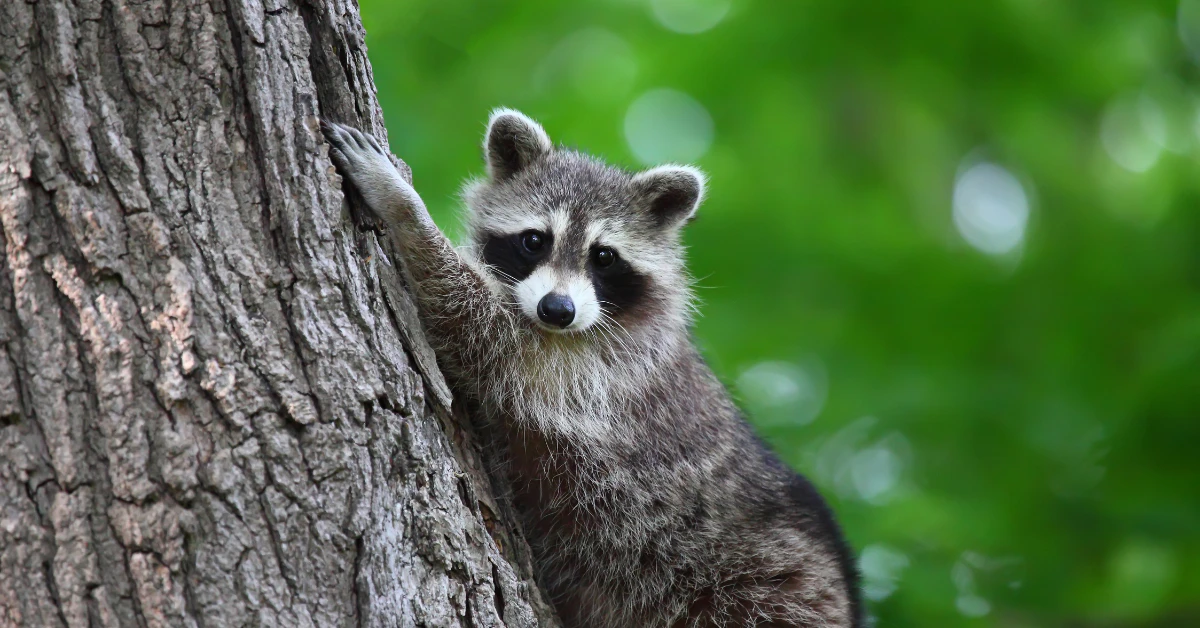
Raccoons as pets are legal in only a handful of US states, and even there you need a strict permit and a licensed breeder, not a wild-caught animal. Most states ban it outright. Vets and wildlife agencies advise against it anyway, because raccoons are wild, undomesticated animals and a rabies vector species. Many become unpredictable or aggressive once they reach sexual maturity around age 1.
Maybe a viral video of a raccoon doing something clever or cuddly sent you here. Or maybe you already have a raccoon kit in a box in your laundry room and you need real answers fast, not fluff. Either way, this guide covers what’s actually legal in your state, what daily life with a raccoon really looks like, and why most veterinary and wildlife professionals urge caution before you commit.
Are Raccoons Becoming Domesticated? What a 2025 Study Really Found
A study published in Frontiers in Zoology in late 2025 looked at nearly 20,000 photos of raccoons from across the US. Researchers at the University of Arkansas at Little Rock, led by Raffaela Lesch, found that raccoons living in cities have snouts about 3.5% shorter than raccoons living in rural areas. A shorter snout is one early sign of what scientists call “domestication syndrome,” the same kind of change seen in the earliest stages of dogs and cats becoming pets.
That sounds exciting, but the researchers were clear about one thing: this does not mean raccoons are ready to be pets. True domestication takes thousands of years of selective breeding, not a few generations of raiding trash cans.
Marcie Logsdon, a veterinarian at Washington State University’s College of Veterinary Medicine, adds an important point for anyone raising one. A raccoon may seem to bond with its caregiver, but that behavior is usually tied to food, warmth, and comfort, not the kind of attachment you’d see in a dog. A raccoon looking cuter in photos does not mean it acts tame at home.
Do Raccoons Make Good Pets? The 1-Year Maturity Turn and Daily Realities
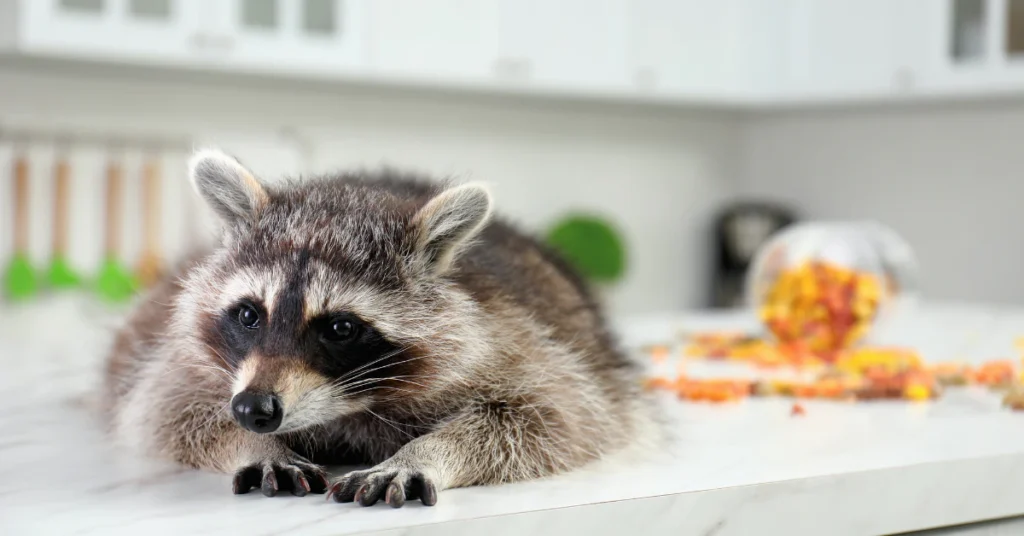
A baby raccoon is easy to fall for. It’s small, curious, and often bottle-fed by hand, which can make it feel like a bonded, trusting pet. That phase does not last.
Veterinary behaviorists at Washington State University’s College of Veterinary Medicine point to a clear turning point: sexual maturity, usually between 6 and 12 months of age. This is when hormones kick in and wild instincts take over, even in raccoons that were hand-raised from a young age. Owners often see sudden biting, territorial guarding, and aggression that wasn’t there a few months earlier. This isn’t bad luck or poor training. It’s a normal biological shift that most owners aren’t prepared for.
Raccoons also cause a lot of damage indoors, and it has nothing to do with bad behavior in the way a badly trained dog misbehaves. Their front paws work almost like human hands, and they’re smart enough to use that skill constantly. Cabinet latches, fridge doors, and door handles are not much of a challenge for them. Add in the fact that raccoons have no natural instinct to use a litter box or respect furniture, and the result is often torn-up drywall, raided kitchens, and chewed or shredded furniture.
If there are other pets in the home, this gets riskier. There are real, documented cases of adult raccoons seriously injuring family dogs, sometimes during what looked like normal play that turned aggressive. Owners who step in to break up the fight have been bitten too. A raccoon’s teeth and claws are built for a wild animal defending itself, not for sharing a living room with a Labrador.
None of this means every raccoon turns violent. But the pattern is common enough that vets and wildlife agencies bring it up again and again.
Raccoon Health Risks, Rabies Laws, and the Vet Access Problem
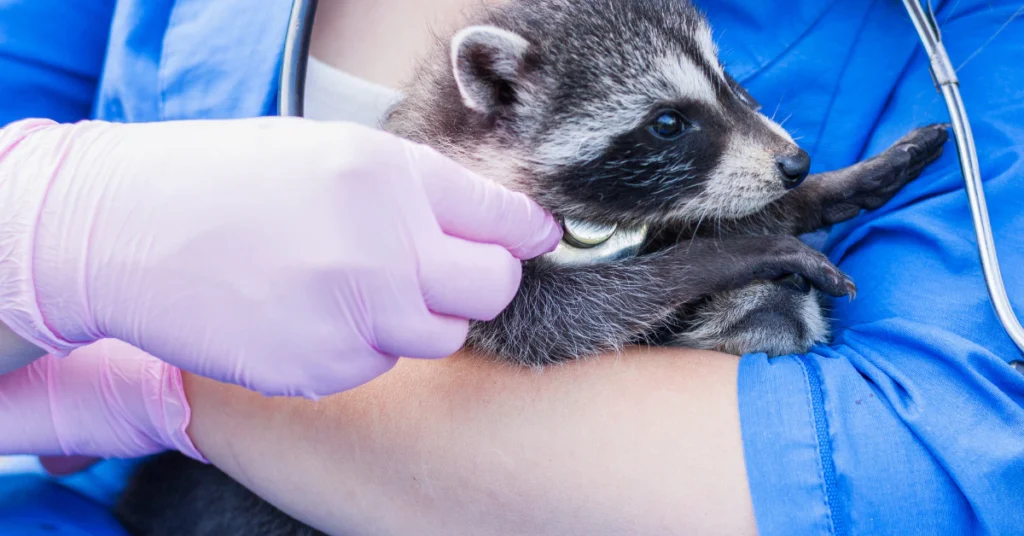
Veterinary & Medical Disclaimer: This guide is for informational purposes only and is not a substitute for professional veterinary care or public health advice. If you or someone else has been bitten or scratched by a raccoon, or exposed to its feces, contact a doctor or your state health department right away.
There’s a legal and medical trap that catches a lot of raccoon owners off guard, and it comes down to one fact: there is no USDA-approved rabies vaccine for raccoons. Raccoons are classified as a rabies vector species (RVS) by the CDC, alongside skunks, foxes, and bats. A vet can give a rabies shot, but it’s considered “off-label,” meaning the law does not recognize the raccoon as protected.
This matters a lot if your raccoon ever bites or scratches someone, whether it’s a guest, a neighbor, or a vet tech. With a dog or cat, a bite usually means a 10-day home quarantine to watch for symptoms. With a raccoon, that option generally isn’t available under state health rules. According to the New Jersey Department of Environmental Protection’s Division of Fish & Wildlife, the usual outcome is euthanizing the raccoon so its brain tissue can be tested for rabies. There’s no in-between option.
Raccoon roundworm, known as Baylisascaris procyonis, is a separate risk. The CDC explains that eggs shed in raccoon feces become infectious within 2 to 4 weeks and can survive in soil for over a year. In humans, an infection can cause severe and sometimes fatal neurological damage.
This risk is more common than most people think. A study by UC Santa Barbara, done with the CDC and published in the journal Emerging Infectious Diseases, tested 150 healthy residents and found that 7% carried antibodies for raccoon roundworm, meaning they’d been exposed without knowing it. A separate University of Georgia study found even higher exposure rates among wildlife rehabilitators who handle raccoons regularly.
Raccoons as Pets Legal States: 2026 State-by-State Comparison Table
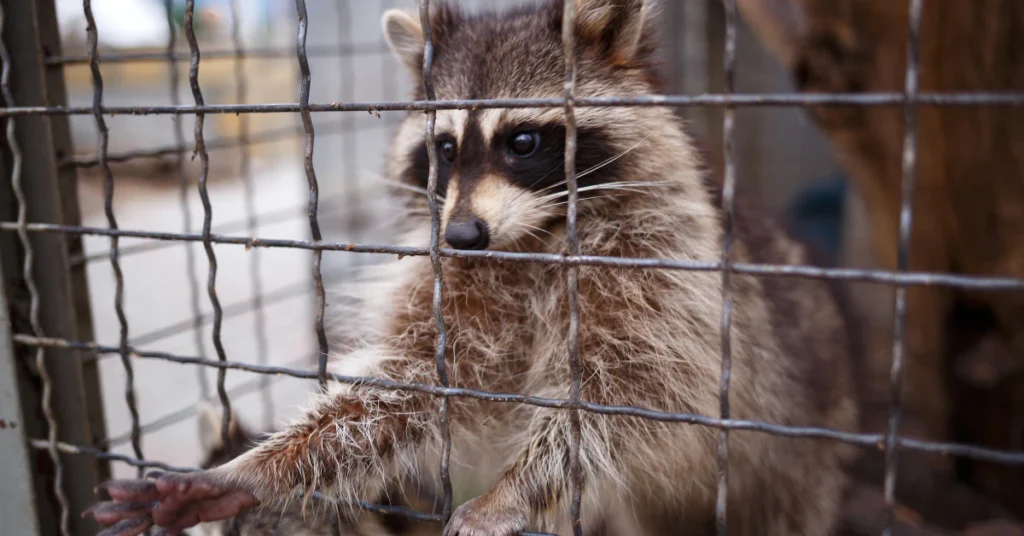
If you’re searching for raccoons as pets legal states, the honest answer is that only about a third of US states allow it in any form, and even then, the rules are strict. Rhode Island, for example, permits raccoon ownership under a state license (R.I. Gen. Laws §20-16-5). But no state, legal or not, allows you to pull a raccoon kit out of the woods and keep it. Every legal pathway requires a captive-bred animal from a licensed source. Here’s how the 11 most-searched states break down.
| State | Legal as a Pet? | Permit / Key Rule & Agency |
| Tennessee | Yes | TWRA captive wildlife permit; $31 fee eliminated in 2026; no wild-caught animals |
| Florida | Yes | Free Class III “Personal Pet” permit (PPNC) from FWC; captive-bred source required |
| Ohio | Yes | ODNR wild animal permit; must come from a USDA-licensed breeder |
| Wisconsin | Effectively No for Household Pets | Only a narrow Captive Wild Animal Farm License (DNR), not meant for personal pets |
| Texas | Illegal | Fur-bearing permit is NOT a pet permit, confirmed directly by TPWD |
| California | Illegal | No private-citizen permits at all (CDFW) |
| Missouri | Illegal | Banned under the Wildlife Code of Missouri (MDC) |
| Colorado | Illegal | Banned since 1983 (Colorado Parks & Wildlife) |
| Georgia | Illegal | On the state’s banned native-species list (GA DNR) |
| Utah | Illegal | Requires a rare state veterinarian variance (Utah DWR) |
| Virginia | Illegal | Banned due to rabies/roundworm risk (VA Dept. of Wildlife Resources) |
States Where Pet Raccoons Are Legal With a Permit (2026 Rules)
Tennessee just made this easier. Anyone researching raccoons as pets in Tennessee should know about a 2026 law, sponsored by Sen. Joey Hensley and Rep. Kip Capley, that eliminated the $31 fee for a Tennessee Wildlife Resources Agency (TWRA) captive wildlife permit. Getting the permit is now free. That said, the rest of the rules still apply: your raccoon must come from a licensed breeder, never caught from the wild, and it must be vaccinated.
Florida keeps things fairly simple too. For raccoons as pets in Florida, the Florida Fish & Wildlife Conservation Commission (FWC) requires a Class III Wildlife “Personal Pet” permit, known as a PPNC. It’s free to get, but you’ll need to show the raccoon came from a licensed, captive-bred source, not the wild.
Ohio has a two-part requirement. If you’re looking into raccoons as pets in Ohio, you’ll need a wild animal permit from the Ohio Department of Natural Resources (ODNR), plus proof the raccoon was purchased from a USDA-licensed breeder. Wild-caught raccoons are off the table entirely, no exceptions.
Wisconsin is where things get murky. For raccoons as pets in Wisconsin, the honest answer is that an average resident really can’t get one as a household pet. Under Wisconsin DNR Chapter 169, the only real license available is a Captive Wild Animal Farm License, and that’s built for commercial and farm-style operations, not someone wanting a raccoon in their living room. If you’re hoping for a straightforward household pet permit here, it doesn’t exist.
Across all four states, one rule never changes: the permit only covers an animal from a legal, captive-bred source. A raccoon found in your backyard or woods can’t be legalized after the fact.
The Texas “Pet Permit” Myth and States That Ban Pet Raccoons Outright
Let’s clear up the biggest myth online first. A lot of websites, and even some AI tools, claim raccoons as pets in Texas are legal because of a “fur-bearing animal permit.” This is false, and the Texas Parks and Wildlife Department (TPWD) has said so directly. In a July 2025 Houston Chronicle investigation, TPWD spokesperson Maggie Berger confirmed on the record: “Someone may not legally own a raccoon as a pet in Texas.” The fur-bearing permit people point to does exist, but it’s not for pet owners. TPWD’s own permit paperwork states in capital letters: “THIS IS NOT A ‘PET PERMIT.’” If you’ve seen a claim that Texas allows pet raccoons, it’s simply wrong.
Texas isn’t alone. Six other target states ban pet raccoons outright, no permit pathway at all for private citizens.
Raccoons as pets in California are illegal across the board. The California Department of Fish and Wildlife (CDFW) classifies the entire raccoon family as “detrimental” under Title 14, Section 671, placing them on a restricted list with no exceptions for private owners.
Raccoons as pets in Missouri are banned under the state’s Wildlife Code. Missouri Department of Conservation agent Brian Shelton has confirmed this directly to local media: raccoons are wildlife, and keeping one as a pet isn’t allowed.
Raccoons as pets in Colorado have been off-limits since 1983. State statute (33-6-109, 113, and 114 C.R.S.) bans non-commercial possession of regulated mammals, raccoons included.
Raccoons as pets in Georgia are prohibited by the Georgia Department of Natural Resources, which lists raccoons among native species that “may not be held as a pet regardless of its origin.” That means even buying one from out of state doesn’t make it legal once it’s in Georgia.
Raccoons as pets in Utah fall under strict import and possession rules. Since raccoons are considered non-native to the state, Utah Admin. Code R58-14-3 makes it illegal to bring one in or keep one without a rare variance from the state veterinarian’s office.
Raccoons as pets in Virginia are banned too. Both the Virginia Department of Wildlife Resources and the Wildlife Center of Virginia point to rabies and roundworm risk as the reasons raccoons can’t be kept as pets here.
If you live in any of these seven states, no permit, breeder paperwork, or online advice changes the legal reality.
What Happens If You Get Caught With an Illegal Pet Raccoon?
If you’ve taken in a baby raccoon and are hoping to just quietly keep it, it’s worth knowing that confiscations happen more often than people expect. In February 2025, the Missouri Department of Conservation seized a man’s hand-raised raccoon, named Springtrap, even though he’d cared for it for months. In Ohio, a 2025 traffic stop turned up a pet raccoon named Chewy, and the owner had no ODNR permit. In Utah, wildlife officers seized four raccoons from one home after they’d been driven illegally across state lines.
These weren’t unlucky, rare events. They’re the kind of thing that happens when an unpermitted raccoon is spotted by the wrong person, whether that’s a police officer, a neighbor, or even a vet.
The harder truth is what happens to the raccoon afterward. Wildlife rescue groups, including the Ottawa Humane Society, warn that once a baby raccoon gets used to living around people, it usually can’t be safely released back into the wild. It no longer has the fear or survival skills it needs. So if you keep an orphaned kit instead of calling a licensed wildlife rehabilitator right away, you may be setting the animal up for permanent confiscation, lifelong captivity, or euthanasia later.
Basic Diet, Lifespan, and Daily Care If You Legally Own One
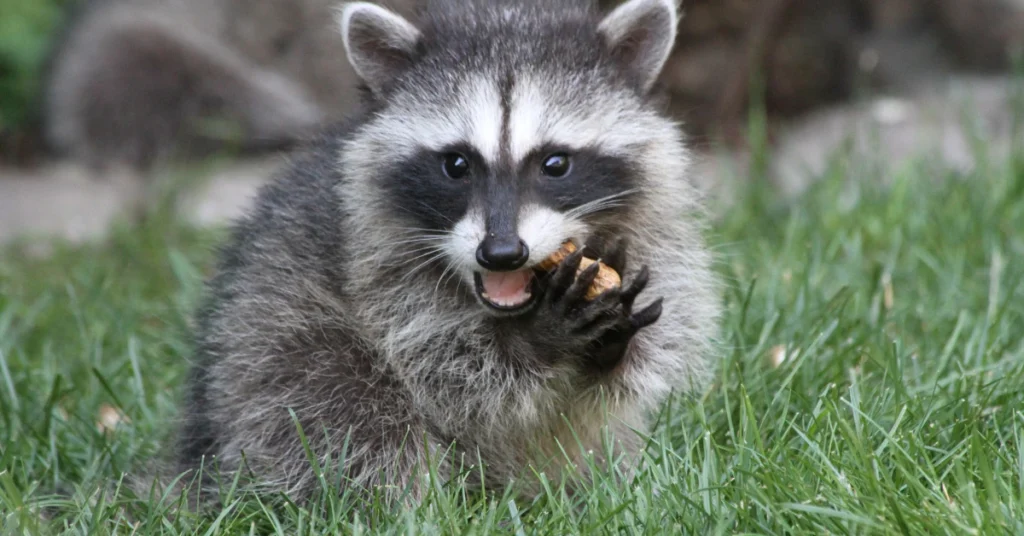
If you’re in a legal permit state, know what you’re signing up for. The National Wildlife Federation reports that wild raccoons average only 2 to 3 years of survival, with a wild maximum of 16 years. In captivity, away from predators and traffic, raccoons have been recorded living up to 21 years. That’s potentially a two-decade commitment, not a short-term pet.
Diet matters just as much. Raccoons are opportunistic omnivores. In the wild, they naturally eat crayfish, frogs, insects, fish, bird eggs, fruits, and nuts. In captivity, that means a varied, whole-food diet is needed to avoid obesity, not processed filler food. They also need a large, escape-proof outdoor enclosure with climbing structures and a water basin, since raccoons naturally douse and handle food near water as part of normal foraging behavior.
Frequently Asked Questions About Pet Raccoons
What states is it legal to own a raccoon?
Roughly a third of states allow it with strict captive-bred permits, including Florida, Ohio, Tennessee, and Rhode Island. Texas, California, Missouri, Colorado, Georgia, Utah, and Virginia ban it outright.
Are raccoons good domestic pets?
Not generally. They’re undomesticated wild animals that often turn aggressive around age 1, cause heavy property damage, and their rabies-vector status limits which vets can even treat them.
Can raccoons get attached to humans?
Hand-raised raccoons often show preference for their caregiver. Washington State University vets explain this is usually tied to food, warmth, and comfort, not the same bonding seen in dogs.
Why is owning a raccoon illegal?
Most states cite rabies vector status with no approved vaccine, roundworm risk to humans, and wildlife welfare concerns as the main reasons for banning private ownership.
What is a sad fact about raccoons?
Once a raccoon gets used to living with humans, wildlife rescues like the Ottawa Humane Society say it usually can’t be safely released back into the wild again.
What’s the lifespan of raccoons?
Wild raccoons average 2 to 3 years, with a documented max of 16. In captivity, away from predators, raccoons have lived up to 21 years, per the National Wildlife Federation.
What is a raccoon’s biggest enemy?
Natural predators include coyotes, bobcats, fishers, red foxes, and great horned owls. Vehicles and disease also account for many raccoon deaths each year.
Can raccoons recognize humans?
Yes. Hand-raised raccoons can tell familiar caregivers apart from strangers, largely through routine, food association, and repeated contact rather than complex social bonding.
What do raccoons eat?
As opportunistic omnivores, raccoons naturally eat crayfish, insects, frogs, fish, bird eggs, fruits, and nuts, along with crops or garbage near human areas.
Conclusion
Raccoons are undeniably clever, and it’s easy to see why a cute video or an orphaned kit in a backyard pulls at your curiosity or your heart. But the reality is straightforward: most states ban pet raccoons outright, and even where it’s legal, you’re taking on a wild animal with no approved rabies vaccine, a hard turn toward aggression around age 1, and a lifespan that can stretch past 20 years in captivity. If you’ve found an orphaned raccoon, the kindest and safest move is to call a licensed wildlife rehabilitator right away, not to raise it yourself. And if you’re just raccoon-curious, admiring them from a distance is still the option every vet and wildlife agency agrees on.