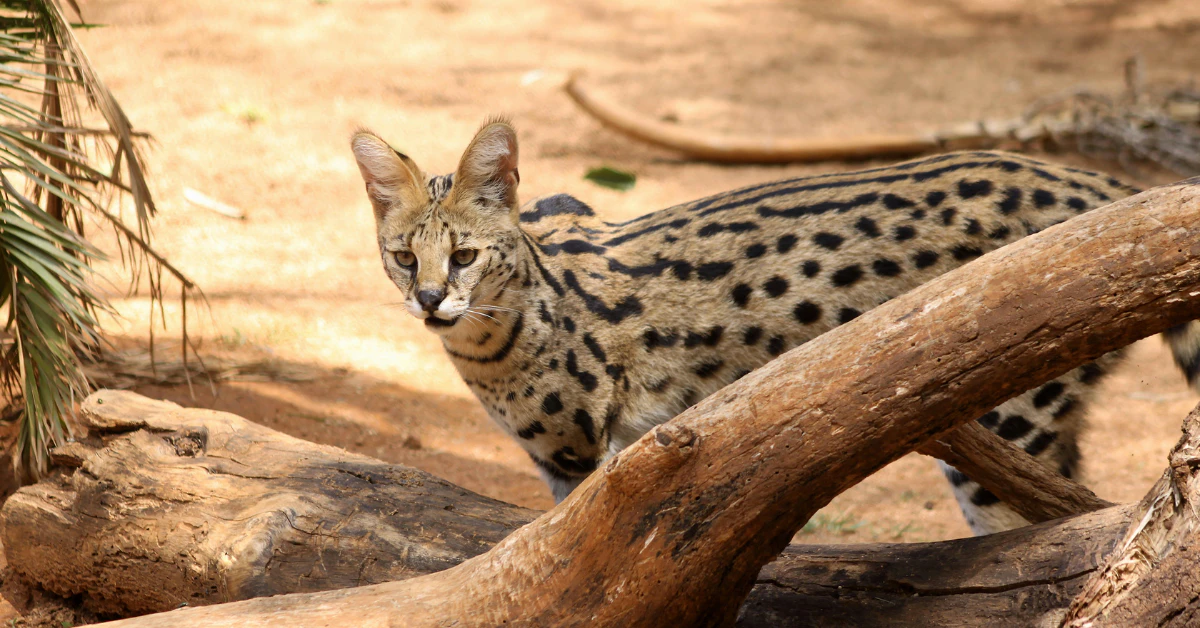
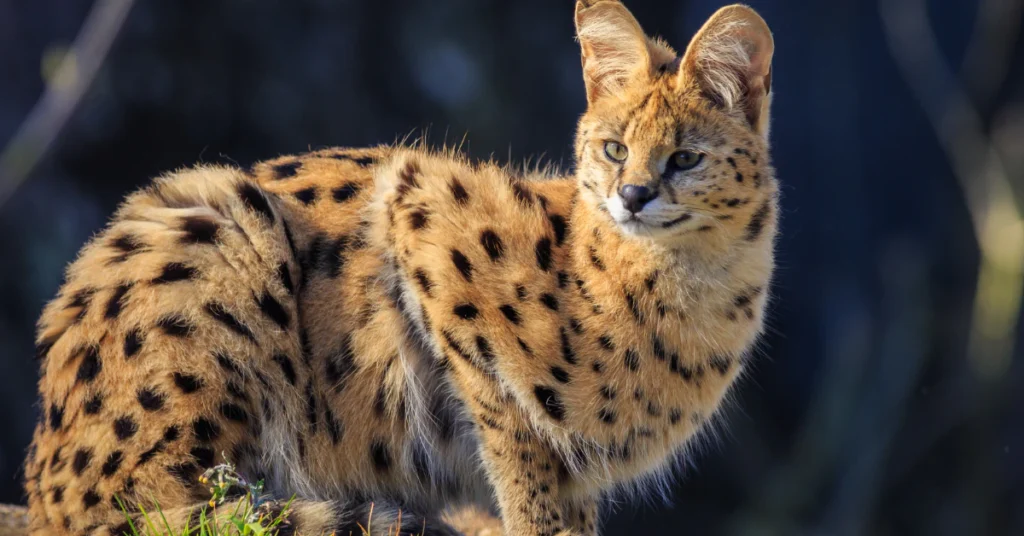
A serval cat pet is a wild African cat, not a domestic breed. Servals are known for their long legs, huge ears, and spotted coat. In the wild, they live about 12 to 17 years. In managed care, like a home or sanctuary, their median lifespan is closer to 13.5 years. They are legal in only a handful of US states, and even then, rules vary by county.
Disclaimer: This article is for educational purposes only and does not substitute for veterinary advice or official legal counsel. Exotic felid nutrition and local laws change rapidly. Always consult a licensed exotic vet and your state’s wildlife department.
Servals often get mistaken for a designer breed. They are not. A serval is a real wild species, scientifically named Leptailurus serval, found across sub-Saharan Africa. It hunts in tall grass, using its long legs and huge ears to track rodents and birds by sound.
Some people keep servals as exotic pets in the US. Doing so means taking on the needs of a wild animal, not a house cat. That includes specialized diets, large enclosures, and legal paperwork most cat owners never think about.
This guide covers what a serval actually is, what it costs, where it’s legal, and whether it makes sense as a pet at all.
What is a Serval? Size, Weight, and The F1/F2 Confusion
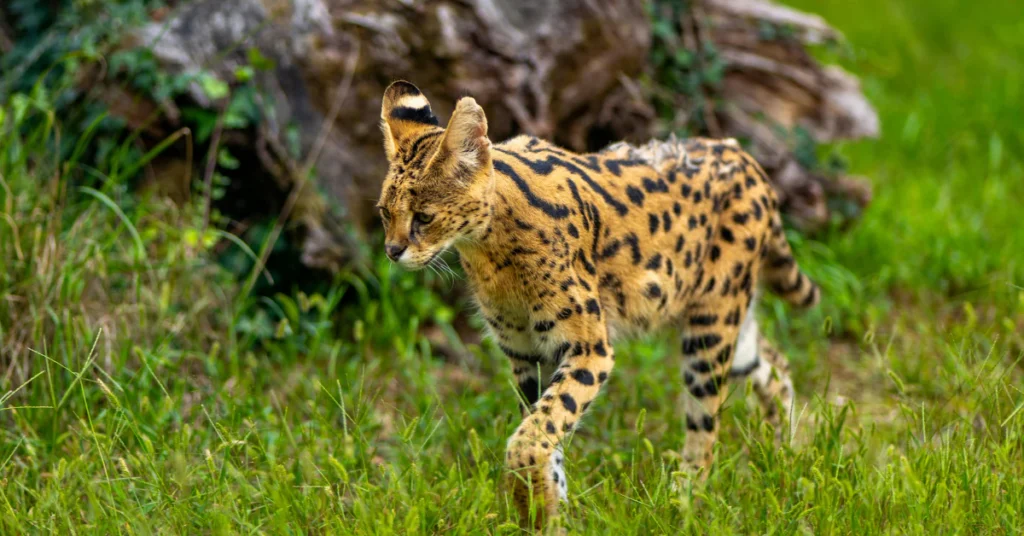
A serval is a lean, tall cat, but its exact size depends on sex more than most people realize.
According to San Diego Zoo Wildlife Alliance data, male servals typically weigh between 20 and 40 pounds. Females run smaller, usually landing between 20 and 26 pounds. That’s a real gap. A big male serval can weigh nearly twice as much as a small female. Most competitor content skips this and just gives one vague number, but if you’re planning space, food, or an enclosure, knowing the sex matters.
Height-wise, servals stand about 2 feet tall at the shoulder, with a body length between 23 and 36 inches. Their legs are proportionally the longest of any cat species. That’s part of what gives them their nickname, the “giraffe cat.”
Now, here’s where a lot of buyers get confused: the terms F1 and F2.
If you’ve searched “serval cat pet f1” or “serval cat pet f2,” you’ve likely run into mixed information. Here’s the clear answer. F1 and F2 are filial generation labels. They describe how many generations removed an animal is from a serval ancestor. But these labels apply to Savannah cats, which are a hybrid between a serval and a domestic cat. They do not apply to a pure serval.
A pure serval is 100% serval. There is no “F1 serval” or “F2 serval.” If a seller uses that language for an animal they’re calling a serval, it’s worth asking directly what they mean, because it usually signals they’re actually selling a Savannah cat, not a purebred serval.
This distinction matters for more than just vocabulary. Savannah cats, especially early generations like F1 and F2, retain a lot of wild serval traits, including size and energy level. But their legal status, temperament, and care needs can differ from a pure serval in real ways. Confusing the two can lead to buying the wrong animal, misunderstanding legal requirements, or being unprepared for the animal’s actual size and behavior.
If you’re serious about owning a serval, start by confirming whether the animal you’re looking at is a pure serval or a Savannah hybrid. That one detail changes almost everything else in this guide.
Legal Realities: Big Cat Act and Conflicting State Laws
In December 2022, the federal government passed the Big Cat Public Safety Act. It bans private ownership of lions, tigers, leopards, cheetahs, jaguars, and cougars, along with any hybrids of those species.
Servals are not on that list.
This surprises a lot of people. Servals are wild cats, so many assume they’d fall under the same federal ban as lions and tigers. They don’t. The Big Cat Public Safety Act specifically targets a defined group of large cat species, and the serval, a medium-sized cat, is not one of them. That means serval ownership is left entirely up to state and local law, with no federal ban standing in the way.
So where can you actually own one? This is where things get messy, and it’s worth being honest about that.
When researching this topic, we compared several current legal guides that claim to list which states allow serval ownership. They don’t agree with each other. One source lists a state as fully legal. Another lists that same state as requiring a strict permit. A third leaves it off entirely. This isn’t a case of one source being right and the others being wrong. It reflects how fast these laws change, and how much local county and city rules can override state-level law.
Here’s the practical takeaway: don’t rely on any single article, including this one, for a final answer on legality. State wildlife agencies update exotic animal rules often, and city or county ordinances can ban an animal even when the state technically allows it.
Before you spend any money or bring a serval home, contact your state’s wildlife or fish and game department directly. Ask about serval ownership specifically, not just “exotic cats” in general. Then check with your county and city offices too, since local rules can be stricter than state law.
You can find your state wildlife agency’s contact information through the U.S. Fish and Wildlife Service directory.
The Hidden Costs: Purchase Price, Insurance, and Upkeep
The price tag on a serval kitten is just the starting point, not the full picture.
Buying a serval cat pet typically costs between $2,500 and $12,000 or more, depending on the breeder, the kitten’s age, and its lineage. That’s already more than most people spend on a dog or cat. But the purchase price is the smallest part of what serval ownership actually costs.
Here’s a gap most guides skip entirely: insurance.
Standard homeowners insurance almost never covers exotic pets. If a serval bites a visitor or damages property, a typical homeowners policy is unlikely to help, since most policies exclude exotic animals from liability coverage altogether. This isn’t a minor detail. It means if something goes wrong, you could be personally on the hook for medical bills, legal fees, or property damage claims.
To fill that gap, owners generally need a separate exotic-animal liability insurance policy. These policies exist specifically because standard home insurance won’t touch exotic pets. They also tend to cost more than typical pet insurance, since insurers view any wild cat as a higher risk.
In some states, this isn’t even optional. Florida, for example, requires exotic pet owners to carry liability insurance as a condition of getting a permit at all. If you’re considering ownership in a state with similar rules, insurance isn’t a nice-to-have. It’s a legal requirement before you can own the animal.
Then there’s housing. Servals need large, secure outdoor enclosures, not just a spare room. Building an enclosure strong and spacious enough for a wild cat that can jump several feet straight up is a serious construction project, not a DIY weekend job. Costs vary widely based on materials and size, but this is consistently one of the biggest expenses new owners underestimate.
Add up the kitten price, enclosure construction, specialized insurance, and ongoing vet care, and the real first-year cost of serval ownership climbs far past the sticker price of the kitten alone.
Diet and Health Risks: Why “Raw Recipes” Fail
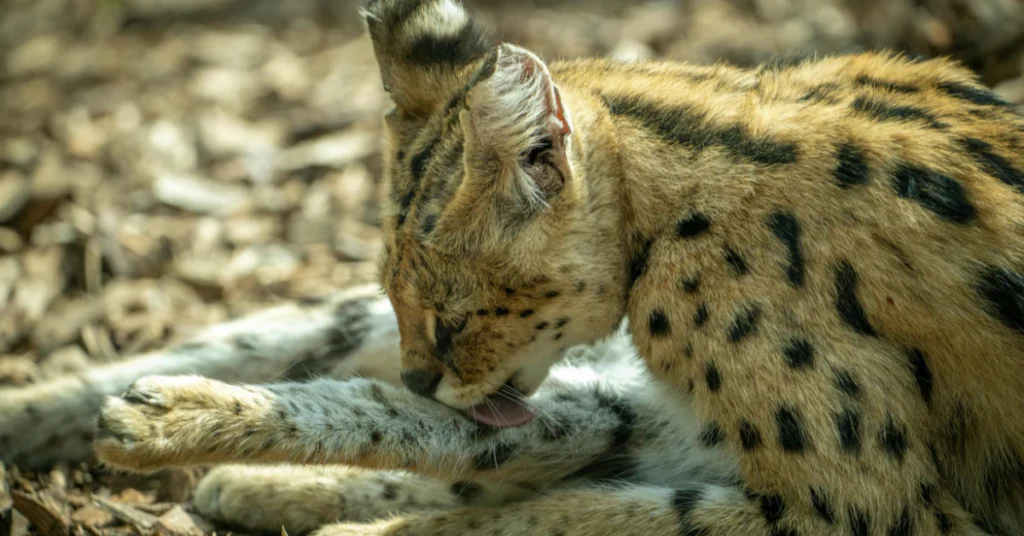
Feeding a serval is not like feeding a house cat, and getting it wrong can seriously hurt the animal.
Servals are obligate carnivores that need a diet close to what they’d eat in the wild, which is whole prey like mice, quail, and rats. Some new owners try to skip this and feed homemade “raw recipes” made from ground meat instead. According to the Merck Veterinary Manual, this is a real problem. These homemade mixes often fail to hit the correct calcium-to-phosphorus ratio that wild felids need. Get that ratio wrong, and the risk is metabolic bone disease, a serious condition tied to poor bone development.
The Merck Veterinary Manual also notes that exotic felids need enough taurine in their diet. Without it, cats can develop heart and vision problems over time. Ground meat recipes that skip organs, bones, and other whole-prey parts often miss this nutrient entirely.
This is not a minor feeding preference. It’s a documented welfare concern serious enough that major veterinary bodies have taken a formal stance on non-domestic cat ownership as a whole.
The American Veterinary Medical Association’s policy states that ownership of wild and exotic pet species should generally be prohibited unless proper care standards can be guaranteed. The American Association of Feline Practitioners has gone further, stating it opposes breeding wild felids with domestic cats and discourages ownership of early-generation hybrids specifically because of welfare and care standard concerns.
In plain terms, both organizations are saying the same thing: most private owners are not equipped to consistently meet a wild cat’s nutritional and welfare needs, and getting it wrong has real health consequences for the animal.
If you’re already caring for a serval or considering it, work directly with a veterinarian experienced in exotic felids to build a diet plan, rather than relying on internet recipes. You can learn more about the AVMA’s position on exotic pet ownership on the AVMA’s official policy page.
This isn’t a substitute for professional veterinary advice. Always consult a licensed exotic vet before making changes to an exotic animal’s diet.
Behavior, Aggression, and the Reality of Home Life
This is the question most people actually want answered before they get anywhere near a purchase: can a serval cat kill a human?
Based on the available data, a serval’s bite force measures around 172 Newtons, roughly three times stronger than a typical house cat’s bite. That’s a real amount of force. It’s enough to cause deep puncture wounds, serious scratches, and injuries that need medical attention.
There are no documented cases of a pet serval killing an adult in the United States. That said, serious bite and scratch injuries do happen, and they’re not rare enough to dismiss. A wild animal under stress can react fast and hard, and a serval’s claws and teeth are built for hunting, not for gentle play.
Living with a serval day to day looks very different from what most people picture.
Litter box training is often oversold. Yes, servals can learn to use a litter box. But that’s separate from spraying, sometimes called “hosing” by owners, which is territorial marking behavior. Spraying doesn’t stop just because an animal is litter trained. It’s a different behavior entirely, and it commonly continues, especially in intact males and females who haven’t been spayed or neutered.
Timing matters here. Owners who delay spaying or neutering past around 6 months often see worse spraying and increased aggression as the animal reaches sexual maturity. Waiting doesn’t make the behavior easier to manage. It usually makes it harder.
There’s another daily reality that gets skipped in most guides: activity needs. Serval kittens need hours of active play every single day. Owners who cage a serval kitten for long stretches without that outlet often end up with a stressed, miserable animal that reacts with more aggression, not less. This isn’t a matter of opinion. A bored, confined wild cat behaves very differently from one that gets to move, climb, and expend energy the way its instincts demand.
None of this means a serval is a ticking time bomb. But it does mean that “safe” here depends entirely on the owner meeting needs most house cats never require, starting with space, timing on surgery, and daily physical outlets that go far beyond what a typical pet cat needs.
Breeder Promises vs. Rescue Realities
Breeders often make integration sound easy. Reality tends to disagree.
Many breeders will tell buyers that a serval can grow up alongside dogs, cats, and kids without much trouble, especially if raised together from a young age. In practice, this doesn’t hold up consistently. Servals retain strong hunting instincts, and a single defensive or predatory lash-out can seriously injure or kill a smaller dog or cat. That risk doesn’t disappear with good intentions or careful raising. It’s tied to the animal’s nature, not a training gap.
Small children face similar risk. A serval’s size, claws, and unpredictable reactions make close, unsupervised contact genuinely dangerous, no matter how affectionate the cat seems most of the time.
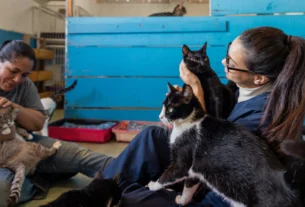
This gap between the sales pitch and daily reality shows up clearly at sanctuaries. Wildlife sanctuaries across the country regularly take in adult servals surrendered by owners who loved the animal but couldn’t keep up once it matured. These aren’t neglectful owners in most cases. They’re people who underestimated what a fully grown serval actually needs, and who eventually realized their home, their other pets, or their family situation couldn’t safely support it anymore.
That pattern repeats often enough that it’s worth taking seriously before bringing a serval home. A breeder’s reassurance is a sales pitch. A sanctuary intake record is a data point. Before committing, it’s worth asking which one you’re planning around.
Frequently Asked Questions
Can you have a serval cat as a pet?
In a few US states, yes, usually with permits and strict enclosure rules. In many others, ownership is fully banned. Legality depends heavily on your specific state, county, and city, not just one general rule. Always check directly with local wildlife authorities before assuming a serval is allowed where you live.
Do servals use litter boxes?
Servals can learn to use a litter box, similar to house cats. But that’s separate from spraying, also called “hosing,” which is territorial marking behavior. Litter training doesn’t stop spraying, especially in cats that haven’t been spayed or neutered. Expect both behaviors to exist independently, not one replacing the other.
Do serval cats like humans?
Hand-raised servals can form real bonds with their primary caregiver and show affection. That’s not the same as domestication, though. They remain wild animals with strong instincts, and even socialized servals can react unpredictably, especially around unfamiliar people, children, or other pets.
In what states can I legally own a serval?
Online lists claiming to answer this often contradict each other, since laws change fast and vary by county and city too. Rather than trusting any single list, including this one, contact your state’s fish and wildlife department directly, then check local city and county rules before making any decisions.
How much do serval cats cost?
Purchase price typically runs from $2,500 to $12,000 or more, depending on breeder and lineage. That’s just the starting cost. Ongoing expenses include specialized whole-prey diets, large secure enclosures, exotic-animal veterinary care, and liability insurance, which together often cost far more than the kitten itself over time.
What is the largest cat you can legally own in the US?
There’s no single answer here. Legality is set state by state, not by one federal rule, aside from the Big Cat Public Safety Act’s ban on species like lions and tigers. Which mid-sized wild cats, including servals, are legal depends entirely on where you live, not a national standard.
Final Thoughts
A serval is not a starter exotic pet, and it’s not a substitute for a Savannah cat either. It’s a wild animal with real physical, legal, and financial demands that go far beyond what most house cat owners are used to.
Before considering ownership, get clear on the actual legal status in your specific area, talk to a vet experienced with exotic felids about diet and health needs, and think honestly about whether your home, family, and other pets can safely support a wild cat’s instincts for its full lifespan. Sanctuaries are full of servals whose owners meant well but underestimated what the animal actually needed.