

Call your vet or an animal poison control hotline before you do anything else. Inducing vomiting the wrong way, or in the wrong situation, can hurt your dog more than it helps. This article is for information only and does not replace advice from a licensed veterinarian.
If your vet or poison control confirms it’s safe, the only method recommended for making a dog throw up at home is 3% hydrogen peroxide. Nothing else on your kitchen shelf works safely.
Never try this on a cat. Hydrogen peroxide is too harsh for a cat’s stomach and esophagus, and there is no safe way to induce vomiting in cats at home.
Keep reading for exact dosing, timing, and the situations where you should skip this step entirely and go straight to the vet.
The 1-to-2 Hour Window (And What Vomiting Actually Achieves)

Timing matters more than most owners realize. A dog’s stomach usually empties into the intestines within about 1 to 2 hours. Once the food (or the toxin) has moved past that point, making your dog vomit won’t pull it back out. If it’s been longer than 2 hours since your dog ate something dangerous, vomiting is less likely to help, and your vet needs to know that so they can plan the next step.
Even within that window, vomiting isn’t a perfect fix. A 2012 study published in the Journal of the American Veterinary Medical Association looked at 147 dogs and compared hydrogen peroxide to the injectable drug vets use, apomorphine. Vomiting was successfully triggered in about 92% of dogs, regardless of which method was used. That sounds reassuring. But the same study found that only about 48% of the actual substance was recovered when hydrogen peroxide was used, and about 52% when apomorphine was used.
In plain terms: your dog can throw up successfully and still have roughly half of what they ate still sitting in their system.
This is the part most home-remedy advice skips. Getting your dog to vomit is not the same as getting the danger out. It’s a first step, not a finish line. Your dog may still need an exam, blood work, activated charcoal, or IV fluids afterward, depending on what they swallowed.
This is exactly why the first call should be to your vet or ASPCA Animal Poison Control, not to your medicine cabinet. They can tell you whether you’re still inside the useful window, and what to watch for even after your dog throws up successfully.
How to Use Hydrogen Peroxide (Dosage & Steps)

Getting the amount right matters. Too little won’t work. Too much can hurt your dog’s stomach. Here’s the formula vets use:
Give 1 teaspoon (5 ml) of 3% hydrogen peroxide for every 5 pounds your dog weighs.
The maximum single dose is 45 ml, or about 3 tablespoons, no matter how big your dog is.
| Dog’s Weight | Hydrogen Peroxide Dose |
| 5 lbs | 1 tsp (5 ml) |
| 10 lbs | 2 tsp (10 ml) |
| 20 lbs | 4 tsp (20 ml) |
| 30 lbs | 6 tsp (30 ml) |
| 40 lbs | 8 tsp (40 ml) |
| 45 lbs or more | 45 ml (max, do not exceed) |
Only use 3% hydrogen peroxide. Anything stronger can burn your dog’s mouth, throat, and stomach.
Steps to Give It Safely
- Confirm with your vet or poison control first. Don’t skip this.
- Measure the exact dose using a syringe, dosing spoon, or turkey baster. Don’t eyeball it.
- Squirt it toward the back of your dog’s mouth, not straight down the throat.
- Walk your dog for a few minutes. Gentle movement helps trigger vomiting.
- Watch closely for 10 to 15 minutes. Most dogs vomit within this window.
- Don’t give a second dose on your own. If nothing happens, call your vet back before trying again.
Why the Math Matters: A Chocolate Example
Chocolate is a good example of why exact weight and exact substance matter, not just exact peroxide dosing. The toxic compound in chocolate is theobromine. Mild symptoms can start around 20 mg of theobromine per kilogram of your dog’s body weight. Serious heart effects can start at 40 to 50 mg/kg. Seizures can appear at 60 mg/kg or higher.
That means a small dog and a large dog can eat the same chocolate bar and end up in completely different danger zones. It also means your vet needs to know your dog’s exact weight, the type of chocolate, and roughly how much was eaten, the same details they’ll need to decide whether inducing vomiting is even the right call.
This isn’t a substitute for professional veterinary advice. Always confirm dosing and next steps with your vet or a poison control hotline before giving your dog anything.
The “Do Not Induce” List: Bones, Socks, and Grapes

Not every emergency calls for vomiting. In some cases, making your dog throw up can cause more damage than the thing they swallowed. Here are three situations where the instinct to induce vomiting can actually work against you.
Chicken Bones and Other Bones
It feels like the obvious move: get the bone out before it causes a problem. But most vets advise against it.
Bones splinter. When they come back up through the esophagus, those sharp edges can scratch, cut, or puncture the lining a second time on the way out, on top of whatever damage happened going down. That turns one risky trip through the digestive tract into two.
If your dog swallowed a bone, don’t try to make them vomit. Call your vet instead. They’ll tell you whether to monitor at home or come in for an X-ray.
Socks, String, and Fabric
A sock seems harmless compared to a bone, but it falls into a category vets call a “linear foreign body.” This includes socks, string, ribbon, and strips of fabric.
Here’s the problem. These items can get stuck at one end while the rest trails through the intestines. As the gut keeps contracting around it, the material can saw through the intestinal wall from the inside. This is a serious, sometimes surgical, emergency.
Don’t attempt to induce vomiting on your own if your dog swallowed a sock or anything string-like. Call your vet right away and describe exactly what was swallowed.
Grapes and Raisins
Grapes and raisins are toxic to dogs, but here’s what makes them different from something like chocolate: there’s no safe “small amount.”
Scientists believe the toxic compound is tartaric acid, and its concentration in grapes can range anywhere from 0.35% to 2%, depending on the variety, how ripe it is, and growing conditions. That means one grape could be harmless, or it could be enough to cause kidney damage, and there’s no way to know just by looking at it.
Because of this, don’t wait around trying to guess if “enough” was eaten. If your dog ate any amount of grapes or raisins, treat it as an emergency and call your vet or poison control immediately. Don’t try to calculate risk the way you might with chocolate. With grapes, the only safe assumption is that it could be serious.
General rule: if what your dog swallowed is sharp, could splinter, is stringy, or you’re not sure how dangerous it is, skip the home remedy and call a professional first.
Why Hydrogen Peroxide Fails (And The Hidden Risks)
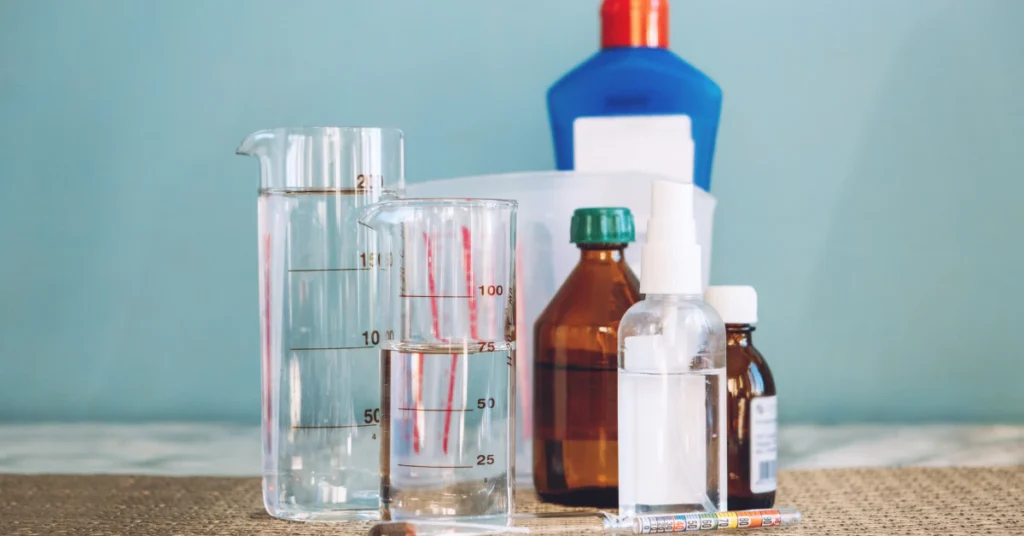
Sometimes hydrogen peroxide just doesn’t work, and owners are left panicking with a dog that still hasn’t thrown up. Here’s what’s usually going on, and why trying again on your own can make things worse.
The Most Common Reason It Fails: Old Peroxide
Hydrogen peroxide breaks down over time, even in an unopened bottle. It loses its strength, and a weak solution simply won’t irritate the stomach enough to trigger vomiting.
If the bottle has been sitting in your cabinet for a long time, there’s a real chance it’s no longer strong enough to work, even at the correct dose. This is one of the most common reasons owners report giving the right amount and seeing nothing happen.
Don’t Keep Re-Dosing
If your dog hasn’t vomited within 10 to 15 minutes, the answer is not to give more. Call your vet before trying a second dose.
This matters for a real reason: hydrogen peroxide is not gentle on the stomach, even when used correctly. A study on healthy dogs found that standard emetic doses of 3% hydrogen peroxide caused visible damage to the stomach lining, including fragile, easily irritated tissue. That’s at the normal dose. Giving more only raises that risk.
Hydrogen peroxide has also been linked to a serious condition called gastric dilatation-volvulus, or bloat, where the stomach fills with gas and can twist. This is a life-threatening emergency on its own.
A Real Case: When More Isn’t Better
In April 2025, Pet Poison Helpline shared a case that shows exactly why this matters. An owner realized her dog had accidentally eaten her cancer medication. In a panic, she gave the dog a large amount of hydrogen peroxide, well beyond a safe dose, to force vomiting.
The medication did come back up. But the excess peroxide itself became the problem. The dog kept vomiting long after the pill was gone and stopped eating entirely. What started as a quick fix turned into its own medical issue.
The lesson here isn’t that hydrogen peroxide is useless. It’s that more is not safer. A correct, calculated dose given once, with your vet or poison control on the phone, is the goal. Guessing, panicking, and re-dosing is how a manageable situation turns into a second emergency.
If your dog doesn’t vomit after one properly measured dose, stop and call your vet. Don’t treat hydrogen peroxide like something you can keep adding until it works.
What Vets Do Differently (Professional Emesis)
Hydrogen peroxide works by irritating the stomach until your dog throws up. Vets often use a different approach that skips the stomach entirely and goes straight to the brain.
Apomorphine: The Vet’s Go-To
The most common drug vets use is called apomorphine. It’s given as an injection or placed in the eye. Instead of irritating the stomach, it works on a part of the brain called the chemoreceptor trigger zone, which is the body’s built-in vomiting switch. Stimulating it directly tells the body to vomit, without needing to damage the stomach lining first.
This usually works fast, often within 5 to 15 minutes.
Ropinirole: A Newer Eye-Drop Option
Some vets now use a medication called ropinirole, given as an eye drop. In a controlled trial, it worked just as well as apomorphine, with 95% of dogs vomiting within 30 minutes.
Why This Matters to You
| Hydrogen Peroxide (Home) | Apomorphine / Ropinirole (Vet) | |
| How it works | Irritates the stomach lining | Triggers the brain’s vomiting center |
| Stomach impact | Can cause irritation or damage | Doesn’t rely on stomach irritation |
| Precision | Owner estimates dose and timing | Vet controls exact dose and monitoring |
| Backup plan | None if it doesn’t work | Vet can switch methods or treat further on the spot |
This is the real reason a vet visit is often worth it, even after a successful at-home dose. A clinic can act faster, use a gentler method, and immediately follow up with bloodwork, fluids, or other treatment if needed. Home hydrogen peroxide is a first-aid option for when you truly can’t get to a vet right away, not a replacement for one.
Frequently Asked Questions
How do I help a dog throw up?
Call your vet or a poison control hotline first. If they confirm it’s safe, the only recommended home method is 3% hydrogen peroxide, given at the correct weight-based dose.
What can I use to induce vomiting in my dog?
Hydrogen peroxide (3%) is the only method considered safe. Skip the old home remedies you may have heard about, like salt, mustard, olive oil, or ipecac. These don’t work reliably and can cause their own serious problems, from dangerously high salt levels to pancreatitis to heart issues. None of them are a safe substitute for proper dosing.
How long after peroxide will a dog throw up?
Most dogs vomit within 10 to 15 minutes if the dose was correct and the peroxide was fresh.
What do vets do to induce vomiting?
Vets typically use a medication called apomorphine, or sometimes a ropinirole eye drop, both of which trigger the brain’s vomiting center directly rather than irritating the stomach. These are usually faster and gentler than hydrogen peroxide.
What stimulates throwing up?
In dogs, vomiting can be triggered either by irritating the stomach lining (how hydrogen peroxide works) or by stimulating the vomiting center in the brain (how apomorphine and ropinirole work). Walking your dog after dosing can also help, since movement stimulates this response.
Can hydrogen peroxide be used to induce vomiting in dogs?
Yes, 3% hydrogen peroxide is the recognized at-home option for dogs. It should never be used on cats, since it’s too harsh on their stomach and esophagus.
Why didn’t my dog throw up after hydrogen peroxide?
The most common reason is expired or old peroxide, which loses its strength over time. An incorrect dose or natural individual variation can also play a role. If nothing happens within 15 minutes, call your vet instead of giving another dose yourself.
How much peroxide should I give a 40 lb dog?
Using the standard formula of 1 teaspoon per 5 pounds, a 40 lb dog needs 8 teaspoons, or 40 ml, of 3% hydrogen peroxide. That’s just under the 45 ml maximum cap used for larger dogs, so no adjustment is needed at this weight.
This article is for general information only and is not a substitute for professional veterinary advice. Always contact your veterinarian or a poison control hotline before inducing vomiting in your dog.
Conclusion
A dog eating something dangerous is scary, but acting fast doesn’t mean acting alone. Call your vet or poison control first, every time. If hydrogen peroxide is the right call, use the correct dose, give it once, and watch closely. If your dog swallowed something sharp, stringy, or unpredictable like grapes, skip the home remedy and get professional help right away. The goal isn’t just to make your dog throw up. It’s to get them through this safely, with the right support at every step.