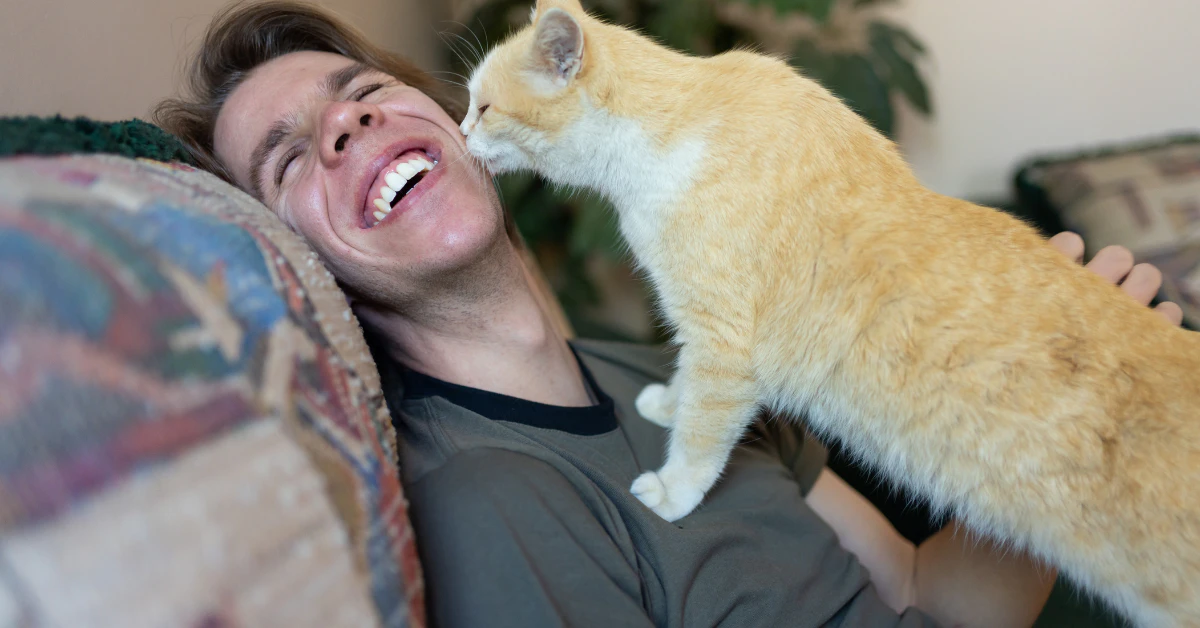
When a cat licks you, it’s usually a sign of trust and affection. This grooming habit starts in kittenhood, when a mother cat licks her kittens to clean and bond with them. Adult cats carry this behavior into their relationships with people they feel close to. According to the Cornell Feline Health Center, cats spend 30 to 50 percent of their day grooming, so a lick from your cat is simply their natural way of including you in that world.
A lick on the hand or cheek might feel small, but it carries real meaning. It’s your cat’s way of saying you belong.
Why Cats Lick Their Humans: Affection, Scent, and Science
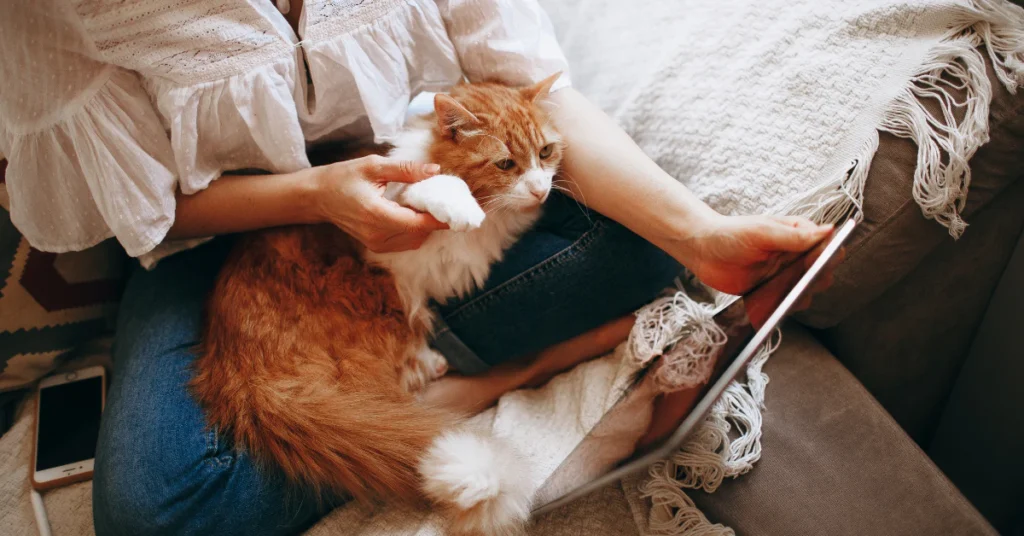
A cat’s lick is rarely just one thing. Several instincts work together each time your cat gives you a lick.
It’s a bonding ritual. Mother cats groom their kittens constantly, and this builds trust and comfort early in life. When your adult cat licks you, they’re using that same instinct to strengthen your bond. If your cat licks you while purring, that’s an especially strong signal. Purring usually means your cat feels safe and relaxed, so a lick paired with a purr is about as close to a hug as a cat can give.
It’s also how cats claim you as their own. Cats have scent glands, and licking leaves their scent behind. In the wild, cats in the same social group groom one another to create a shared group smell. When your cat licks you, they may be marking you as part of their circle, not a stranger to be wary of.
The science backs this up. Researchers have measured hormone levels in cats during contact with their owners, looking specifically at oxytocin and cortisol in their urine. The results showed that social contact with humans actually changes these hormone levels in cats. Oxytocin is often called the bonding hormone, so this is real physical evidence that affection toward you isn’t just a human interpretation. Something measurable is happening inside your cat too.
Taste plays a role as well, and it’s more interesting than most people realize. Cats are missing a working copy of the gene that lets most mammals taste sweetness. Because of this, cats can’t taste sugar at all. What they can taste strongly is salt. Your skin, especially after exercise or on a warm day, carries a salty residue from sweat. That’s often enough to catch your cat’s attention and start a licking session that has nothing to do with hunger and everything to do with curiosity.
Attention-seeking rounds out the list. If your cat wants playtime, feeding time, or simply more of your focus, a lick is an easy way to get a reaction out of you. It works almost every time, which is exactly why cats keep doing it.
NIH research on feline taste receptors confirms cats are wired differently from humans when it comes to taste, which helps explain this very common habit.
Face, Hands, or Hair? Deciphering Where Your Cat Licks
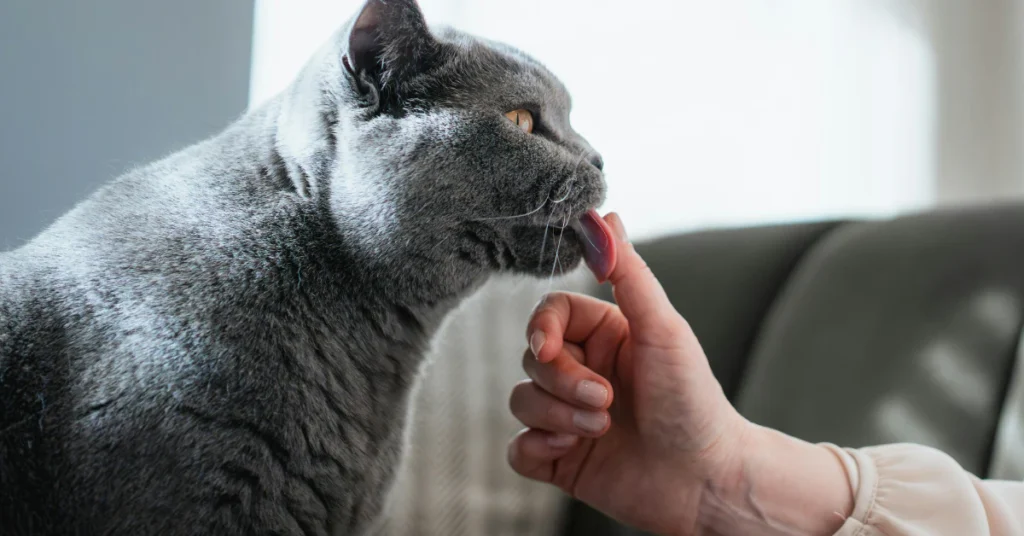
Where your cat licks says almost as much as the licking itself.
- Face and nose: This mimics how cats groom each other, called allogrooming. Licking your face puts your cat close to you, which only happens with someone they trust completely.
- Hands and fingers: Hands carry a lot of scent and salt from sweat, so this is often about taste as much as affection. If your cat licks your hand while you’re petting them, they’re likely returning the favor.
- Hair and head: This is classic mutual grooming behavior. Cats groom each other’s heads because they can’t reach their own, and some cats extend that same care to you.
- Arms: Often simple affection, especially if your cat is curled up next to you or in your lap.
- Feet: This can surprise owners, but feet carry strong scent and salt too, especially after a workout or a long day in shoes. Curiosity, not affection, usually drives this one.
A few things shift the meaning slightly. A quick lick is usually a greeting or a hello. A slow, repeated lick in one spot is closer to true grooming behavior, the kind cats give each other in a trusted relationship.
None of these locations mean something is wrong. Cats are simply using the tools they have, their tongue and their nose, to explore and connect with the people they live with. If one spot suddenly gets far more attention than usual, that’s worth noting, but on its own, a lick on your foot or your hair is just your cat being a cat.
Why Does My Cat Lick Me and Then Bite Me?
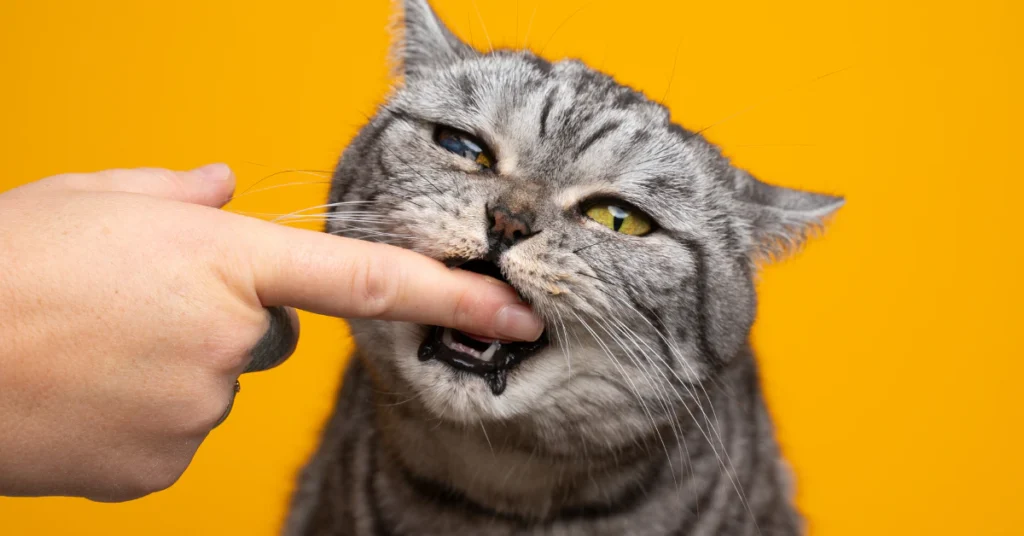
This is one of the most confusing cat behaviors, and you’re not alone if it catches you off guard. One moment your cat is licking your hand while you’re petting them, and the next, you’ve got a surprise nip.
Vets call this petting-induced aggression, and according to the Cornell Feline Health Center, there’s no single confirmed cause. The leading theories point to overstimulation or your cat trying to control when the contact stops. Licking can actually be the first sign your cat is getting too much input, and the bite follows when that signal goes unnoticed.
The good news is your cat usually gives warnings before the bite. Watch for:
- Skin twitching along the back
- A tail that starts flicking or thumping
- Ears turning sideways or flattening
- A sudden pause in purring
If you catch any of these, it’s time to stop petting and let your cat walk away on their own terms. This isn’t about punishment or bad behavior. It’s simply your cat’s way of saying “that’s enough for now,” and respecting it keeps trust intact for next time.
Are “Cat Kisses” Safe? The Real Risks of Feline Saliva
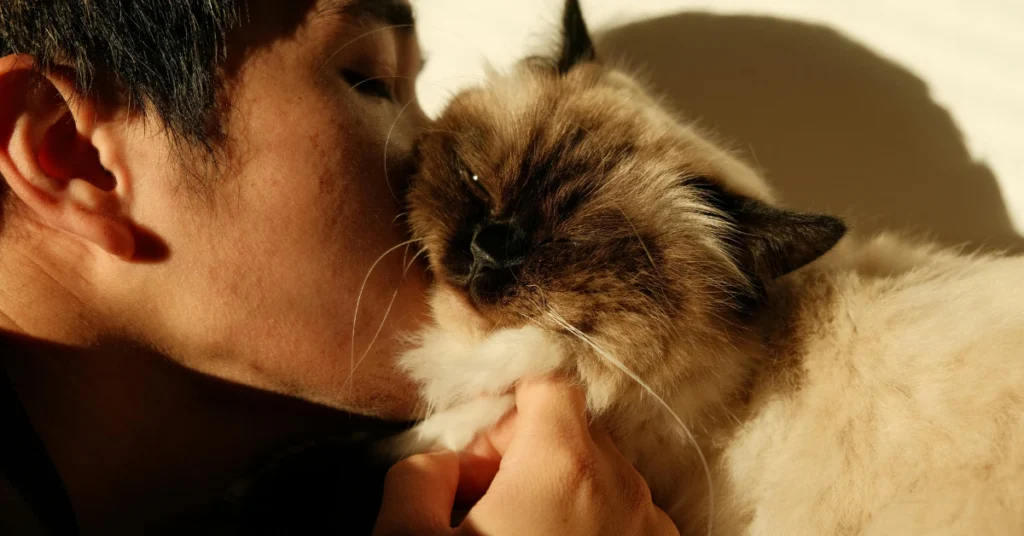
This section is for general information only and isn’t a substitute for professional veterinary advice. If you have concerns about an injury or infection, contact your doctor or veterinarian.
A lick on dry, healthy skin is usually nothing to worry about. But it’s worth knowing what’s actually in your cat’s mouth before you let the kisses get too close.
Pasteurella bacteria live in the mouths of 70 to 90 percent of cats, according to the Cleveland Clinic. It’s the most common cause of infection after a bite or scratch. The CDC estimates that 20 to 80 percent of reported cat bites become infected, which is a wide range, but it shows this isn’t rare.
Some people face higher risk than others. If you’re immunocompromised, elderly, diabetic, pregnant, or caring for a young child, it’s smart to be more cautious around cat saliva, since infections can hit harder and heal slower in these groups.
A few simple rules keep things safe:
- Avoid letting your cat lick open cuts, scrapes, or wounds
- Keep licks away from your mouth and eyes
- Wash the area with soap and water if a lick lands somewhere sensitive
For most healthy adults, an occasional lick on the hand or arm is harmless. The real caution is around broken skin, not everyday affection.
CDC guidance on cat bites and scratches offers more detail if you want to read further.
When to Worry: Signs Your Cat’s Licking Is a Problem
Most licking is harmless, but sometimes it’s your cat’s way of flagging a problem. The Cornell Feline Health Center notes that licking one itchy or painful spot over and over can point to fleas, or to pollen and food allergies.
If there’s no physical cause behind the behavior, vets often treat excessive grooming as a stress response instead.
Watch for these red flags:
- Bald or thinning patches of fur
- Raw, red, or broken skin
- Licking focused on one small area again and again
- A sudden jump in how often your cat grooms
Any of these is a good reason to call your vet. They can rule out fleas, allergies, or pain, and help figure out if stress is behind the behavior. Catching it early makes treatment easier and keeps your cat more comfortable.
Frequently Asked Questions
Do cat licks mean kisses?
In a way, yes. Licking comes from the same grooming bond kittens share with their mother, and cats carry that instinct into their relationships with people they trust.
How do you say “I love you” in a cat?
Try a slow blink. A 2020 University of Sussex study found cats reliably blink back when a person blinks slowly at them, and they’re more likely to approach someone, even a stranger, who greets them this way.
Should you let your cat lick you?
Occasional licks on healthy, unbroken skin are generally fine. Avoid letting your cat lick open cuts or your mouth, since cat saliva can carry bacteria.
Why do cats lick their human owners?
Affection, scent-marking, curiosity about salty skin, and attention-seeking are the main reasons. Sudden or excessive licking can also point to stress or a medical issue.
How do you tell if a cat really loves you?
Look for a mix of signs together: slow blinks, choosing to sit near you, and grooming you. No single behavior proves it alone.
Do cats recognize humans as cats?
Not confirmed. It’s a popular idea among behaviorists, but no study has actually proven cats think of people as oversized cats.
How long will a cat remember you?
There’s no exact, agreed-upon number. Vets generally describe feline memory as strong and tied to scent and routine, especially with a close bond.
What’s a cat’s worst fear?
Cats don’t have one universal fear. Common triggers include loud noises, sudden unfamiliar objects, and tight spaces with no way out.
Do cats prefer female owners?
No. Research shows cats don’t favor one gender. People of different genders simply tend to interact with cats differently, and cats respond to that behavior.
Wrapping It Up
A lick from your cat is almost always a good sign. It means trust, comfort, and a bond that started back in kittenhood. Pay attention to where and how your cat licks you, and you’ll start reading their signals like a second language. Most of the time, it’s simple affection. Once in a while, it’s your cat asking for a little space, or flagging something worth a vet visit. Either way, you’re already closer to understanding your cat than you were a few minutes ago.