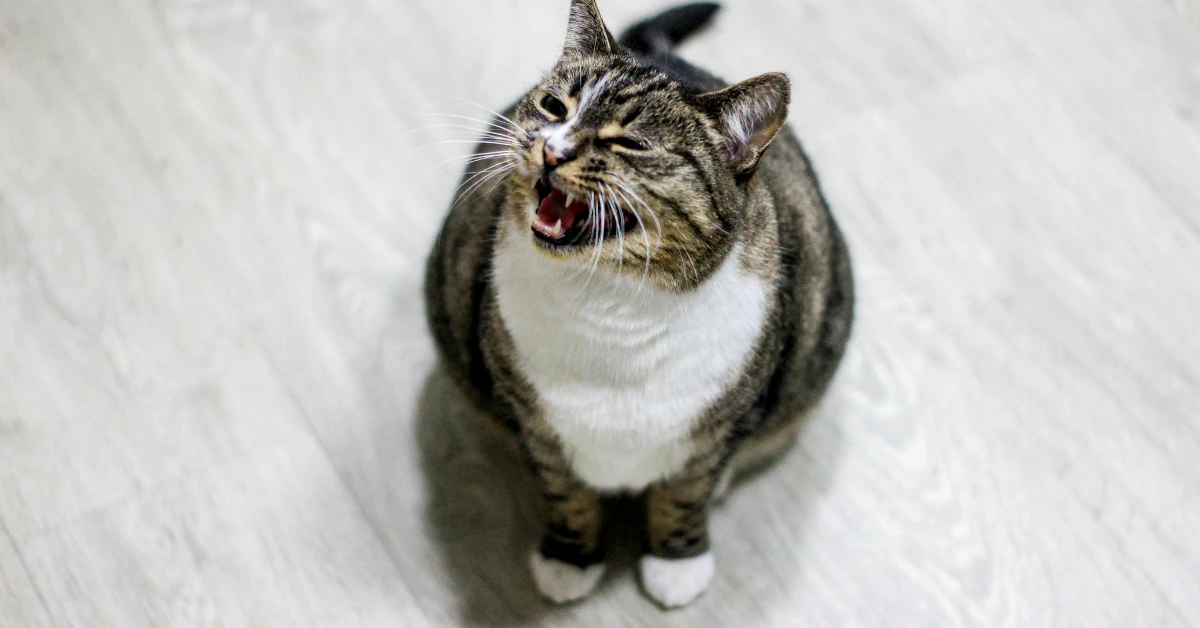
Your cat is meowing so much because she’s talking to you, not to other cats. Adult cats rarely “meow” at each other at all. They save that sound almost entirely for humans, using it to ask for food, attention, an open door, or just company. So when the noise ramps up, she’s trying to tell you something specific.
That 3 a.m. serenade probably isn’t random, either. If you’ve been asking yourself why your cat is suddenly so vocal, or why your indoor cat won’t stop meowing once the lights go out, the answer usually comes down to instinct, habit, or something in her environment that changed. Cats are wired to be busiest at dawn and dusk, so nighttime noise is often just biology doing its thing.
The good news: most excessive meowing is fixable without a single trip to the vet. Once you understand what’s driving the behavior, quieting things down is mostly about adjusting habits, not solving a mystery. Let’s break down exactly why she won’t shut up, and what actually works to calm it.
Why Is My Indoor Cat Meowing So Much?
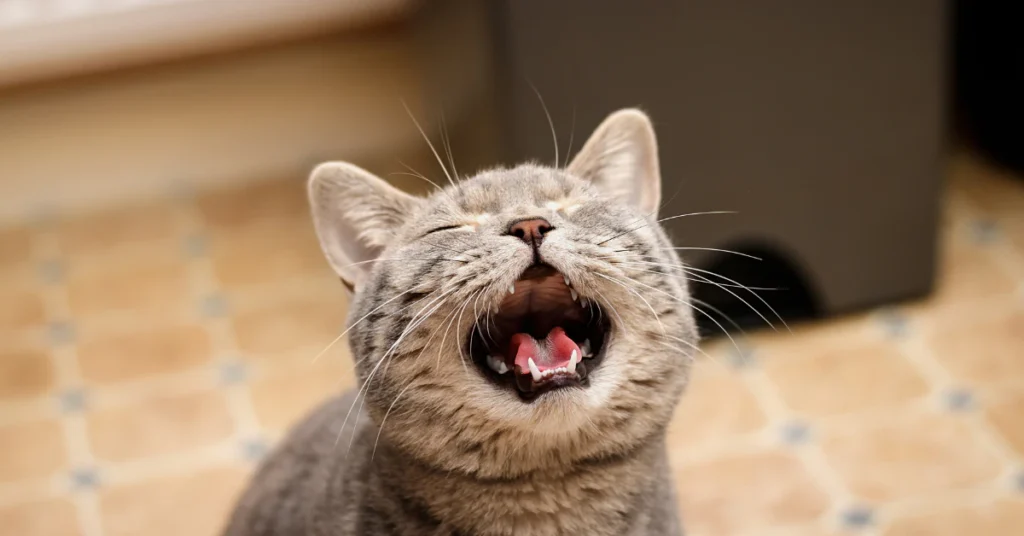
Here’s something most people don’t realize: adult cats barely meow at each other. It’s a sound they mostly grew into using on purpose, aimed straight at us. The ASPCA notes that meowing developed largely as a way for cats to communicate with people, since cat-to-cat conversation relies more on body language, scent, and other quieter signals. So when your cat opens her mouth, she’s usually talking directly to you.
Once you start paying attention, you’ll notice the meows aren’t all the same. A short chirp means something different than a long, drawn out wail. Learning the basic dialect helps a lot.
The Cat Meow Translator
| Type of Meow / Action | What They Mean | How You Should React |
| Short, single meow | A simple hello | Say hi back, no need to drop everything |
| 2 quick meows | A friendly greeting | Smile, chat with her, keep moving |
| Long, drawn out meow | A demand, usually food or a door | Check the obvious needs, then ignore if it continues |
| Low, rumbling meow | Mild annoyance or discomfort with the moment | Give her a little space |
| Loud, repetitive meowing at night | Boredom or built-up energy | Add play sessions earlier in the evening |
| High-pitched yowling | Frustration or, in unfixed cats, a mating call | Rule out heat cycles, add distraction |
A lot of daytime meowing comes down to plain old boredom or hunger. Indoor cats especially can run out of things to do, and a bored cat will often turn to noise just to shake up the routine. If mealtimes have gotten irregular, or she’s used to a treat every time she cries, that habit builds fast.
There’s also the mating angle. If your cat isn’t spayed or neutered, hormones can turn up the volume in a big way. This is where you might notice your female cat meowing so much and rubbing against everything in sight, the furniture, your legs, doorframes. That combination of loud yowling plus constant rubbing is usually her marking territory and broadcasting that she’s ready to attract a mate. It’s instinct, not a behavior problem, and it tends to fade once cats are spayed or neutered.
Bottom line: most meowing fits into a small handful of categories once you know what to look for.
Why Is My Cat Suddenly Being So Vocal?

A cat that goes from quiet to constantly chatty didn’t just wake up one day and decide to be loud. Something shifted. A new pet in the house, a move, rearranged furniture, or even a schedule change at work can all throw a cat’s sense of routine off balance, and the meowing is her way of reacting to that.
If the change happened overnight and seems extreme, a quick vet check is smart just to be safe. Beyond that, most sudden vocal shifts trace back to something in her world that moved, changed, or disappeared.
Why Is My Cat Meowing So Much All of a Sudden at the Door?
Cats are territorial by nature, and a closed door feels like a wall cutting off part of their patrol route. She’s not being dramatic for no reason. In her mind, that room is hers to check, and a shut door blocks her from doing her job.
This is especially common with bathroom doors, bedroom doors, or any spot she used to have free access to. Once a door closes, expect a paw scratch, a meow, or both.
The fix is usually simple: give her a consistent routine around which doors stay open and which stay closed, so the boundary feels normal instead of new.
Why Is My Cat Meowing So Much at Night?
Cats are crepuscular, meaning their natural energy peaks around dawn and dusk, not in the middle of the afternoon like ours does. That means the quiet hours when you’re trying to sleep are often exactly when she feels most awake and ready to move.
Add in a day spent napping with nothing to do, and all that stored up energy has to go somewhere. Nighttime meowing is frequently just built up boredom looking for an outlet.
Sometimes this comes paired with purring, which can throw people off. A cat meowing and purring at the same time is often sending two signals at once: she wants your attention badly, but she’s also comfortable and content near you. It’s not always a sign of distress. Sometimes it’s simply happiness mixed with an urgent request for company or play.
Either way, the pattern is worth noticing. A cat who’s loud at night but calm and quiet all day is usually asking for a schedule shift, not help with a bigger problem.
How Do I Get My Cat to Shut Up? (The Nice Way)
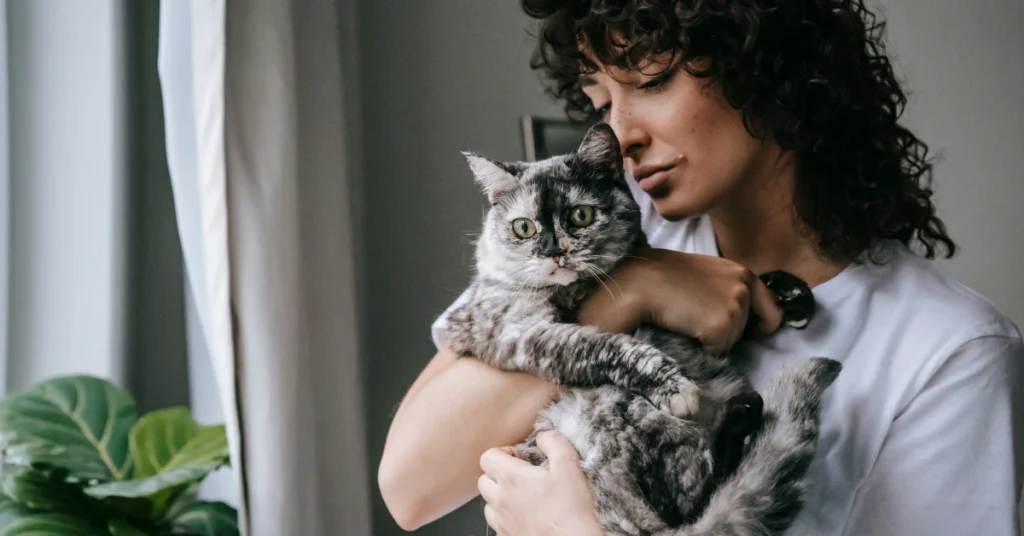
First, take a breath. Being exhausted and frustrated by a cat who won’t stop crying at 2 a.m. doesn’t make you a bad pet owner. It makes you a normal human who wants some sleep. The fixes here are simple, but they take a bit of patience before they click.
The Power of Ignoring
This is the hardest tip and also the most effective one. According to the Humane Society of the United States, ignoring demand meowing is one of the best ways to stop it for good.
Here’s why: every time you get up, feed her, or even yell at her to stop, you’re teaching her that meowing works. Even negative attention counts as attention to a cat. She learns that loud enough, long enough, always gets a response.
So when the meowing isn’t tied to a real need, the move is to do nothing. No talking, no eye contact, no getting out of bed. It’ll feel brutal for a few nights, but the behavior fades once she learns the noise doesn’t pay off anymore.
Resetting the Feeding Schedule
A lot of nighttime meowing is really just hunger dressed up as noise. If she’s used to an irregular schedule, or gets fed the second she cries, that connection gets wired in fast.
Try this instead:
- Feed on a fixed schedule, same times every day
- Move the last meal closer to bedtime so she’s not hungry at 3 a.m.
- Consider a timed feeder for an early morning portion, so she associates the feeder with food, not you
- Never feed immediately after a meow, wait for a calm moment first
Burn the Energy
Since cats naturally want to be active at dawn and dusk, working with that instinct instead of against it makes a huge difference. A tired cat is a quiet cat.
Quick tips to wear her out before bed:
- Run a 10 to 15 minute play session an hour or two before you sleep, using a wand toy or laser
- Rotate toys weekly so she doesn’t get bored of the same ones
- Add a cat tree or window perch so she has something to do during the day
- Try a puzzle feeder to give her brain something to work on besides waiting for you
Give these a week or two of consistency before deciding whether they’re working. Most cats settle into the new routine faster than owners expect.
Keeping Your Indoor Cat Entertained
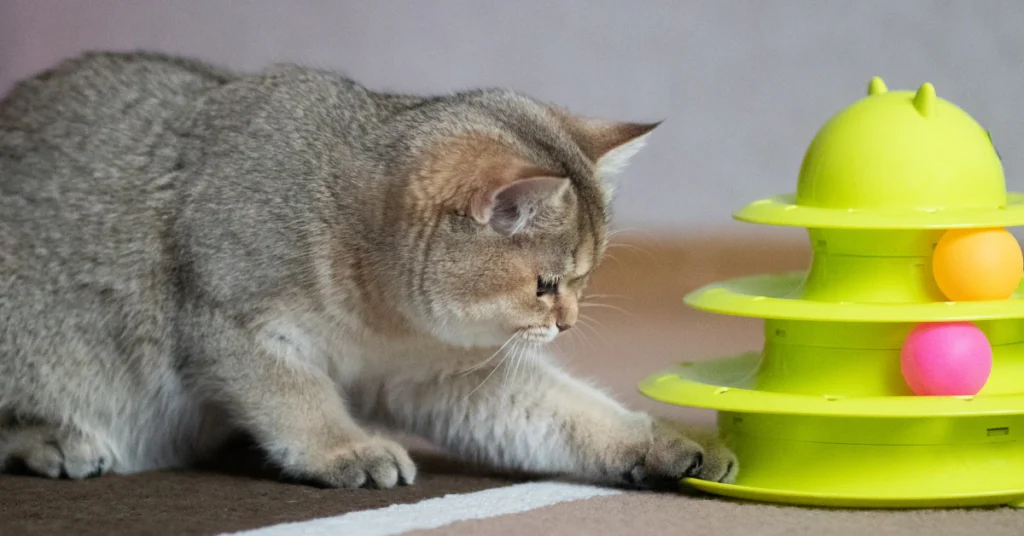
If there’s one root cause behind most excessive meowing, it’s boredom. Indoor cats don’t get the natural stimulation of patrolling outside, hunting bugs, or exploring new smells, so they end up looking for entertainment wherever they can find it, and often that means vocalizing at you.
The fix doesn’t need to be expensive. A few small additions to her daily routine can make a real difference:
- Set up a window perch near a bird feeder or busy street so she has a constant show to watch
- Rotate two or three puzzle feeders so mealtime doubles as mental exercise
- Save a few cardboard boxes, cats are endlessly entertained by a simple box to sit in or hide inside
- Add a scratching post near her favorite napping spot to give her an outlet close by
- Swap toys out every week or two so nothing gets stale or ignored
If you’re dealing with a kitten instead of an adult cat, expect the meowing to be even more frequent. Kittens have huge amounts of energy and very little patience, so a kitten meowing constantly is often just a request for more playtime, not a sign anything’s wrong. Short, frequent play sessions throughout the day usually work better for kittens than one long session, since their attention spans are still short.
Whatever her age, the goal is the same: give her enough to do during the day so she isn’t saving up all that energy for 2 a.m.
Frequently Asked Questions
Why is my indoor cat meowing so much?
Indoor cats often meow from boredom, hunger, or a need for attention, since they don’t get the natural stimulation of the outdoors. It’s usually fixable with more playtime and a consistent feeding schedule.
How do I get my cat to shut up?
Ignore meowing that isn’t tied to a real need, since responding to it (even negatively) teaches her the noise works. Pair that with a fixed feeding schedule and daily play to cut down on the demand meowing over time.
Why is my cat suddenly being so vocal?
A sudden change usually points to something new in her environment, a schedule shift, a new pet, or a move. If it happens overnight and seems severe, a quick vet visit is a smart precaution.
Why is my cat meowing while walking around?
This is often just her narrating or searching for you, especially in cats that are naturally chatty breeds. It can also mean she’s looking for food, attention, or a toy she lost track of.
What does “2 quick meows” mean?
Two short meows in a row are typically a friendly greeting, similar to saying hello. No response is needed beyond a quick acknowledgment.
Should I ignore my cat meowing at me?
Yes, if the meowing isn’t tied to hunger, litter box access, or another real need. Ignoring demand meowing is one of the most effective ways to reduce it long term.
Final Thoughts on Your Chatty Feline
A vocal cat is a cat who trusts you enough to ask for things. It’s frustrating at 2 a.m., sure, but that constant chatter is really just proof of a strong bond between you two. With a little patience, the noise settles down without losing the connection.