This article is for general information only. It isn’t a substitute for professional veterinary advice, diagnosis, or treatment.
Cats bite for many reasons, and most have nothing to do with hating you. A bite can mean your cat is overstimulated, caught up in play, scared, or even in pain. So if you’re asking “why does my cat bite me,” the honest answer is: it’s usually just your cat’s way of talking.
You are not alone in this. Nearly 400,000 cat bites happen every year in the United States. That means owners everywhere are dealing with the exact same confusion you feel right now. Your cat’s bites might seem random, but they follow patterns. Once you learn to read those mixed signals, from gentle nips to sudden nips out of nowhere, the whole thing starts to make a lot more sense.
The 5 Main Reasons Your Cat Bites You
Cats don’t bite for just one reason. Most bites fall into five main categories, and figuring out which one fits your cat can save you a lot of confusion (and skin).
Overstimulation
This is the most common reason cats bite during petting. Stroking feels good to your cat at first, but their skin has a limit. Once that limit is hit, the same touch that felt nice a minute ago starts to feel like too much. The bite is your cat’s way of saying “that’s enough,” not an attack.
Play Aggression
Cats are hunters by nature. Stalking, pouncing, and biting are all part of how they play, especially if they never had a sibling or fellow kitten to teach them how hard is too hard. If your cat grabs your hand mid-play and gives it a nip, this is usually what’s going on.
Fear
A scared cat will almost always try to run and hide first. But if your cat feels cornered or can’t get away, biting becomes a last resort. This kind of bite is defensive, not personal.
Pain
Sometimes a bite that seems to come out of nowhere is actually about pain. Cats are naturally good at hiding when they hurt, so a bite might be the first real clue that something is wrong. If your cat suddenly starts biting during normal handling and this is new for them, it’s worth paying attention to.
Redirected Aggression
This is the one that confuses owners the most. Your cat gets worked up by something they can’t reach, like another cat outside the window or a sudden loud noise. Since they can’t take it out on the real trigger, they turn and bite whoever happens to be nearby. That’s often you.
This is also why a bite can seem to come back later, sometimes hours after the original trigger. Your cat may still be carrying that leftover tension without you ever knowing what set it off in the first place.
Warning Signs Owners Often Miss
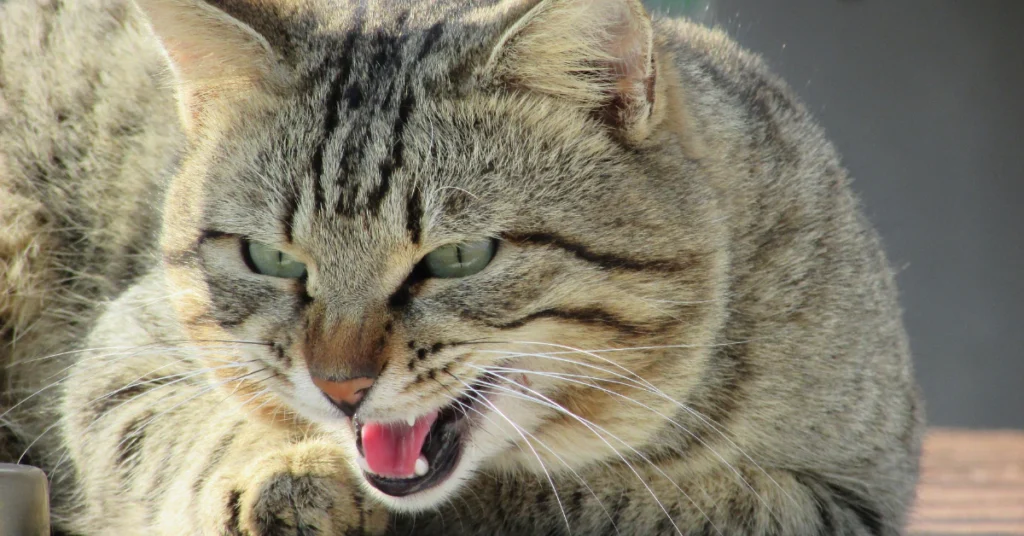
Cats rarely bite without warning. The problem is that the warning is usually quiet, and easy to miss if you’re not looking for it. Watch for:
- Tail flicking or lashing back and forth
- Ears turning sideways or flattening back
- Pupils suddenly getting bigger
- Skin rippling along the back
- A sudden stillness or tension in the body
If you catch any of these signs, that’s your cue to pause and give your cat some space. It’s much easier to prevent a bite than to figure out why one already happened.
The “Love Bite” vs. Real Aggression
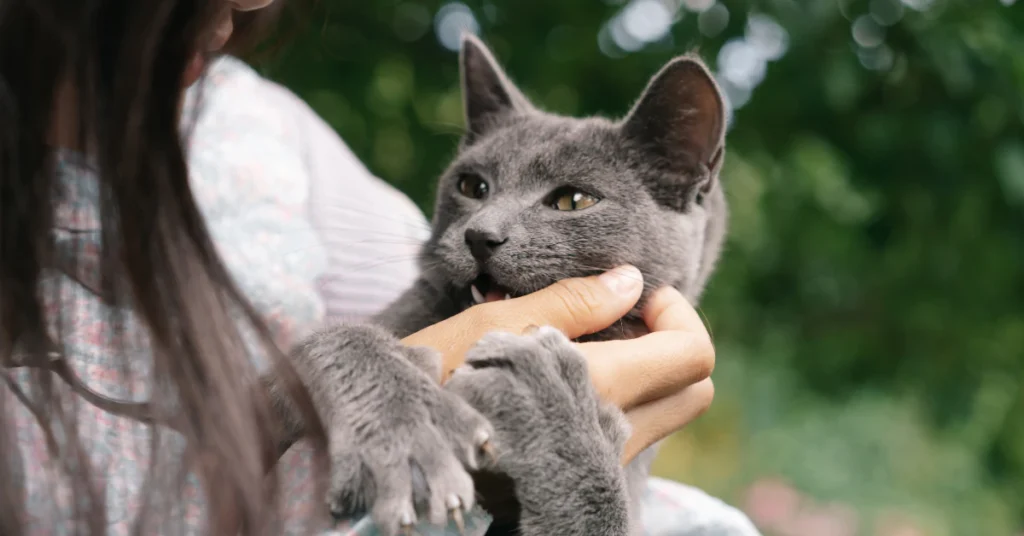
A gentle bite doesn’t always mean your cat is upset with you. Sometimes it’s the opposite.
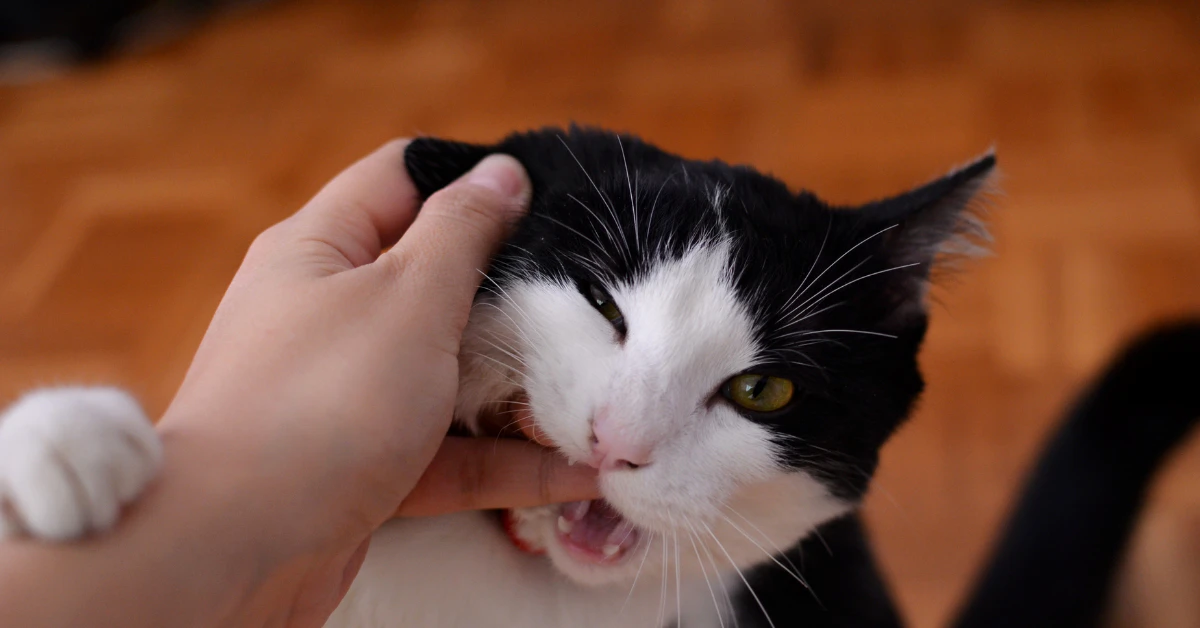
What people call a “love bite” is thought to come from the way cats groom each other. Bonded cats lick and gently nibble one another as a normal part of affection and social bonding. When your cat does this to you, it may simply be treating you the way it would treat another cat it trusts.
This is also why a cat can be purring one second and nipping you the next. It isn’t a contradiction. A relaxed, affectionate cat can still give a small nip, especially if the petting has gone on a bit long or the excitement is building.
Here’s how to tell the difference:
| Love Bite | Aggressive Bite | |
| Pressure/Skin Break | Light, rarely breaks skin | Hard, often breaks skin |
| Duration | Quick, single nip | Can be sudden or repeated |
| Body Language | Relaxed body, soft eyes, may be purring | Flattened ears, tense body, dilated pupils |
| Aftermath | Cat stays close or keeps cuddling | Cat backs away, hisses, or stays tense |
If your cat nips and then settles right back in beside you, you probably weren’t in trouble. That’s just how they say “I like you” in cat.
Ankle Ambushes & “Misdirected Predation”
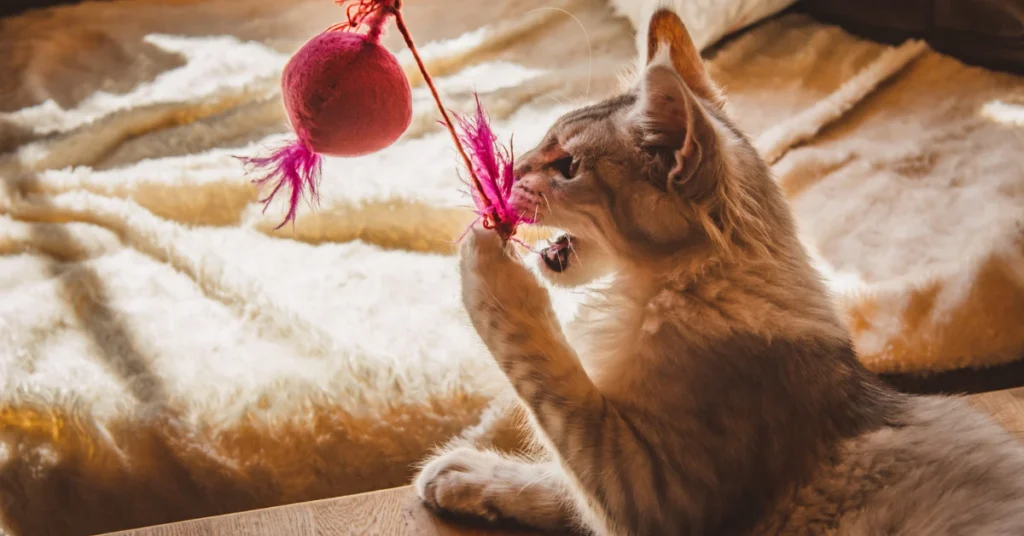
If your cat waits around a corner just to pounce on your ankles, you’re dealing with something vets call misdirected predation.
Cats are born hunters. In the wild, that hunting instinct gets used every day, chasing, stalking, and catching real prey. Indoor cats still have that same drive, but they don’t have mice or birds to chase. So your moving feet become the closest thing to prey they can find.
This behavior is also tied to how a cat learned to play as a kitten. Kittens normally learn how hard is too hard by wrestling and biting their littermates. If a kitten gets bitten too hard, its sibling yelps and play stops for a moment. That’s how bite inhibition gets learned. Cats who were weaned early, or who grew up without other kittens, often miss out on this lesson. As adults, they may not have learned where the line is, so the “hunt” on your ankles can come with real teeth and claws.
The good news is this energy can be redirected. Try these simple steps:
- Keep a wand toy or fishing-pole style toy nearby for quick play sessions
- Give your cat a few minutes of active hunting play, chasing, and pouncing, before times you know they tend to ambush you
- Toss a toy mouse or crinkle ball down the hallway right before you walk through it
- Never use your hands or feet as toys, even in fun, since this teaches your cat that skin is fair game
A few short play sessions a day can take a lot of pressure off your ankles.
The Confusing “Lick-Then-Bite” Combo
You’re mid-cuddle, your cat is licking your hand softly, and then suddenly, teeth. It can feel like a light switch flipped with no warning, and that flip is exactly what makes this so confusing for owners.
Here’s what’s likely happening. Licking is a grooming behavior cats use with other cats they feel close to. When your cat licks you, it may be treating you the same way it would treat a trusted cat friend, as part of the group it grooms and bonds with.
The trouble is, that same closeness can build up quickly. As the licking continues, your cat’s excitement or arousal can climb until it crosses a line you can’t see coming. That sudden nip is often the moment your cat’s tolerance threshold gets reached, even though nothing about the interaction seemed to change from your side.
So the lick wasn’t fake affection, and the bite doesn’t cancel it out. Both can be true at once. Your cat was likely being affectionate right up until the moment their body told them it was time to stop, and the bite was simply how they said so.
Out of Nowhere: Feline Hyperesthesia Syndrome
Sometimes a bite really does come out of nowhere, and it has nothing to do with mood or manners. It might be a real medical condition called feline hyperesthesia syndrome, or FHS.
FHS is different from ordinary overstimulation. With regular petting-induced biting, you can usually spot the buildup: your cat gets a little tense, the tail starts twitching, and then comes the nip. FHS looks and feels more sudden and more physical. According to Cornell Feline Health Center, cats with FHS may show:
- Rippling or twitching skin, usually along the lower back near the tail
- Dilated pupils
- Sudden, intense grooming or biting directed at their own back, tail, or flank
- A reaction that seems to come from touch that wouldn’t normally bother them
The key difference is where the reaction is aimed. With FHS, the skin itself seems to be the trigger. Your cat may react as if their own back suddenly became uncomfortable or irritated, sometimes even biting at themselves rather than you, right in the middle of what looked like calm petting.
If you notice these physical signs, especially the rippling skin and dilated pupils, alongside the sudden biting, it’s worth mentioning to your vet rather than assuming it’s just a behavior quirk. This isn’t something you can diagnose from a blog post. It’s simply a pattern worth watching for and describing to a professional, since it involves your cat’s physical wellbeing.
The Real Safety Risk: Why Cat Bites Are Dangerous
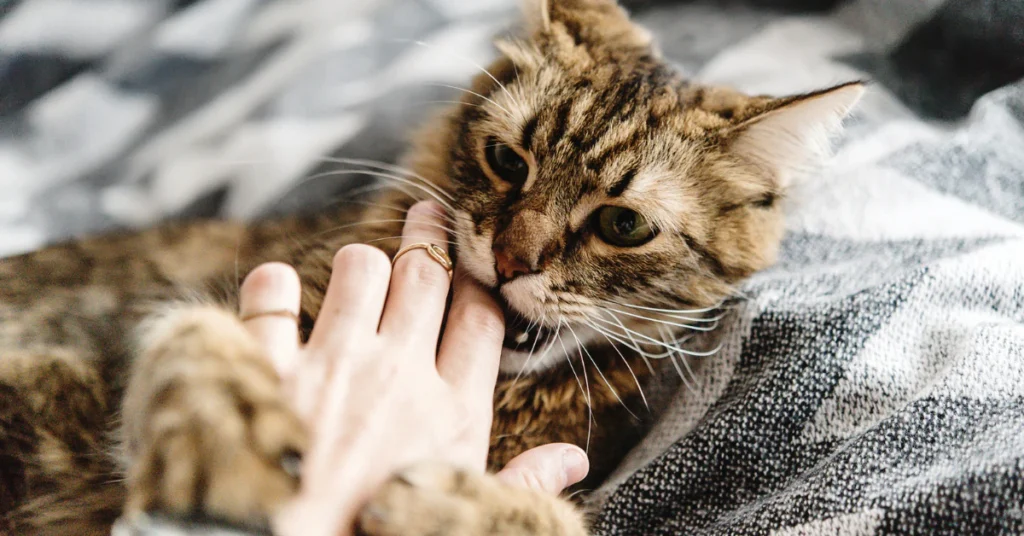
A quick but important note: the information below is educational, not medical advice. If you’ve been bitten and are worried about infection, please contact a doctor rather than relying on this article alone.
A cat bite can look like nothing, just two tiny puncture marks, and still turn into a real problem within a day. This is exactly why cat bites so often feel worse than they look.
The reason comes down to a cat’s teeth. Unlike a dog’s teeth, which tend to tear and scrape, a cat’s teeth are thin and needle-like. When a cat bites, those teeth drive bacteria deep into the tissue instead of leaving it near the surface. One of the most common bacteria involved is Pasteurella multocida, which lives in most cats’ mouths.
Then something else works against you. Because the puncture is so small, the skin often closes over quickly. That seals the bacteria inside a small, warm pocket with very little oxygen, which happens to be the exact environment bacteria like that thrive in. So a bite that looked minor at first can quietly turn into an infection underneath the skin.
This isn’t a rare fluke either. Cat bites become infected at a notably higher rate than dog bites, commonly cited around 30 to 50 percent. That’s a meaningful risk, not a worst-case scenario.
When a doctor visit isn’t optional:
- The bite broke the skin, even if it looks small
- The area is on your hand, wrist, or near a joint
- You notice redness, swelling, warmth, or pain that shows up or gets worse within a day
- You feel feverish or generally unwell after being bitten
- The bite came from a cat whose vaccination status you don’t know
If any of these apply, don’t wait it out at home to see if it settles down on its own. Deep puncture wounds like these are hard to clean properly without medical help, and infections from Pasteurella multocida can move fast. Getting it looked at early is a lot easier than treating it after it’s already spread.
For more general guidance on animal bite safety, the ASPCA is a reliable place to start.
How to Stop Biting (And Why Discipline Backfires)
Most owners try to stop biting the same way they’d correct a dog: a firm “no,” a tap on the nose, maybe a spray bottle. With cats, this approach usually backfires.
According to Cornell Feline Health Center, physical punishment, even something as small as a light tap on the nose, increases a cat’s fear and anxiety. Some cats don’t back down from this either. They read it as a challenge and become more aggressive, not less. So the exact thing meant to correct the behavior can end up making it worse.
This matters more than it might seem. Cornell also notes that aggression is the reason behind 27 percent of cats surrendered to shelters for behavioral problems. Biting isn’t just an annoying habit to tolerate or punish away. Left unaddressed, it can genuinely put a cat’s home at risk.
So what actually works? A calmer, quieter approach:
- The moment your cat bites, stop what you’re doing and remove your attention. Stand up, walk away, or simply stop petting.
- Don’t yell, don’t swat back, and don’t chase after them to scold them.
- Give your cat a minute or two to settle before returning to normal interaction.
- When your cat sits calmly without biting, especially during petting, reward that with a treat or gentle praise.
- Keep interactions short and positive rather than pushing until a bite happens.
Over time, this teaches your cat that calm behavior gets attention, and biting makes it disappear. That lesson tends to stick a lot better than fear ever does.
Frequently Asked Questions
Do cats show affection by biting?
Yes, in a specific way. A gentle nip during calm petting or after licking is often a “love bite,” which is thought to come from the same grooming behavior cats use with other cats they trust. It’s usually light, quick, and doesn’t break skin.
How do you discipline a cat when they bite you?
The best approach isn’t punishment at all. Stop the interaction, remove your attention, and reward calm behavior instead. Physical correction, even something mild like a tap or a spray bottle, tends to increase fear and can make biting worse.
What does it mean if a cat bites you gently?
A gentle bite usually means your cat is either showing affection or telling you they’ve had just about enough petting for now. Watch their body language. Relaxed and soft means affection. Tense and still means it’s time to pause.
Why does my cat grab my arm and bite me?
This is most often play aggression. Cats are natural hunters, and grabbing and biting are part of how that instinct comes out, especially if they never had a sibling to teach them how hard is too hard.
What is the highest form of affection from a cat?
There’s no official ranking, but a slow, deliberate blink is one of the clearest trust signals a cat can give. Research has shown cats are more likely to slow blink at people they feel comfortable around, and they’ll often approach someone who slow blinks at them first.
Why should you not stare a cat in the eyes?
A hard, unblinking stare reads as a threat or a challenge to a cat, based on how cats communicate with each other. A slow blink sends the opposite message: that you’re relaxed and not a threat at all.
Conclusion
A bite from your cat isn’t usually a verdict on how they feel about you. Most of the time, it’s overstimulation, play, fear, or a signal you simply missed. Learning to read those small cues, a flick of the tail, a change in the eyes, can save both of you a lot of confusion. And when in doubt, your vet is always the right person to ask.