No, you cannot legally or practically keep a Pallas cat as a pet in the US. International wildlife treaties, federal laws, and the species’ extreme health risks in captivity make private ownership off the table, even for experienced exotic animal owners.
Chances are, you landed here after watching a round, fluffy cat plant its paws on its own tail and stare into the camera with pure disdain. That viral clip has turned the Pallas cat into one of the internet’s favorite “grumpy” animals, and it’s easy to see why people fall for that face.
But behind the memes is a real wild cat with real needs. The Pallas cat is native to the cold, rocky steppes of Central Asia, and it’s currently listed as Near Threatened. Before you start dreaming about one curled up on your couch, here’s what you actually need to know.
What Exactly is a Pallas Cat? (Size, Fur, and That Famous Tail)

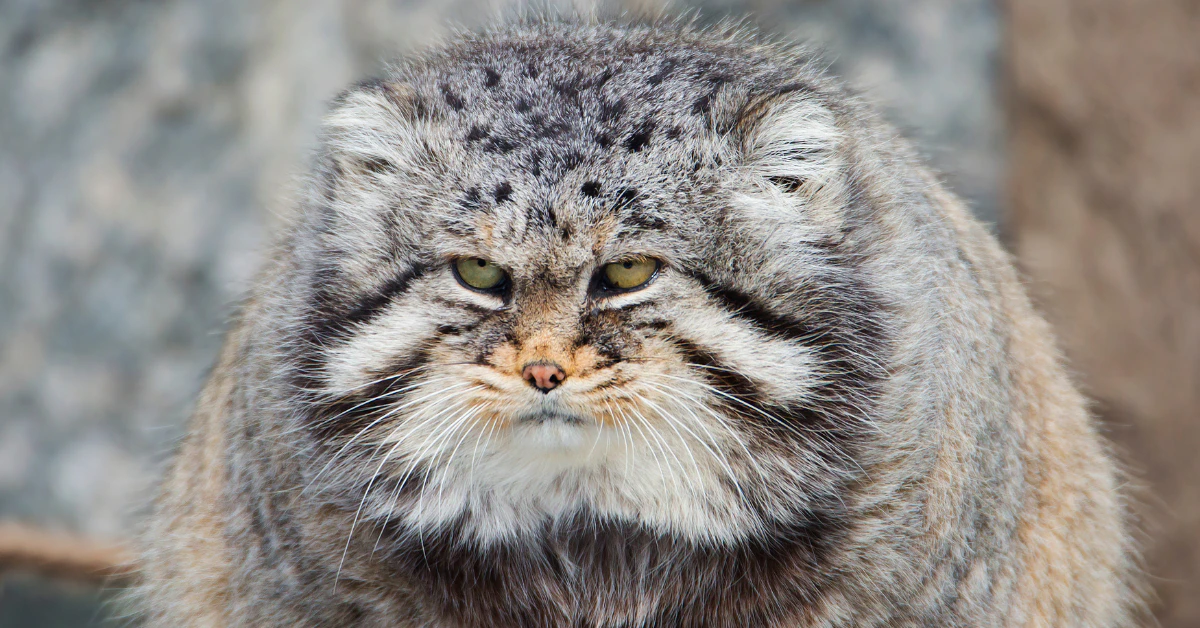
Despite its wild reputation, the Pallas cat is surprisingly small. Adults weigh between 5.5 and 11 pounds, so in terms of pure size, you’re looking at something close to a stocky housecat. It’s the thick fur and low, wide build that make it look so much bigger on camera.
That fur isn’t just for show. Pallas cats have the densest coat of any cat species, and it lets them handle temperatures as low as negative 60 degrees Fahrenheit on the open steppe. This is also the secret behind the viral “standing on tail” videos you’ve probably seen. When a Pallas cat’s paws get cold or wet from snow, it shakes the snow off and rests its paws on its own bushy tail to warm them up. It’s not a trick. It’s a real survival habit these cats use in the wild, and kittens learn it from their mothers early on.
One Pallas cat became genuinely famous for this behavior. Zelenogorsk, who lived at the Novosibirsk Zoo in Russia, went viral after a video of him warming his paws this way racked up millions of views. He passed away in February 2026 at age 13, more than double the typical lifespan for a wild Pallas cat. Over his life, he fathered more than 35 kittens, making him one of the most important cats in the species’ captive breeding history, not just an internet star.
The Legal Reality: Can You Own a Pallas Cat in the US?

A lot of people assume the Big Cat Public Safety Act of 2022 settled this question. It didn’t, at least not directly. That law only covers lions, tigers, leopards, cheetahs, jaguars, and cougars, along with any hybrids of those species. The Pallas cat isn’t mentioned at all, because it’s not a “big cat” by the law’s definition.
So why can’t you own one? The real answer comes from a stack of other rules working together.
First, the Pallas cat is listed on CITES Appendix II, an international agreement that controls trade in animals whose survival could be threatened. To legally bring one into the US, the exporting country would need to issue a permit proving the trade won’t harm the wild population. In practice, this is extremely hard to get, especially since Pallas cats are already protected under domestic law in nearly every country where they live.
Second, there’s the Lacey Act. This federal law makes it a crime to possess any wildlife that was captured, sold, or exported illegally, even if you personally did nothing wrong. If a Pallas cat entered the country without a valid CITES permit, owning it anyway puts you on the hook too.
On top of all that, most US states have their own exotic animal laws layered on top of the federal rules. Even in states that allow some wild cats with a permit, a Pallas cat would need to pass facility inspections built for animals that can safely live in captivity, something this species struggles with even in professional zoos.
Put it all together, and legal ownership isn’t just discouraged. It’s functionally closed off.
U.S. Fish and Wildlife Service: Big Cat Public Safety Act rule
Why You Can’t Just Buy One: The Pallas Cat Pet Price Reality
If you’re searching for a pallas cat pet price, here’s the honest answer. There isn’t one, because they are not sold to the public anywhere in the US.
The only Pallas cats living in this country are in about 17 AZA-accredited zoos, including places like the Smithsonian National Zoo, Denver Zoo, and Hogle Zoo. These cats aren’t purchased individually. They’re part of a coordinated Species Survival Plan, where zoos work together to manage breeding for the health of the overall population, not to supply buyers.
So if you ever come across a website or social media post offering to sell you a Pallas cat kitten, treat it as a red flag. At best, it’s a scam designed to take your money for an animal that doesn’t exist. At worst, it’s a genuine black market listing, and buying from one is a federal offense.
Under 16 U.S. Code § 3373, penalties for illegally trafficking protected wildlife can include steep fines and even criminal charges. There’s no safe or legal price tag here, because this isn’t a market you can actually shop in.
The “Domestic Hybrid” Myth: Pallas Cat vs. Savannah and Bengal

You may have come across the idea of a pallas cat domestic hybrid online. It sounds plausible, since other wild-looking cats like Savannahs and Bengals are mixed with housecats. But with Pallas cats, this isn’t something that actually happens.
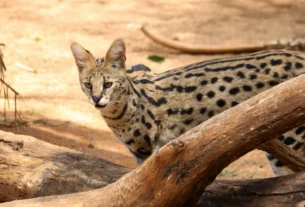
Here’s the science in simple terms. Most cats, including domestic cats, servals, and Asian leopard cats, belong to closely related genus groups. That close relation is what makes crossbreeding possible. The Pallas cat is different. It’s the only member of its own genus, called Otocolobus. That extra genetic distance means a true Pallas cat and domestic cat hybrid has never been scientifically documented, no matter what old field notes or online rumors suggest.
This is a big part of why Savannah and Bengal cats are legal to own in most states, while Pallas cats are not. Those two breeds are domestic cats with some wild ancestry bred in, not wild species themselves.
| Feature | Pallas Cat | Savannah Cat | Bengal Cat |
| Species/Genus | Otocolobus manul (wild species) | Felis catus hybrid (serval ancestry) | Felis catus hybrid (Asian leopard cat ancestry) |
| Legal Status (US) | Not legally ownable | Legal in most states, some restrictions | Legal in most states, some restrictions |
| Price Range | No legal market | Roughly $2,000 to $20,000+ | Roughly $1,000 to $25,000 |
| Hybrid Status | True wild species, not a hybrid | True hybrid (wild x domestic) | True hybrid (wild x domestic) |
The bottom line is simple. A Savannah or Bengal cat is a domestic cat with wild roots. A Pallas cat is, and always will be, fully wild.
Are Pallas Cats Dangerous? Behavior and Bite Force
Searches for “pallas cat is dangerous” and “can a pallas cat kill you” usually come from the same place as the pet questions: that grumpy face just looks intense. Realistically, a cat this size isn’t going to kill an adult human. But don’t let the cute videos fool you either. This is a true wild predator, not a pet that happens to look wild.
The numbers back that up. A Pallas cat’s bite force at the canine tip measures 155.4 newtons, with a bite force quotient of 113.8. In plain terms, that’s a strong, sharp bite for an animal its size, built for taking down prey quickly, not for cuddling.
Pallas cats are also solitary by nature. They don’t seek out company, human or otherwise, and when cornered or threatened, they respond with real aggression, not a hiss and a swat like an annoyed housecat. None of the easygoing, domesticated temperament that thousands of years of breeding gave regular house cats exists here. Every instinct in a Pallas cat is built for survival on a cold, empty steppe, not for life on your sofa.
So no, you’re not likely to see headlines about a Pallas cat attack. But that’s because almost no one gets close enough to one to find out, not because they’re secretly friendly.
The Heartbreaking Reality of Pallas Cat Kittens in Captivity

A baby Pallas cat is impossibly cute, which is exactly why so many people search for pallas cat kittens hoping to find a path to owning one. But the real story behind these kittens is heartbreaking, and it’s one of the strongest reasons this species simply can’t be kept as a pet.
Pallas cats evolved in remote, high-altitude parts of Central Asia, places where they had almost no contact with a common parasite called Toxoplasma gondii. Most domestic cats carry some immunity to this parasite without any issue. Pallas cats never developed that same protection, since their isolated environment never exposed them to it.
The result shows up tragically in captivity. Peer-reviewed studies from zoos have recorded kitten mortality rates from toxoplasmosis as high as 35 to 58 percent in some litters. These numbers come from institutions with full-time veterinary teams, specialized diets, and controlled environments built specifically for this species.
If world-class zoo care still loses more than a third, sometimes more than half, of a litter to this one disease, a home environment offers no realistic chance at all. An amateur attempt to raise a Pallas cat kitten isn’t just illegal. It’s very likely a death sentence for the animal, no matter how much love or effort goes into it.
This section covers general health research findings and is not a substitute for guidance from a licensed veterinarian or wildlife veterinary specialist.
Clearing Up the Money Myths: $13 Million and $20,000 Cats
If you came here searching for a cat “worth $13 million” or “worth $20,000,” you may have landed on this article by accident, and neither of those cats is a Pallas cat.
The $13 million cat is Tommaso, a stray cat from Rome who got lucky in 2011. His owner, an elderly Italian woman with no children, left her entire fortune to him when she passed away. He’s famous for an inheritance, not for being a rare breed.
The $20,000 price tag usually points to a Savannah cat, specifically an early generation one known as F1 or F2. These are the result of breeding a serval with a domestic cat, and the closer a Savannah is to its wild serval ancestor, the higher the price climbs.
So if either of these numbers is what brought you here, now you know the real story, and it has nothing to do with a Pallas cat.
Wrapping Up: Quick FAQs
A couple of last questions deserve quick, straight answers before you go.
What is the lifespan of a Pallas cat?
In the wild, Pallas cats typically live 8 to 9 years. In AZA-accredited zoos, with full veterinary support, that number stretches to around 11 years on average, with some individuals living as long as 13.
What is the most misbehaved cat breed?
This one doesn’t really apply here. Pallas cats aren’t a domestic breed at all, they’re a separate wild species, so they don’t fit on any list ranking pet behavior. If you’re weighing “misbehaved” domestic breeds, that’s a completely different conversation from anything covered in this article.
And that’s the full picture. The Pallas cat is a fascinating, resilient wild animal, but every fact points the same direction: admire it from a screen, support the zoos and conservation groups working to protect it, and leave the pet ownership dream to cats that were actually built for home life.