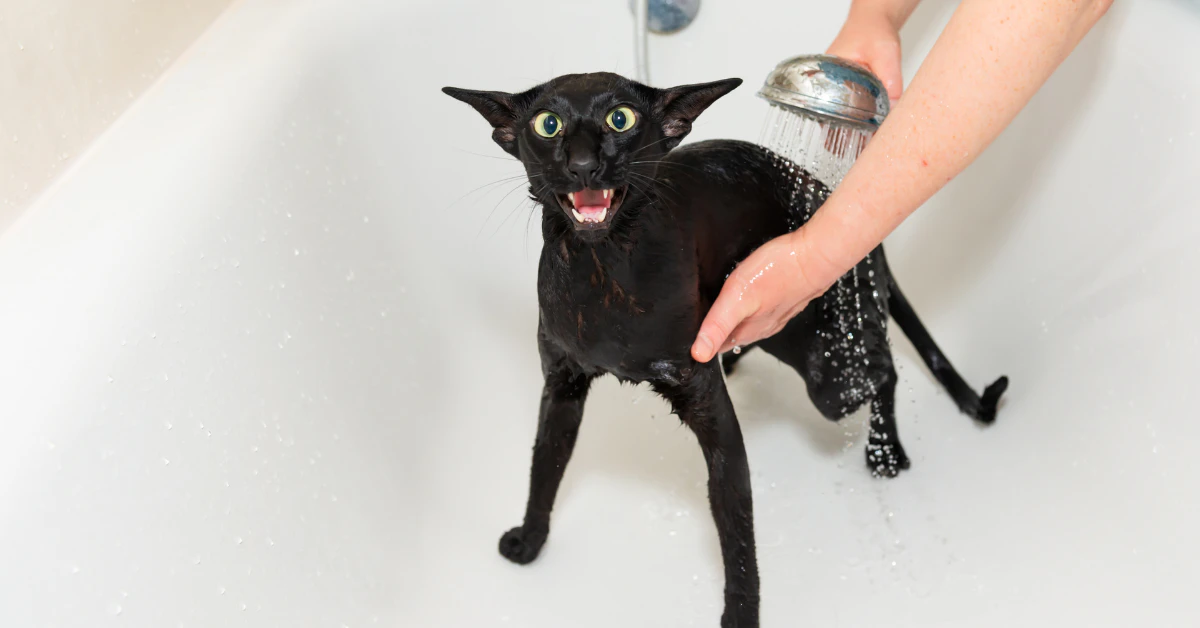
Most cats hate water because their wild ancestors came from dry desert regions, not rivers or lakes. Cats never needed to deal with big bodies of water to survive. On top of that, a cat’s fur isn’t waterproof, so getting wet feels heavy, cold, and uncomfortable fast.
That desert history runs deep. Domestic cats descend from Felis lybica, a wildcat built for arid land, not swamps or streams. Water simply wasn’t part of daily survival for these animals, so there was never much evolutionary pressure to get comfortable around it.
Dogs, by comparison, often have water-resistant double coats built for different climates and jobs, like retrieving from lakes. Cats didn’t get that upgrade. Their fur soaks up water instead of shedding it, which explains a lot of the drama at bath time.
The Desert Origins: Why Felines Avoid Getting Soaked
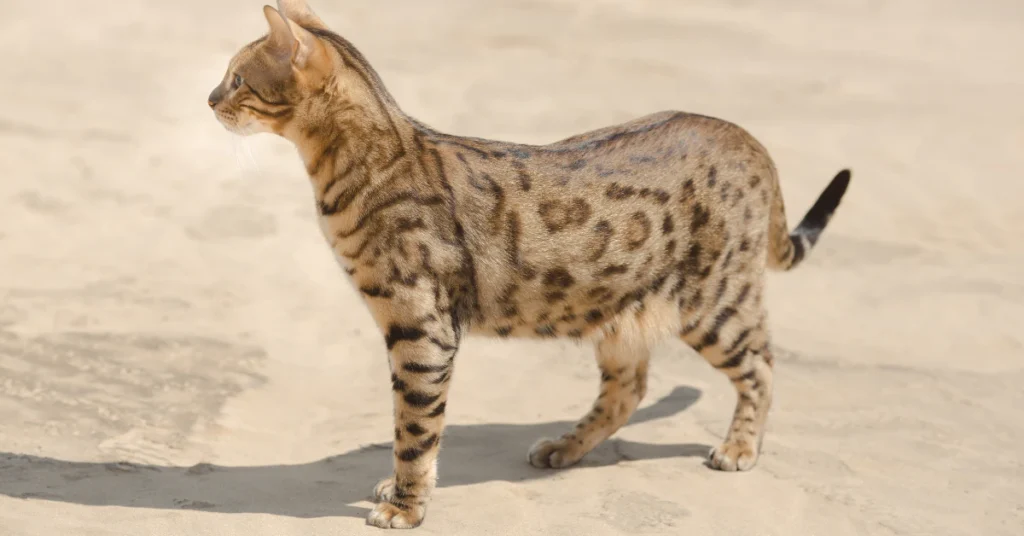
Cats can swim. They just really don’t want to.
That’s an important difference. A cat dropped in a pool will usually doggy paddle its way to safety just fine. But being able to swim and wanting to get wet are two separate things, and for cats, the second part never evolved.
Their ancestor, the African wildcat, lived in dry, rocky terrain with little standing water. There was no evolutionary reason to build a body suited for lakes or rivers. So cats kept paws made for stalking on solid ground, not paddling.
Their fur makes the problem worse. Cat coats soak up water rather than repelling it. Once wet, that fur gets heavy fast, and a soaked cat suddenly feels slower and clumsier than usual.
For an animal that is both a hunter and a target for bigger predators, feeling slow is a serious problem. A cat that can’t move quickly feels exposed and vulnerable, which is likely why so many cats react to water with instant, dramatic escape attempts.
Dogs had a very different path. Many breeds were developed specifically to work in and around water, like retrieving birds from lakes. Their coats often carry natural oils that help shed water instead of absorbing it, and their evolutionary jobs rewarded a love of getting wet. Cats never got that assignment, so they never got the coat, or the attitude, to match.
The Paradox: Why Do Cats Hate Water But Love Fish?
This is the question that trips up a lot of cat owners. If cats hate water so much, why does every cartoon cat want a fish dinner?
The answer is simple. Cats never actually evolved to fish for their food. Their desert ancestors hunted small land animals like rodents and birds, not salmon. Fish only entered the picture once humans started feeding it to them.
Cats love fish for the same reason they love most meat: it’s packed with protein and has a strong smell that appeals to their sharp sense of smell. The appeal is about taste and nutrition, not some deep connection to lakes or oceans.
So a cat begging for tuna isn’t contradicting its hatred of water. It’s just enjoying a tasty meal that happens to come from one.
Sinks, Fountains, and Bowls: The Running Water Mystery
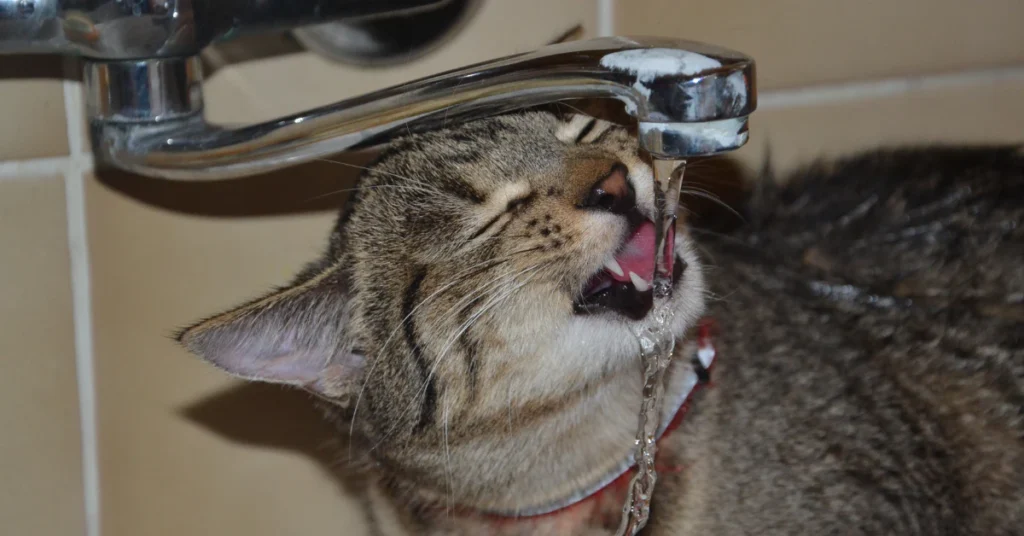
Here’s a scene plenty of cat owners know well. A cat flees from the bathtub like it’s on fire, then trots straight over to bat at the dripping kitchen faucet minutes later.
It sounds contradictory, but it isn’t. Vets believe cats are drawn to moving water because it reads as fresher and safer, a holdover from their wild instincts. Still water can carry more bacteria, so a stream from a tap or fountain simply seems more trustworthy.
A bath is a different story. Still, enclosing water feels less like a drink and more like a trap, especially when a cat can’t easily escape it.
There’s also a theory called whisker fatigue. Some vets think a cat’s whiskers touching the sides of a bowl can overload their sensitive senses, making them hesitant to dip their face in. Not every vet agrees this is a real condition, so it’s worth treating as a debated idea rather than a proven fact.
Either way, it helps explain why a water fountain often gets more love from a cat than a water bowl ever will.
The Exceptions: Why Do Cats Hate Water But Tigers Don’t?
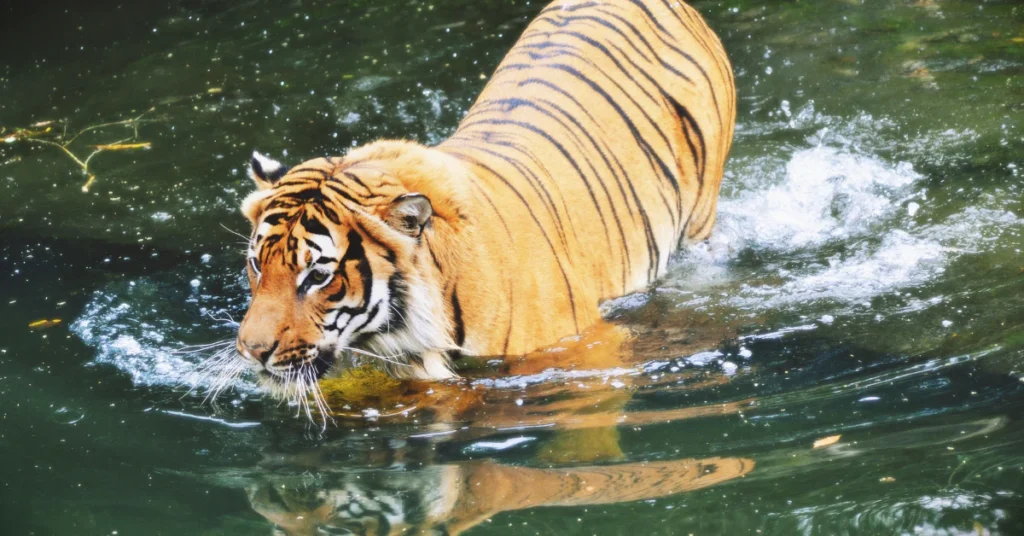
Tigers break every rule your house cat follows. They swim across rivers, cool off in ponds, and look completely at ease doing it.
Part of the answer is in their feet. Tigers have partially webbed toes, a real physical feature that helps push them through water more efficiently, according to the San Diego Zoo Wildlife Alliance. That’s not something your average house cat has.
Tigers also evolved in jungles and wetlands with rivers and lakes everywhere, not deserts. Swimming wasn’t optional for them. It helped them cool down, hunt, and get around their territory. Water was simply part of daily survival in a way it never was for desert-dwelling domestic cat ancestors.
Some house cats got a similar advantage, just on a smaller scale. A handful of breeds grew up around water or picked up traits that make them more comfortable in it.
| Breed | Why It Tolerates Water |
| Turkish Van | Native to a region near Lake Van in Turkey, with a coat that resists soaking through |
| Maine Coon | Descended from ship cats used for rodent control, so they got used to damp conditions on boats |
| Bengal | Related to the Asian leopard cat, a wild ancestor with natural ties to water |
| Turkish Angora | Shares water-tolerant ancestry with the Turkish Van, with a coat that handles dampness well |
These breeds are still the exception. Most house cats are working from the same desert blueprint, webbed toes definitely not included.
Are You The Problem? The Human Anxiety Factor in Bath Time
A cat owner’s own energy plays a bigger role in bath time than most people realize.
Cat owners who have spent years around multiple cats often notice the same pattern. The cats who panic hardest at bath time usually have owners who approach it tense, rushed, or ready for a fight. Cats pick up on that energy fast, and it makes everything worse.
Think about it from the cat’s side. Being grabbed, held down, and dunked by someone who seems stressed out feels threatening, not relaxing. That tension gets remembered.
The spray bottle habit doesn’t help either. Using a spray of water to punish a cat for jumping on the counter or scratching furniture teaches that cat to associate water with sudden, unwanted ambushes. Over time, even a harmless faucet drip can start to feel like a threat.
A calmer approach usually gets a calmer reaction. Slow movements, a relaxed voice, and patience go a long way toward making water feel less like an attack and more like something to tolerate, or maybe even enjoy.
Water Safety: Pools, Temperature, and Do Cats Even Need Baths?
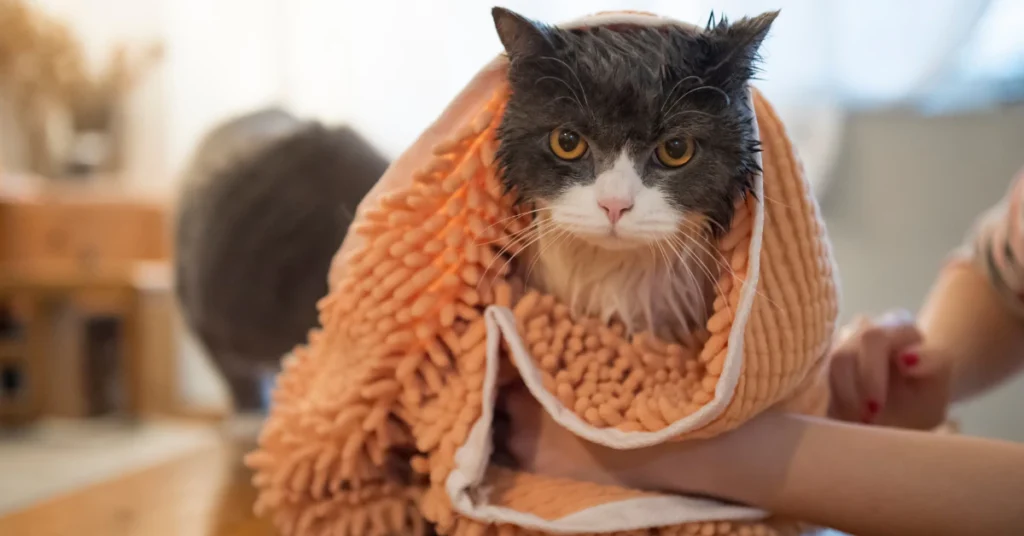
Most healthy cats don’t need regular baths at all. They groom themselves constantly, which keeps their coat clean without any help from a human and a bottle of shampoo.
Outdoor water sources are a different story, especially if you have a backyard pool.
Diluted pool water itself isn’t a major threat to cats. But the chemicals used to treat pools, like chlorine tablets, algicide, and pool shock, are a real hazard before they’re mixed in. According to the ASPCA, these undiluted chemicals are corrosive and can cause severe ulcers in a cat’s mouth, throat, and esophagus if ingested. Always store them somewhere your cat can’t reach.
Temperature matters too. A soaked cat loses its natural insulation, and getting chilled is a real risk for kittens, senior cats, or any cat in a cold house. Drying a wet cat off fully, rather than letting them air dry, helps avoid this.
If your cat ever ingests pool chemicals, or shows signs of severe distress, shivering that won’t stop, or illness after being wet, contact your veterinarian right away. This article is not a substitute for professional veterinary advice.
Frequently Asked Questions
Do cats actually dislike water?
Most cats do, but not all of them. The dislike comes mostly from desert ancestry and fur that soaks up water instead of repelling it. Breeds like the Turkish Van, Maine Coon, and Bengal are known exceptions, often thanks to specific ancestry or coat traits that make water feel less threatening.
Is it bad for cats to get wet?
Getting wet occasionally isn’t harmful for a healthy adult cat. The bigger concern is chilling, since wet fur loses its insulating power fast. This matters most for kittens, senior cats, or any cat in a cold environment, so drying them off thoroughly afterward is a smart habit.
What annoys cats the most?
Loud noises and forced handling rank high on the list. Cats also dislike being rushed or grabbed, especially during stressful moments like baths. A calm, patient approach tends to go over much better than a tense one.
What is the 3-3-3 rule for cats?
This one isn’t actually about water, but it comes up a lot in cat searches. The 3-3-3 rule is a guideline for newly adopted cats, covering the first 3 days to decompress, 3 weeks to settle into a routine, and 3 months to feel fully at home. It helps new owners set realistic expectations during that adjustment period, even though it has nothing to do with bath time.
Conclusion
Cats and water will probably never be best friends, and that’s okay. Their dislike comes down to simple biology: desert ancestry, fur that soaks instead of sheds, and instincts built for dry land, not lakes.
But the story isn’t black and white. Some breeds break the mold, running water gets a very different reaction than bath water, and even human energy plays a bigger role than most owners realize.
Next time your cat side-eyes the bathtub but happily bats at a dripping faucet, you’ll know exactly why.