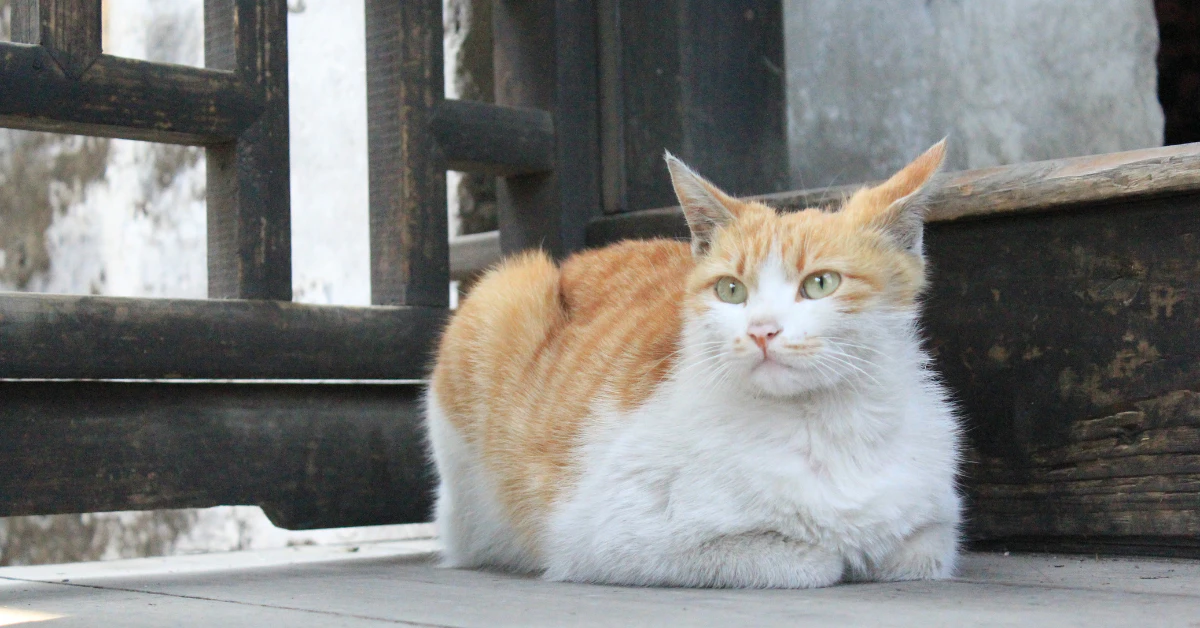
Your cat just tucked all four paws under its body and now looks exactly like a fresh loaf of bread. You are not wrong to find this funny. You are also not wrong to wonder what it means.
Cats loaf when they tuck their front and back paws underneath their body and curl their tail in close, forming a round, bread-like shape. Cats loaf sit mainly because it is comfortable, it helps them stay warm, and it makes them feel safe. In most cases, a loafing cat is a relaxed cat. It is one of the most normal positions a cat can sit in, and it usually just means your cat is happy right where it is.
The 3 Main Reasons Cats “Loaf Up”
Cats do not need a reason to be strange, but loafing actually has a few solid ones behind it. When a cat loafs up, it is usually doing one (or all) of these three things on purpose.
They Are Keeping Warm
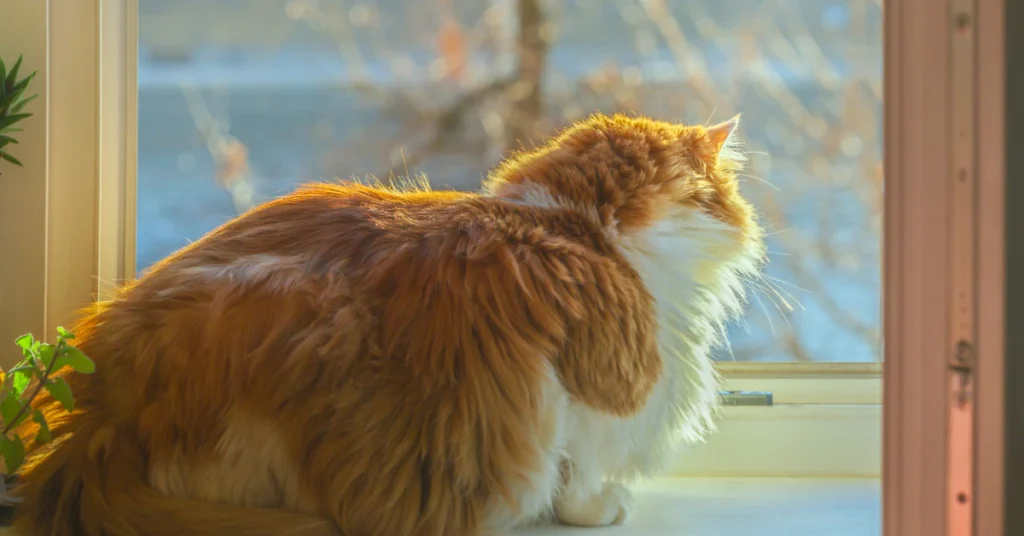
Tucking all four paws under the body is a smart way to trap heat. Cats lose warmth fastest through their paws, belly, and ears, so folding everything in close keeps the cold out. This is why you will often spot a loafing cat parked on a sunny windowsill or curled up near a heater vent. Small body, less surface area, more warmth. It is simple cat math.
They Feel Safe and Secure
A full loaf hides a cat’s soft underbelly, which is its most vulnerable spot. Small animal vet Dr. Hannah Godfrey explains that loafing is likely to make cats feel more secure and less vulnerable, while also helping them stay comfortable and warm. So when your cat loafs themselves into a tight little bread shape, it is often a quiet signal that they feel protected in that moment, whether that is because of you, the room, or just familiar surroundings.
They Are Simply Relaxed
Sometimes the reason is the easiest one. Loafing is comfortable. Cats do not need a deeper motive to sit this way other than it feels good. A relaxed cat often chooses the position that takes the least effort while still keeping them alert enough to react if something interesting happens nearby.
Put these three together and you get the full picture of why do cats loaf up so often. It is warmth, safety, and comfort, all rolled into one tidy, bread-shaped package.
Decoding the Context: Why Do Cats Loaf on You, the Floor, or Facing Away?
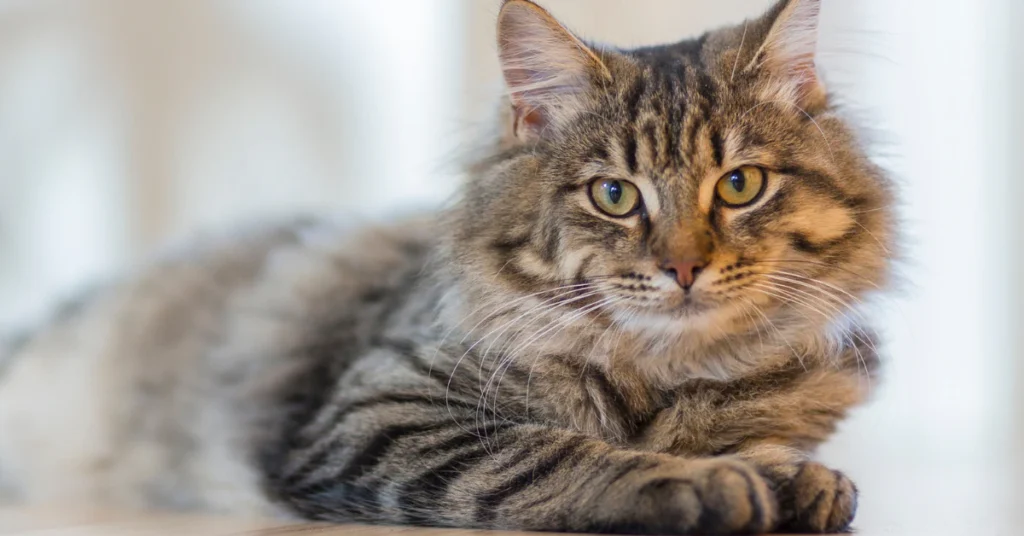
Where your cat loafs can tell you just as much as the position itself. Cats are picky about location, and the spot they pick is rarely an accident.
Loafing on you or on your chest: This is about as close as a cat gets to a hug. A cat loafing on your chest is soaking up your body heat and your scent at the same time, and it is choosing to make itself vulnerable right on top of you. That only happens with someone a cat fully trusts.
Loafing next to you: A cat that settles into a loaf beside you is keeping you company without needing direct contact. Think of it as a companionable presence. Your cat gets the comfort of being near you while still having room to stretch, watch the room, or doze off on its own terms.
Loafing facing away from you: This one trips people up, but it is actually a compliment. A cat that turns its back to you while loafing is trusting you to watch out for danger from behind. It is free to focus on scanning the rest of the room because it has decided you are not a threat.
Loafing in the middle of the floor or in random places: This often comes down to a good vantage point. The middle of the room usually gives a cat a clear view of doors, windows, and movement from multiple angles. A central, open spot lets your cat relax while still keeping an eye on everything going on around it, which is exactly the kind of balance cats are built to look for.
So whether your cat loafs on your lap, next to your feet, or smack in the middle of the hallway, the location usually comes down to the same two things: how safe they feel and how good the view is from there.
What It Means When They Loaf and Stare (or Close Their Eyes)
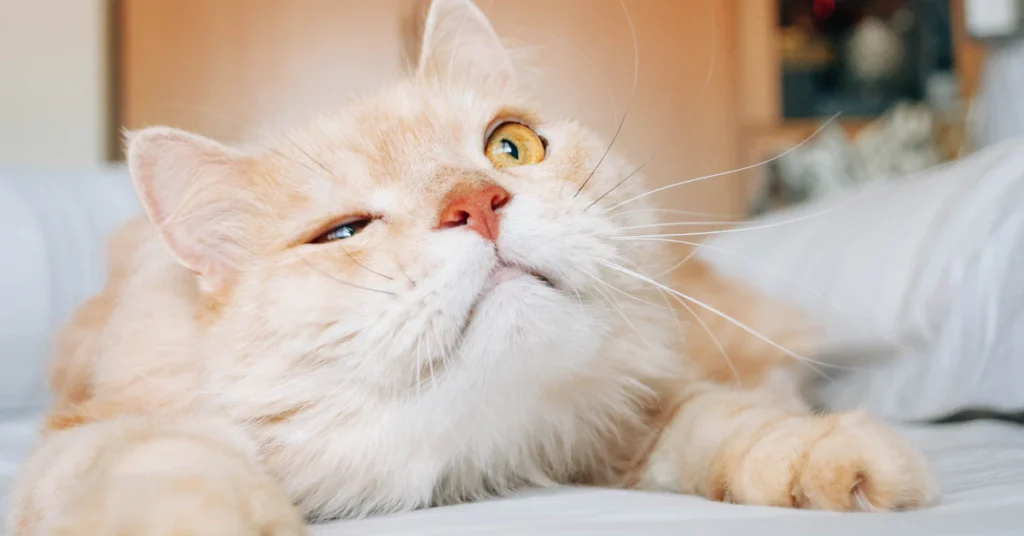
A loafing cat’s eyes tell two very different stories, depending on what they are doing with them.
A cat that loafs and stares at you is usually just keeping tabs on things. Cats are natural watchers, and a loaf gives them a comfortable front-row seat. They might be tracking your movements, waiting to see if you are headed toward the kitchen, or simply checking in because you are part of their environment worth paying attention to. It can look intense, but it is rarely anything more than casual observation.
Closed or narrowed eyes during a loaf tell a completely different story, and it is a sweeter one. Researchers at the University of Sussex ran an actual study on this and found that slow blinking, narrowing the eyes and then closing them gently, works as a genuine trust signal between cats and people. In the study, cats were more likely to slow blink back at an owner who slow blinked first, and they were also more willing to approach someone who had slow blinked at them.
So if your cat loafs down, locks eyes with you, and then slowly closes them, that is not sleepiness talking. That is your cat telling you, in its own language, that it feels completely safe with you. You can even try slow blinking back. There is a good chance your cat will return the gesture.
The “Meatloaf” Position & When Loafing Signals Pain
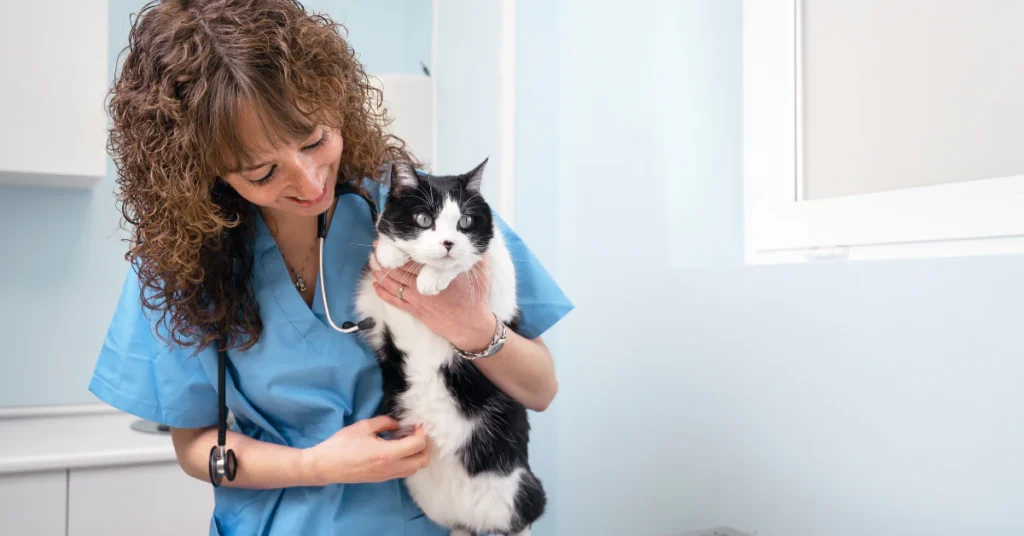
Note: The following is for informational purposes and is not a substitute for professional veterinary advice. If you are worried about your cat’s health, please contact your veterinarian.
Most loafing is nothing but comfort. But there is one variation worth knowing, because it can mean something different.
Vets sometimes call this the “meatloaf” position. Instead of a flat, relaxed loaf, the cat’s back is visibly arched or hunched up. Veterinary contributor Dr. Sarah Wooten points out that this arched-back version is worth paying closer attention to, since it can be a sign of nausea or stomach discomfort rather than plain relaxation.
Here is the tricky part. Cats are naturally good at hiding when something is wrong. It is an old survival instinct. In the wild, looking weak or sick makes an animal an easy target, so cats evolved to mask pain instead of showing it openly. A loaf can be one of the few outward clues that something feels off, especially if it looks tense or hunched rather than loose and flat.
Stress plays a role here too, not just illness. Dr. Wooten notes that cats often settle into a loaf during vet exams, even though they are clearly on edge in that moment. So loafing itself is not a reliable “my cat is calm” signal on its own. The shape of the loaf and the cat’s overall body language matter more than the position alone.
If your cat is loafing and showing any of the signs below, it is worth a call to your vet:
- Muscle tremors
- Skin rippling along the back
- Panting
- Pinned back ears
- Dilated pupils
One or two of these on their own are not automatically an emergency, but they are not things to ignore either. If you notice any of them alongside a hunched or unusual loaf, your vet is the best next step.
For general guidance on recognizing illness in cats, the AVMA offers a helpful overview of warning signs pet owners should watch for.
Quick Reference: Comfort Loaf vs. Pain, Cold, and Alert Loafs
Not all loafs look the same once you know what to check for. Here is a quick way to tell them apart.
| Comfort Loaf | Pain/Illness Loaf (Meatloaf) | Cold Loaf | Alert Loaf | |
| Trigger | Feeling relaxed and safe | Nausea or discomfort | A chilly room or surface | Watching for activity nearby |
| Body Language Cues | Flat back, eyes soft or closed | Hunched or arched back, tense body | Flat back, tightly tucked paws | Flat back, eyes open and tracking |
| What To Do | Let them rest | Watch for other symptoms and call your vet if concerned | Check the room temperature or offer a blanket | No action needed, just normal curiosity |
The Biomechanical Paradox: Is Loafing Actually Defensive?
Here is something fun to think about. A loaf protects a cat’s belly, which is its most vulnerable spot, so it looks defensive on the surface. But there is a catch.
With all four paws folded underneath its body, a cat cannot spring into a sprint right away. It cannot swat, lunge, or bolt without first unfolding itself, and that takes an extra second or two. For an animal built to react fast, that is a real tradeoff.
This means a true, relaxed loaf is not actually a great defensive position at all. It only makes sense if the cat genuinely does not expect trouble. So when your cat settles into a full, loose loaf nearby, it is not just comfortable. It is quietly telling you that it does not feel the need to be ready for anything. That is about as close to total trust as cat body language gets.
Frequently Asked Questions
Are cats happy when they loaf?
Usually, yes. A cat in a relaxed, flat loaf is typically comfortable and content. It is one of the clearest signs that your cat feels at ease in its surroundings.
What is a sad fact about cats?
Cats are instinctively good at hiding pain and illness, a leftover survival trait from the wild. This means an unusual or hunched loaf can sometimes be one of the only outward clues that something feels wrong, which is exactly why it pays to know the difference.
Why do cats loaf and close their eyes?
Closed or softly narrowed eyes during a loaf are a strong sign of trust and safety. Your cat is comfortable enough in that moment to let its guard down completely.
How do you say “I love you” in a cat?
Try the slow blink. Narrow your eyes at your cat like a relaxed smile, then close them for a couple of seconds. Research shows cats are more likely to slow blink back, which is their own way of saying the feeling is mutual.
Conclusion
So the next time your cat folds itself into a tidy little loaf, you can relax right along with it. Most of the time, it is just your cat being warm, safe, and perfectly content. Pay attention to the shape and the signs around it, and you will always know when a loaf is just a loaf, and when it is time to call the vet.