No, dogs should not eat almonds. The ASPCA says sweet almonds are not toxic, but vets still advise against them. Dog ate one or two plain almonds? Monitor closely. Small dog, more than a few, or coated almonds? Call your vet, ASPCA Poison Control at (888) 426-4435, or Pet Poison Helpline at (855) 764-7661.
Veterinary note: This guide is not a substitute for professional veterinary advice. Risk varies with your dog’s size, age, health, and diet. Never induce vomiting at home without expert advice. Pancreatitis needs vet care. Call 24/7: ASPCA (888) 426-4435 (fee may apply) or Pet Poison Helpline (855) 764-7661 ($89 per incident, follow-ups included).
My Dog Just Ate Almonds: How Many Is Too Many and What to Do Now

Take a breath first. No veterinary group publishes an almond dose per pound, so vets judge risk by three things: how many almonds, your dog’s size, and any coating.
Size matters. A couple of almonds may worry you less with a Saint Bernard than with a Yorkshire Terrier. Small dogs also face a higher risk of a blocked windpipe or intestine.
Use this AKC rule of thumb:
- One or two plain almonds: Watch your dog closely.
- More than a few: Call your vet.
- Coated or seasoned almonds: Call right away, since Hill’s Pet advises calling when almonds come with other toxic ingredients.
Why does the coating matter? Salt can cause water retention and salt toxicity. Chocolate and xylitol are also dangerous for dogs.
Here is some good news. The ASPCA says its experts find that 50 to 75% of cases can be managed safely at home when the exposure is not severe.
Signs to watch for:
- Vomiting
- Diarrhea
- Gas
- Loss of appetite
- Lethargy
- Belly discomfort
Pancreatitis, a painful swelling of the pancreas that fatty food can trigger, can look like a simple upset stomach at first. Vets do not publish a set countdown clock for almonds, so keep watching and call if anything changes.
What about making your dog vomit? Advice online clashes. PetMD says a vet may induce vomiting in the clinic within about 30 minutes. Pet Poison Helpline says never do it at home, and never give home antidotes, without expert advice. Let the vet decide.
Before you call, gather five things:
- What your dog ate (plain, salted, flavored, or chocolate-covered)
- How many
- Any coating or seasoning (keep the package)
- Your dog’s weight
- When it happened
Call ASPCA Poison Control at (888) 426-4435 or Pet Poison Helpline at (855) 764-7661 ($89 per incident, follow-ups included).
The ASPCA Myth vs. Reality: Why “Not Toxic” Does Not Mean Safe
You may have read that almonds are poison for dogs. The ASPCA actually lists that claim on its internet myths page. Sweet almonds, the kind sold for eating in the US, are not toxic to pets.
That does not make them a good snack. “Not toxic” and “safe” are two different things.
Bitter almonds are the exception. They contain a cyanide compound and are considered toxic. They are typically not sold in the US, though some natural food stores may carry them, marked as bitter. Sweet almonds from a regular grocery store are the ones most dogs get into.
Here is why sweet almonds still cause trouble:
- Lots of fat. Almonds, like most nuts, hold high amounts of oils and fats.
- Upset stomach. Dogs don’t easily digest them, so vomiting and diarrhea are common.
- Pancreatitis. The ASPCA says stomach trouble and pancreatitis are possible if a lot of sweet almonds are eaten.
- Blockage. Almonds are hard, and they can block a dog’s esophagus, intestines, or windpipe, especially in small breeds.
What about the benefits of almonds for dogs? People often ask because almonds are a popular health snack for humans. But the vet sources in this guide don’t recommend almonds for dogs. The fat load and the hard nut meat cause more problems than any possible upside.
Your dog does not need almonds. If you want to share a snack, pick something else and ask your vet what fits your dog’s diet.
The 4 Real Risks of Feeding Almonds to Dogs (And High-Risk Breeds)

Vets point to four main problems with almonds.
Choking and Blockage
Dogs rarely chew almonds well. A whole nut can lodge in the windpipe, esophagus, or intestines, mostly in small and toy breeds. Blockages can be fatal if not treated and sometimes need surgery.
Pancreatitis (Some Breeds Face Higher Odds)
Almonds are high in fat. The American Animal Hospital Association (AAHA) says a single high-fat meal can trigger acute pancreatitis, a painful swelling of the pancreas. PetMD adds that it can look like simple indigestion at first, then turn severe.
Signs to watch for:
- Repeated, severe vomiting
- Diarrhea and poor appetite
- Belly pain or a swollen belly
- Lethargy and fever
- Trouble breathing
Some breeds get pancreatitis more often: Miniature Schnauzers, Yorkshire Terriers, Cocker Spaniels, Dachshunds, Poodles, and sled dogs. If you own one, skip almonds completely.
Salt, Coatings, and Trail Mix
Salty almonds can cause water retention and salt toxicity. Salt is especially risky for dogs with heart disease.
Flavored almonds and trail mix can hide other dangers:
- Onion or garlic powder: can damage red blood cells and cause anemia.
- Chocolate: a common cause of pet poisoning calls.
- Raisins: grapes and raisins are a top food danger for dogs.
- Macadamia nuts: toxic, with weakness, vomiting, and tremors.
- Xylitol: a sweetener that can crash a dog’s blood sugar.
Mold on Old Nuts
PetMD says any moldy nut is toxic to dogs. Aspergillus molds can grow on nuts and make aflatoxins, which harm the liver. The FDA warns that in pet food, these toxins can be present even when no mold shows.
Other mold toxins can cause vomiting, drooling, high body temperature, tremors, and seizures. Signs start within 1 to 2 hours, or up to several hours later. This applies to nuts in general, so keep old pantry bags and compost away from your dog.
Can Dogs Eat Almond Butter or Drink Almond Milk? (The 3-Step Label Check)
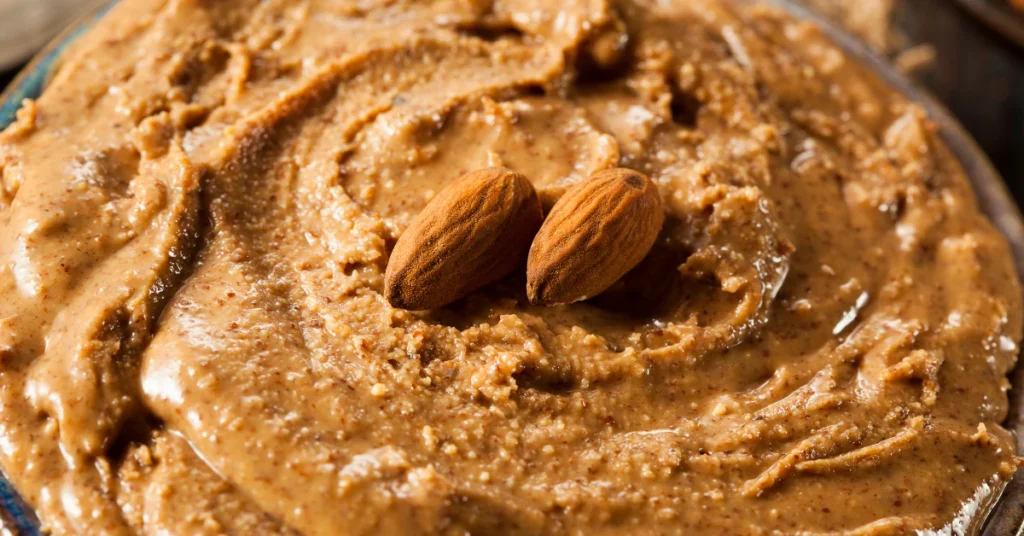
Plain almond butter skips the choking risk of whole nuts. PetMD says it is not toxic, but it is high in fat and may contain salt, sugar, or xylitol. Run this quick label check before your dog gets even a lick.
Look for xylitol. The FDA says some nut butters contain it. Check the label on every jar, especially ones marked sugar-free or low sugar.
Dogs absorb xylitol fast, and it can set off a big insulin spike. Blood sugar can drop within 10 to 60 minutes. Other serious effects may show up 12 to 24 hours later, and PetMD says liver failure can happen in some dogs. Signs include vomiting, weakness, staggering, collapse, and seizures. If you think your dog had xylitol, go to a vet or emergency clinic right away.
Sweeteners are a real problem. In the ASPCA’s 2025 data, food and drink was the second biggest exposure category at 16.4% of more than 376,000 items. Grapes, raisins, xylitol gum, onions, and garlic led the list.
Check for added salt and sugar. Less is better.
Think about your dog’s fat limit. Almond butter is rich. AAHA says one high-fat meal can trigger pancreatitis. Skip it if your dog has had pancreatitis or belongs to a high-risk breed.
What about almond milk?
A small lick from an accidental spill is fine, says PetMD. Don’t pour it as a treat. The fat can cause diarrhea, pancreatitis, and weight gain.
What about almond oil?
Vet groups have not confirmed that almond oil is safe for a dog’s food or coat. It is pure fat, and fatty food can trigger pancreatitis. Ask your vet before trying it.
What Nuts Can Dogs Eat? Peanuts, Cashews, Walnuts, and Why Vets Disagree
Start with what vets agree on. These are toxic to dogs:
- Macadamia nuts: weakness, vomiting, tremors, and high body temperature, usually within 12 hours (recovery is expected in 24 to 72 hours)
- Black walnuts
- Bitter almonds
- Any moldy nut
Pistachios are not toxic. Too many can cause stomach upset and pancreatitis, and shells can cause a blockage.
Where Vets Disagree
Even inside PetMD, advice clashes. One vet in its almond article calls the walnut family and pecans a definite no. PetMD’s nut guide, by Dr. Ardente, calls English walnuts, pecans, and cashews generally safe, apart from fat and choking worries. AKC says cashews are fine only in very small amounts and too fatty for regular treats. Preventive Vet says to avoid raw cashews.
So, can dogs have walnuts or cashews? Here is the simple rule: when vets disagree and the nut is fatty, skip it.
Can Dogs Have Peanuts?
PetMD says shelled, unseasoned peanuts are generally safe in small amounts. Peanuts are technically legumes, and many people say that is why they are safer. The calories tell a different story:
| Nut (per 100 g) | Calories |
| Almonds, dry roasted, unsalted | 598 |
| Almonds, blanched | 590 |
| Peanuts, dry roasted, unsalted | 587 |
| Cashews, dry roasted, unsalted | 574 |
| Pistachios, dry roasted | 572 |
| English walnuts, raw | 654 |
| Pecans, dry roasted | 710 |
Peanuts and almonds are nearly the same. No vet source we found says the legume label makes peanuts safer. The documented difference is shape. PetMD says almonds are a choking hazard because of their size and shape, and the AKC says they can block the windpipe or intestines.
So what nuts can dogs eat? Very few, and only a little. Even the safer ones are fatty.
Safer Treat Swaps (And What to Feed a Mildly Upset Stomach)
Keep all treats combined under 10% of your dog’s daily calories.
Scrambled eggs: Cook them fully and plain, with no oil, butter, salt, or seasoning. Greasy food can trigger pancreatitis. PetMD suggests about a quarter egg per week for dogs up to 10 lb, and up to two for dogs over 90 lb. Skip eggs if your dog is allergic.
Cooked salmon: A safer fish than tuna, which is high in mercury and not for puppies.
Mild upset stomach: The AKC lists plain boiled chicken with white rice, plain pumpkin (never pie filling), and unseasoned bone broth. None of these replace vet care.
If your dog is vomiting after almonds, skip home diets. Call your vet. Pancreatitis needs IV fluids, pain relief, and anti-nausea drugs.
Veterinary note: This guide is not a substitute for professional veterinary advice. Risk varies with your dog’s size, age, health, and diet. Call 24/7: ASPCA (888) 426-4435 (fee may apply) or Pet Poison Helpline (855) 764-7661 ($89 per incident).
Frequently Asked Questions
What happens if my dog eats almonds?
It depends on the count, your dog’s size, chewing, and any coating. Watch closely after one or two plain almonds. Call a vet after more than a few, or right away for small breeds, pancreatitis signs, bitter almonds, or xylitol, chocolate, onion, or garlic coatings. Never induce vomiting at home.
What nut is toxic for dogs?
Macadamia nuts cause weakness, tremors, vomiting, and fever within 12 hours. Black walnuts, bitter almonds, and any moldy nut are toxic too. Vets disagree on English walnuts and pecans, so skip them. Sweet almonds and pistachios are not toxic, but their fat and shells can still cause serious trouble.
Why can dogs eat peanuts but not almonds?
The question’s premise is a bit off. Sweet almonds are not toxic, and peanuts are not risk-free. Their calories are nearly the same (587 vs. 598 per 100 g), and peanuts can grow mold toxins. Vets allow tiny amounts of shelled, unseasoned peanuts. Almonds are harder and can block a dog’s windpipe or intestines.
What is the number one food you should never feed your dog?
There is no single official answer. In ASPCA’s 2025 data, food and drink ranked second at 16.4% of more than 376,000 items, led by grapes, raisins, xylitol gum, onions, and garlic. Chocolate ranked separately at 13.6%. Kansas State’s lab data put chocolate first. Keep all of these locked away.
Can dogs eat scrambled eggs?
Yes, now and then. Cook them fully and keep them plain, with no butter, oil, salt, or seasoning, because greasy food can trigger pancreatitis. PetMD suggests about a quarter egg a week for dogs up to 10 lb. Dogs on prescription diets need their vet’s approval first.
What foods will calm a dog’s stomach?
The AKC lists plain boiled chicken with white rice, plain pumpkin (never pie filling), and unseasoned bone broth for a mild upset. None of these replace vet care. If your dog is vomiting after almonds, call your vet, since pancreatitis needs IV fluids, pain relief, and anti-nausea drugs.
Can dogs eat tuna?
Only as a small, rare treat. Tuna is high in mercury, and PetMD says not to give it to puppies. Cooked salmon is a safer fish choice.
What taste do dogs love the most?
Dogs prefer sweet and meaty, fatty flavors. They care less about salt and tend to avoid sour and bitter tastes. A dog begging for almonds is not proof that almonds are safe.
Conclusion
Almonds are not toxic to dogs, but they are not a smart snack either. Choking, blockage, pancreatitis, and hidden coatings like salt, chocolate, or xylitol are the real worries. If your dog grabbed a few, stay calm and watch closely. When in doubt, call your vet or a poison hotline. Choose safer treats next time.